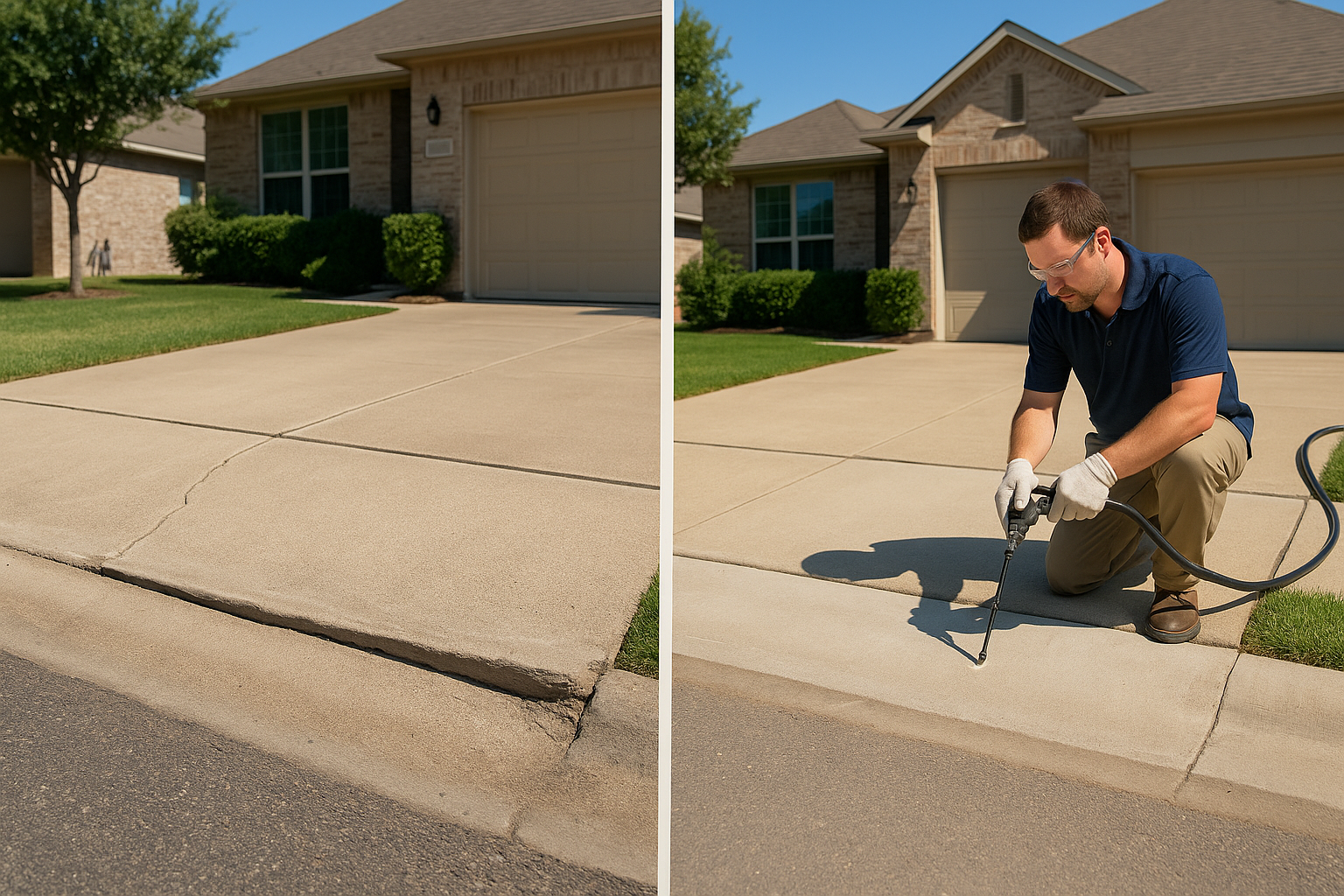
In Texas, driveway drainage problems do not stay small for long. A little standing water after a storm can turn into washed-out base material, widening joints, slab settlement, and trip hazards before a homeowner knows it. We see it all over Austin, Round Rock, and surrounding areas where heavy rains, long dry spells, and shifting soil work against concrete year-round.
If you are dealing with pooling water, erosion at the edges, or sections of driveway that have started to sink, driveway drainage repair in Texas usually needs more than a quick patch. In a lot of cases, the best long-term result comes from fixing the water movement first and then correcting the slab with Driveway Lifting, joint sealing, or both. The goal is simple: get water away from the slab, protect the base, and keep the concrete stable.
Signs Your Driveway Has a Drainage Problem
Most homeowners notice the symptom before they notice the cause. Water may be the real problem, but what you see is often cracking, sinking, or surface wear. If any of these are happening, it is worth having the drainage looked at before the driveway gets worse.
- Water pooling for more than 24 hours after rain or irrigation
- Soil washing out along the driveway edges
- Expansion joints staying wet or filling with sediment
- One slab panel sitting lower than the next
- Cracking near joints, garage approaches, or sidewalk connections
- Spalling or flaking where runoff repeatedly sits on the surface
- Muddy areas next to the driveway after storms
Texas storms can dump a lot of water in a short window. When runoff has nowhere to go, it finds the weak spots. It runs into open joints, follows the slab edges, and starts carrying away the support underneath. Once that base starts moving, the driveway usually follows.
We also tell homeowners to pay attention to the direction of runoff. If the driveway slopes back toward the garage, toward the house, or into low spots near the front walk, that is not just inconvenient. It can increase moisture around the home and add pressure to already expansive soil conditions.
What Causes Driveway Drainage Issues in Texas
Drainage failures in Texas are rarely caused by one thing. Usually it is a combination of slope, soil, weather, and neglected joints. Around Central Texas, we deal with expansive clay soils that swell when wet and shrink when dry. In other areas, you may see more sandy or rocky conditions, but the pattern is the same: water changes the support under the slab.
Expansive clay movement
Blackland and other clay-heavy soils around Austin, Round Rock, Georgetown, Temple, Waco, San Antonio, and Dallas-Fort Worth are notorious for movement. During wet periods, the soil expands. During drought, it contracts and leaves voids. That repeated cycle can break the bond between the slab and subgrade, especially when drainage is poor. A driveway sitting on unstable, moisture-sensitive soil is much more likely to settle.
Heavy rain and flash runoff
Texas weather is hard on flatwork. We can go from dry conditions to a downpour in one afternoon. When runoff comes off the roof, down the street, or across a yard and lands on the driveway, it can overwhelm weak grading fast. If downspouts discharge near the slab or the driveway was poured with minimal fall, standing water becomes common.
Failed or open joints
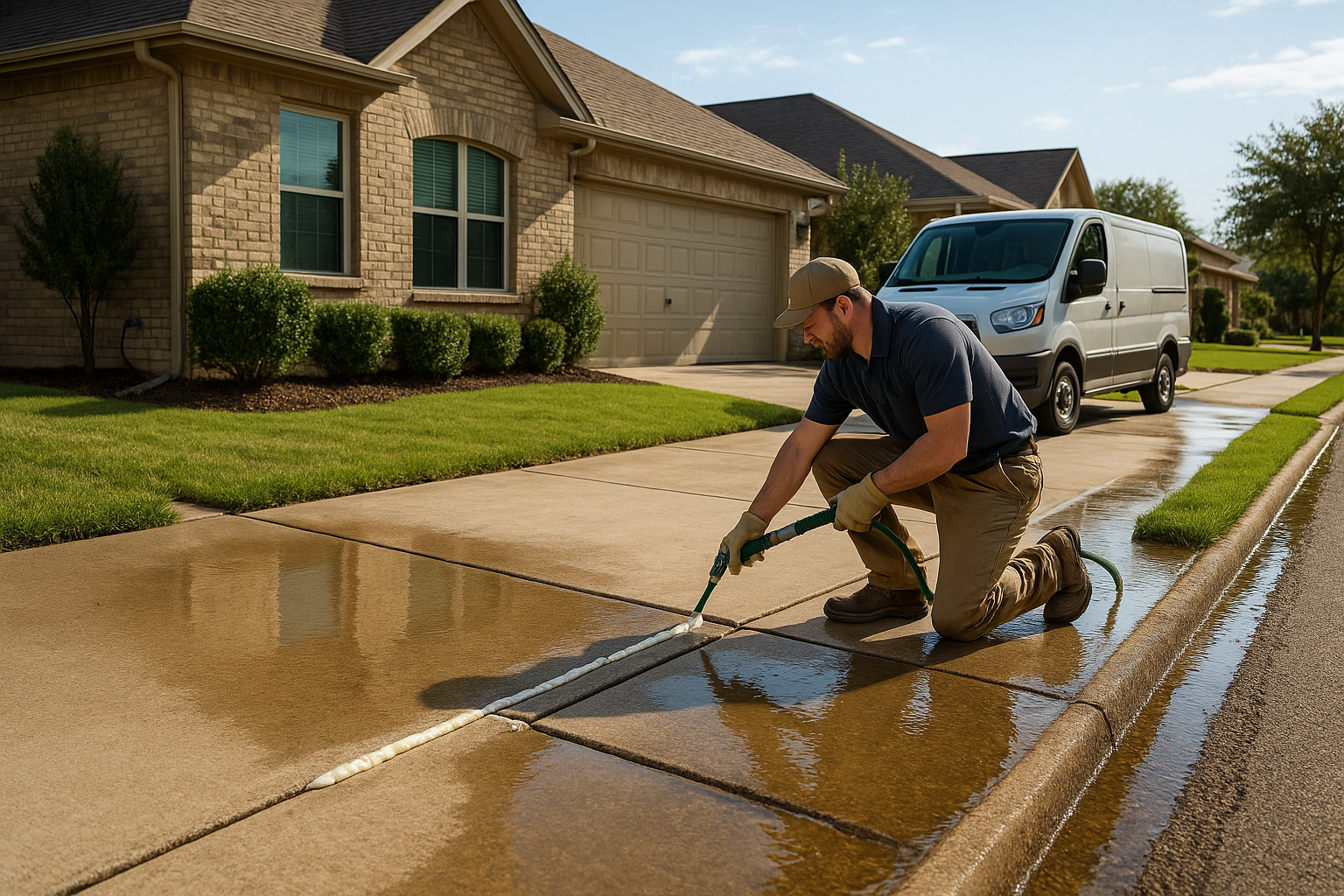
Joints are supposed to help the slab move and keep water from getting straight down into the base. When those joints dry out, crack, or open up, they become water entry points. That is why proper Expansion Joints maintenance matters. Sealing joints is not cosmetic. It is one of the best ways to reduce infiltration and protect the support beneath the concrete. Homeowners looking for joint sealing information can also learn more at sealmyjoints.com.
Poor original grading
Some driveways were never pitched correctly to begin with. Others have landscaping changes, added beds, fence lines, or hardscape features that trap water. Even a small low spot can hold enough water to create trouble over time. Concrete does not need a lake sitting on it to fail. Repeated wetting in the same place is enough.
How Drainage Repair and Concrete Leveling Work Together
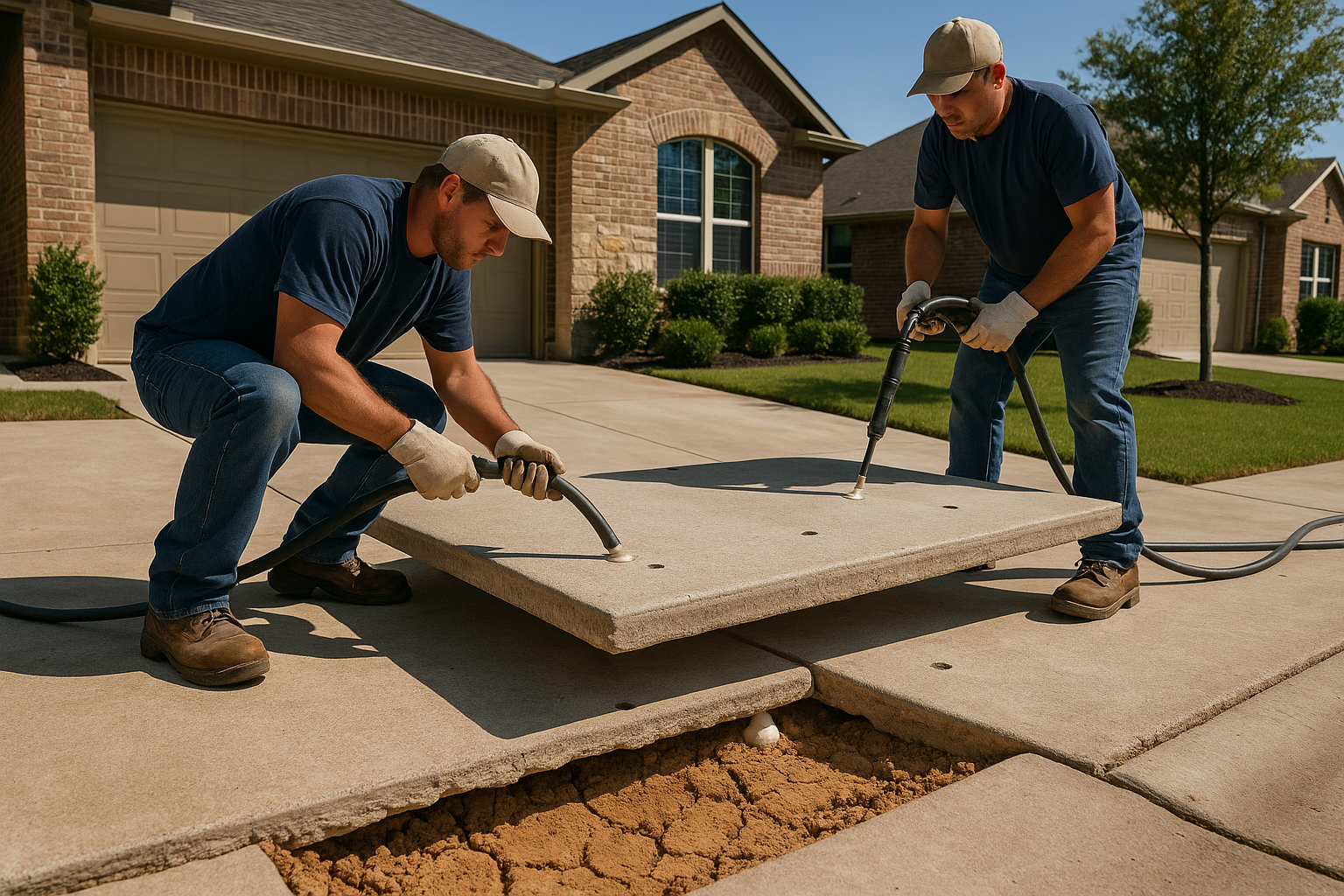
One mistake we see all the time is treating a settled driveway like it is only a lifting problem. If the base washed out because of water intrusion, lifting the slab without addressing drainage is only part of the job. It may improve the trip hazard, but the same water can come right back and keep undermining the concrete.
The right repair plan usually combines drainage correction with slab stabilization. First, identify where the water is coming from and where it is getting under the slab. That could mean improving slope, redirecting runoff, sealing joints, or correcting edge erosion. Then the settled sections can be lifted and supported.
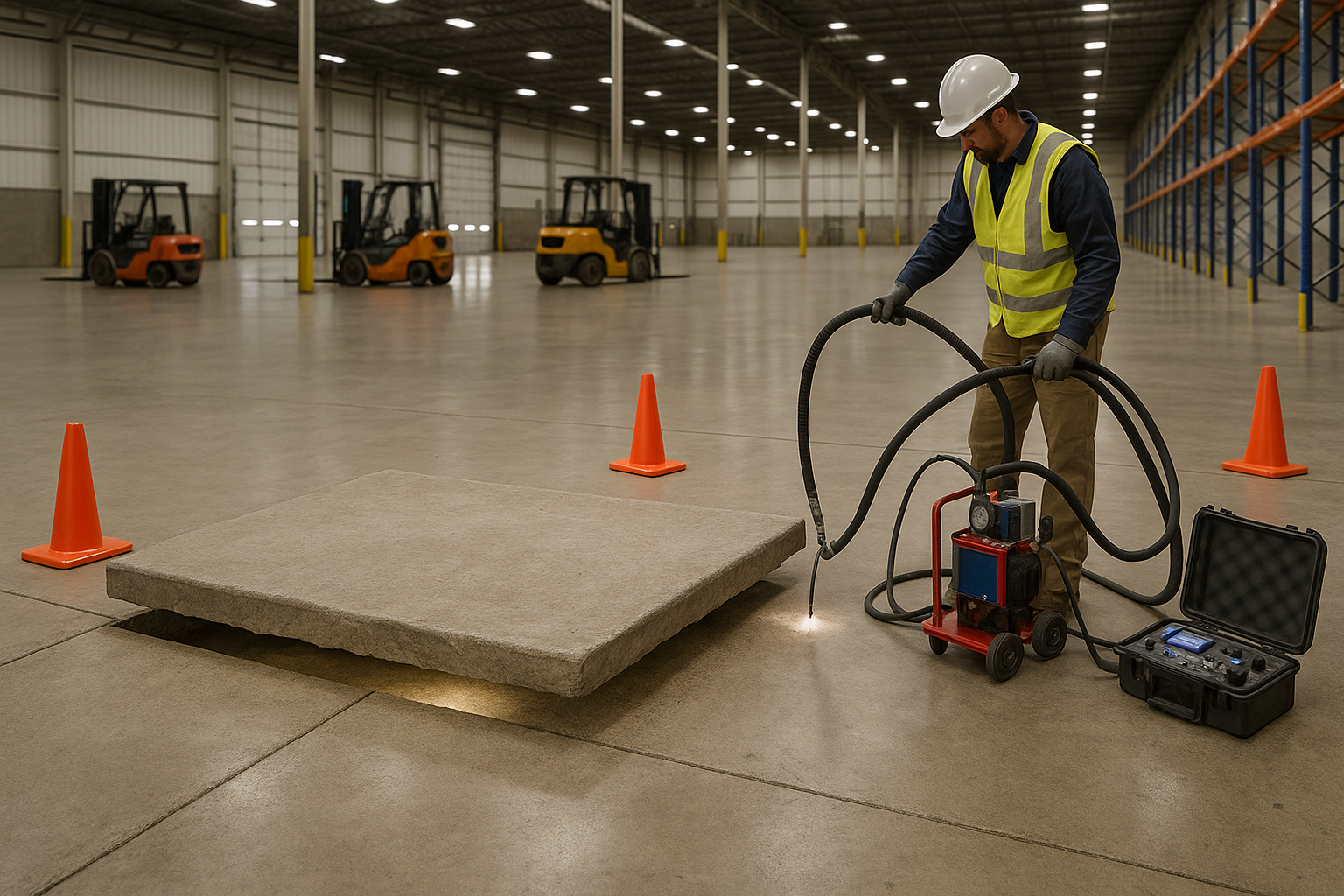
For many Texas driveways, polyurethane foam lifting is a good fit because it fills voids, raises settled slabs with control, and gets the driveway back in service quickly. When used on the right slab, it is a clean repair that addresses settlement without tear-out. Costs vary by access, slab thickness, and the amount of settlement, but homeowners often find lifting far more practical than replacement when the concrete is otherwise in decent shape. In many cases, lifting costs substantially less than full replacement, especially when drainage is corrected at the same time.
That is why our approach is to look at the whole system. If water is entering through failed joints, those need to be sealed. If runoff is cutting along the slab edge, that needs attention. If the driveway has dropped because the supporting soils moved or washed out, then leveling becomes part of the fix. Doing one without the other can leave money on the table.
When to Repair, Seal, or Lift Your Driveway
Every driveway is different, but most repairs fall into one of these categories.
When sealing may be enough
If the driveway is still fairly level and the main issue is water getting into open joints or saw cuts, sealing may be the right first step. This is especially true when you catch the problem early. Proper joint sealing helps block infiltration, reduce base erosion, and protect the slab from further movement. It is preventive work that can save a much larger repair later.
When drainage correction is the priority
If water is visibly ponding, running back toward the garage, or washing out soil around the slab, then drainage needs to be addressed first. That could involve reworking discharge points, correcting low areas, or making sure runoff is not feeding directly into the driveway joints. In some cases, the slab itself is creating the drainage problem because one section has settled and formed a basin.
When lifting is the better option
If one or more slabs have dropped, created a trip hazard, or started holding water because of settlement, lifting is often the most efficient repair. This is common in neighborhoods with active clay soils and on driveways that take repeated runoff from roofs or sloped lots. A good candidate for lifting usually has structurally sound concrete with settlement issues rather than widespread breakup.
As a rough rule, if the driveway is mostly intact and the problem is elevation, driveway lifting deserves a look before replacement. If the slab is shattered, badly heaved, or deteriorated across large areas, replacement may be the better call. But a lot of Texas driveways that look rough at first glance are still repairable.
What about replacement cost?
Full driveway replacement is sometimes necessary, but homeowners should know the price jump can be significant. Depending on size, access, thickness, finish, and demolition needs, replacement can run into the thousands or even tens of thousands of dollars. By comparison, targeted lifting and sealing work is often a more budget-friendly way to restore function and improve drainage without starting over. The key is catching the problem before settlement turns into major breakage.
- Inspect where water is pooling and how long it stays.
- Check joints and slab edges for gaps, erosion, and moisture entry.
- Determine whether settlement is causing the drainage issue or resulting from it.
- Correct the water path.
- Lift and stabilize slabs where needed.
- Seal joints to help protect the repair.
That process gives homeowners a practical path forward instead of guessing. In Texas, drainage and concrete movement are tied together. If you stop the water and restore support, you give the driveway a much better chance to hold up through the next round of heat, drought, and storms.
If your driveway is holding water, sinking at the joints, or showing signs of washout, Hill Country Slabs can help. We serve homeowners across Central Texas with honest recommendations and repair options that fit the actual condition of the slab. Contact us at /contact or call (737) 287-4308 to schedule an evaluation.