Concrete Driveway Apron Repair in Texas
If your driveway is smooth but the section out by the street has dropped, cracked, or started holding water, you’re probably dealing with apron failure. In Texas, that little piece of concrete takes a beating. It handles the weight of cars turning in, trash trucks rolling past, heat expansion, runoff, and movement in the soil right where your driveway meets the road. When it starts to fail, it’s more than an eyesore. It can turn into a trip hazard, a tire-killer, and a drainage problem fast.
At Hill Country Slabs, we see this all over Austin, Round Rock, and the surrounding Central Texas area. Homeowners call us when the apron settles, the edge breaks off, or the joint opens up enough to catch water and debris. The good news is that not every apron needs to be torn out. In a lot of cases, lifting and stabilizing the slab is the better fix.
What Is a Driveway Apron and Why It Fails
The driveway apron is the section of concrete at the entrance of the driveway, right where it ties into the street or curb. It looks simple, but it’s one of the hardest-working parts of the whole driveway. It sees repeated impact loading from vehicles, drainage from the street, and movement from both the driveway side and the roadway side.
In Texas, apron failure usually comes back to a few common causes:
- Expansive clay soil shrinking in drought and swelling after rain
- Erosion under the slab from runoff washing out the base
- Poor compaction when the apron was originally poured
- Heavy traffic stress near the curb line
- Failed joints that let water get underneath the concrete
In Central Texas, we’re often dealing with highly active clay soils. In areas west of Austin, you can also run into rockier ground with shallow soils that still shift enough to affect unsupported edges. North toward Round Rock, Georgetown, and Pflugerville, movement from moisture swings is common. A long dry spell can pull moisture out of the subgrade, then one hard rain can change support conditions under the apron in a hurry.
That is why good joint performance matters. If the apron joint has opened up, cracked out, or lost sealant, water can get under the slab and start softening or eroding the base. If you haven’t looked at your joint condition lately, it’s worth learning more about expansion joints. Proper sealing also helps keep water out, which is why maintenance from specialists like sealmyjoints.com can make a difference.
Signs You Need Concrete Driveway Apron Repair
A failing apron usually gives you some warning signs before it gets really bad. The key is catching it early, before the slab breaks beyond repair or creates a safety issue.
Common signs to watch for
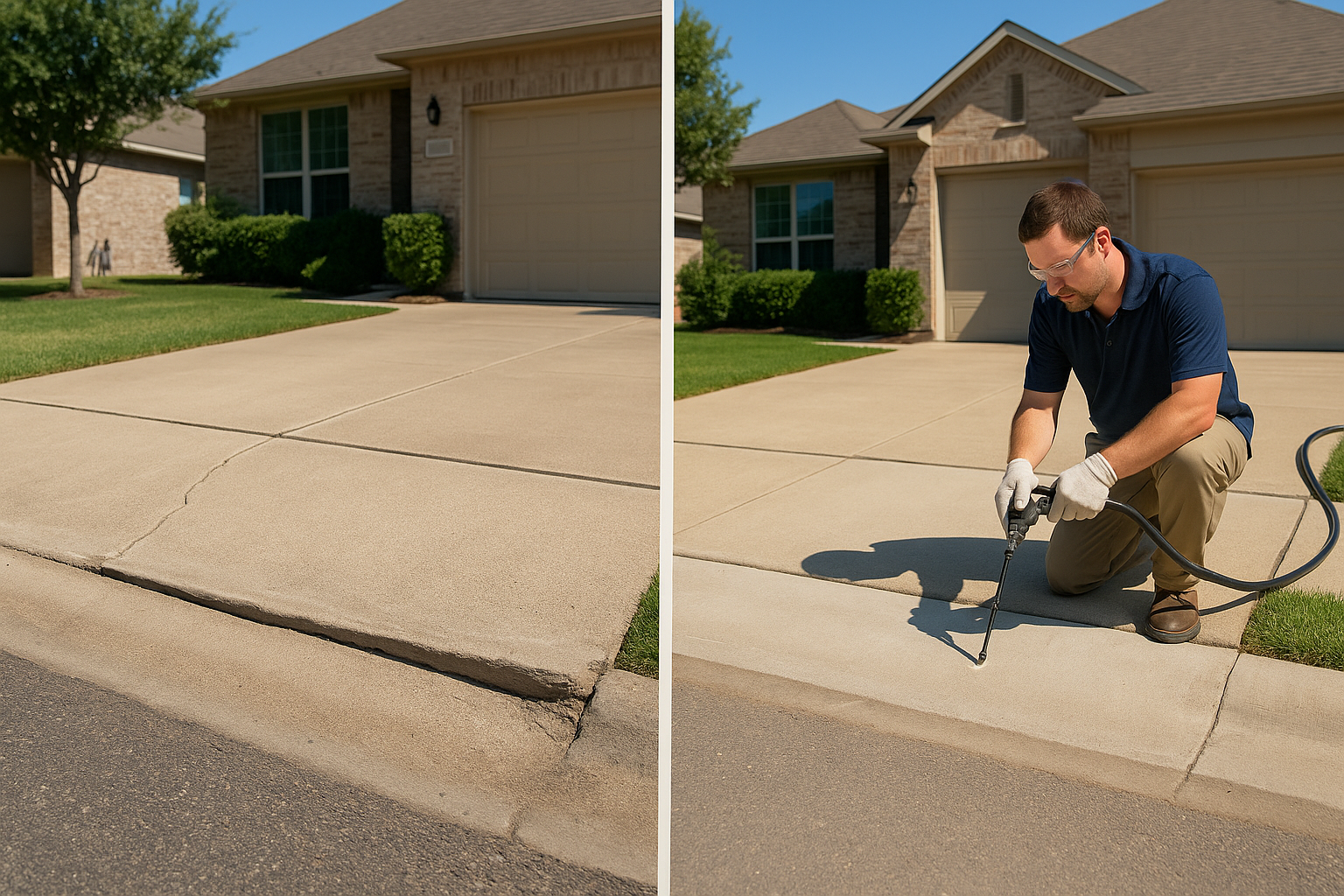
- One side of the apron sits lower than the driveway or curb
- A lip or bump forms where cars hit when entering the driveway
- Cracks spread across the apron, especially near corners
- Standing water stays near the garage approach or street edge
- Gaps open at the joints between apron, driveway, and curb
- Edges break or crumble from loss of support underneath
If you feel a hard thump every time you drive in, that’s not just annoying. It usually means the slab has moved enough that it needs attention. We tell homeowners not to wait until the concrete starts chunking out. Once corners break off or the slab has multiple full-depth cracks with vertical separation, repair options get narrower.
Another big sign is drainage. If water is ponding at the apron after a storm, there is a good chance the slab has settled or the grade has changed enough to trap runoff. In Texas weather, that repeated wet-dry cycle only makes movement worse.
Driveway Apron Lifting vs Replacement in Texas
This is the question most homeowners ask first: can it be lifted, or does it need to be replaced?
The answer depends on the condition of the concrete itself, not just whether it has settled. If the slab is mostly intact and the main issue is loss of support, lifting is often the smartest move. If the concrete is badly shattered, missing sections, or poured too thin to hold up long term, replacement may be the better call.
When lifting usually makes sense
- The apron is sunken but still in one main piece
- Cracks are present but not heavily displaced
- The concrete surface is in decent shape
- The problem is caused by voids, washout, or soil movement underneath
- You want a faster repair with minimal disruption
For aprons in this condition, our Driveway Lifting service can often restore the slab without demolition. That means no waiting on a full tear-out, rebar work, forming, pouring, and curing cycle.
When replacement may be necessary
- The slab is broken into several loose sections
- There is severe spalling or major edge loss
- The apron was poorly built from the start
- Thickness is inadequate for the load it carries
- The subgrade problem is paired with major concrete failure
In those cases, a broader Concrete Slab Repair evaluation helps determine whether replacement is the durable option.
Cost and value in Texas
While every job is different, lifting is often more cost-effective than replacement when the slab qualifies. Homeowners are commonly looking at a repair that can save a substantial amount compared to full demolition and repour. In many cases, lifting can come in at 40% to 70% less than replacement, depending on access, size, and slab condition. It also usually gets done faster, often in hours instead of days.
Replacement still has its place, but if the apron can be saved, most folks would rather avoid the bigger bill and the longer disruption.
How Polyurethane Foam Repair Works
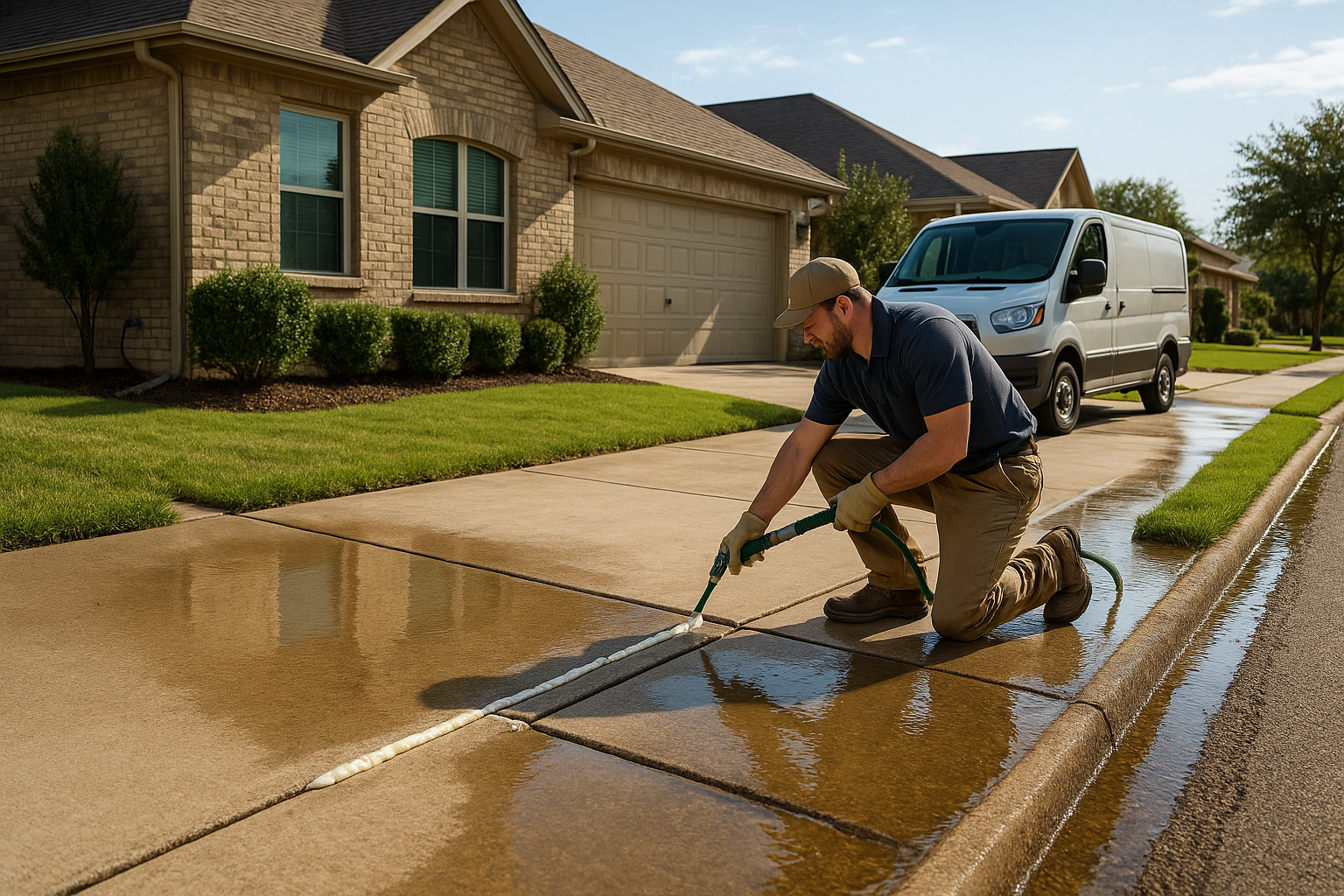
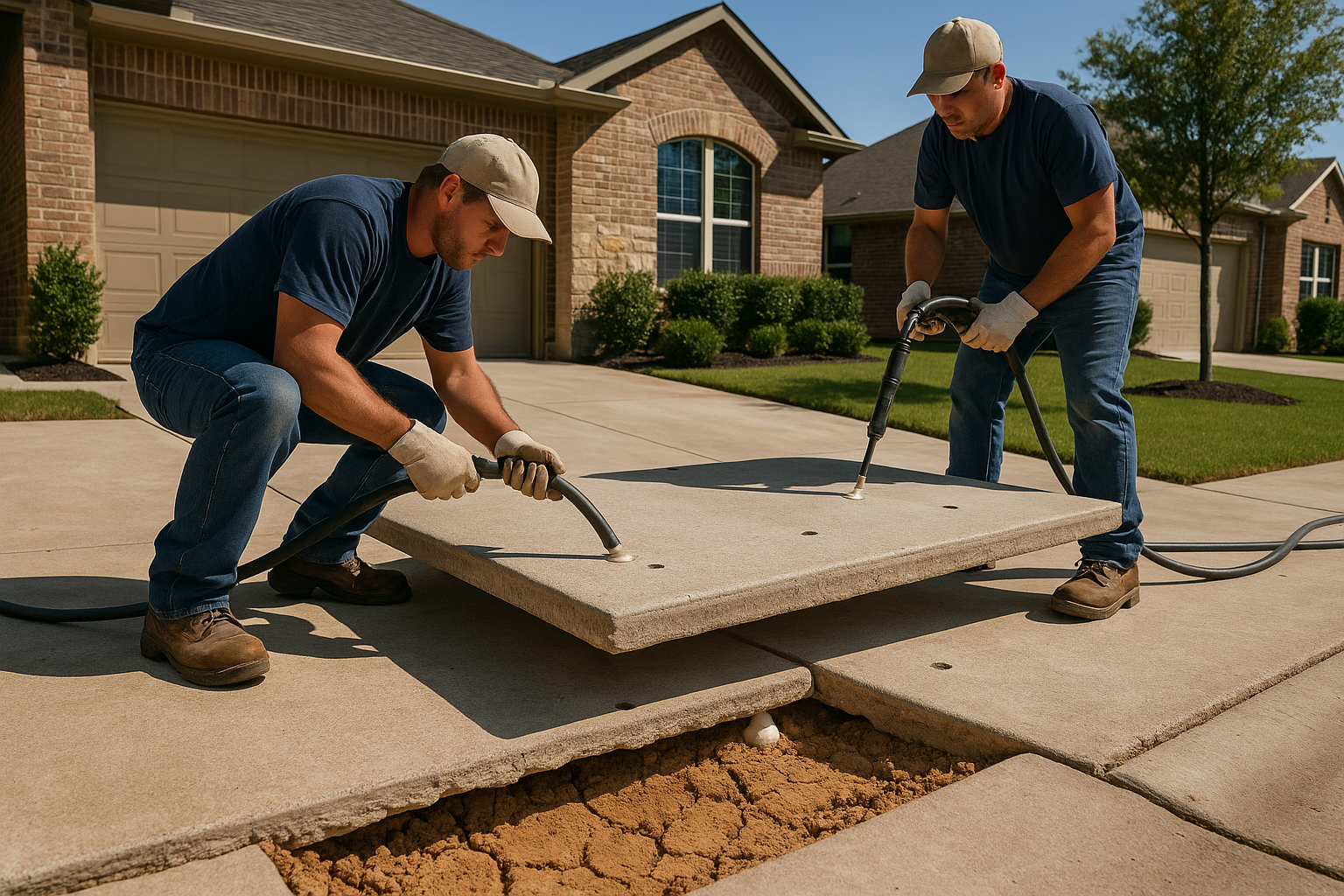
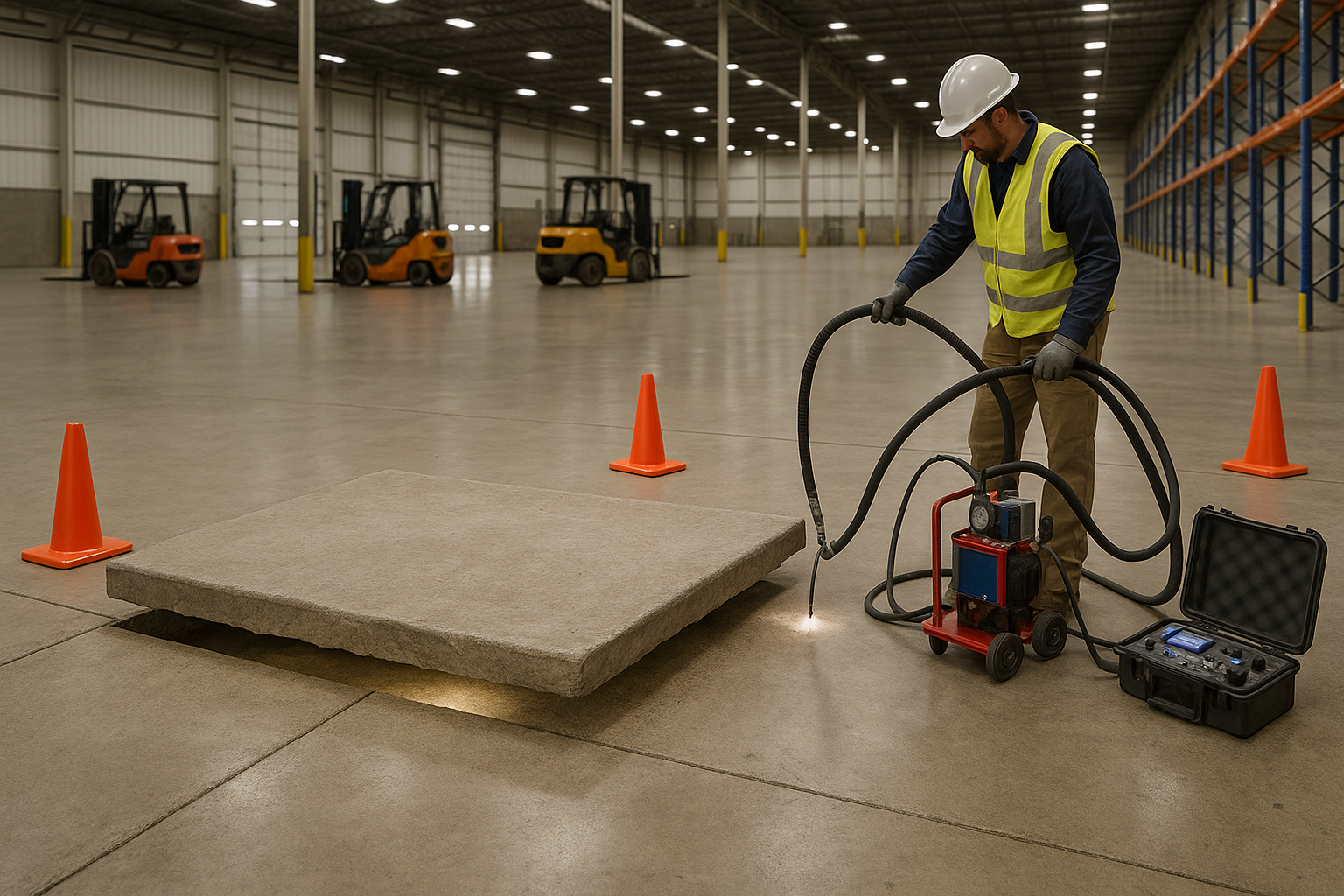
For settled driveway aprons, polyurethane foam lifting is one of the cleanest repair methods out there. It works by injecting a high-density expanding foam through small holes in the slab. The foam fills voids, stabilizes the base, and gently raises the concrete back toward proper position.
- We inspect the apron condition, cracking, and support loss
- Small injection holes are drilled in strategic spots
- Polyurethane foam is injected beneath the slab
- The foam expands to fill empty space and lift the concrete
- The apron is brought back into alignment as closely as conditions allow
- Holes are patched and the area is cleaned up
This process is especially useful in Texas because it addresses the support issue under the slab without adding a lot of extra weight to already active soils. Traditional mudjacking uses a heavier material. Foam is lighter, precise, and cures quickly.
Some of the biggest benefits are:
- Minimal downtime
- Small drill holes
- Fast return to service
- Void filling and stabilization
- Less mess than tear-out and replacement
On many projects, the apron can be used again the same day. That matters when you’re trying to keep your household moving and don’t want your driveway blocked off for a week.
Why Texas Homeowners Should Act Fast
Apron settlement rarely fixes itself. Once water starts getting underneath and traffic keeps pounding the slab, the damage usually grows. A small drop-off can turn into broken edges, wider cracks, and more expensive repairs. In Texas, the combination of heat, sudden storms, and active subgrade movement speeds that process up.
If you are in Austin, Round Rock, or nearby communities, it’s smart to get the apron looked at before the next heavy rain season. Catching it early may be the difference between a straightforward lift and a full replacement.
The other piece homeowners overlook is joint maintenance. Even after lifting, the joints need to be protected so water does not start the same cycle all over again. If your apron joints are open or failing, check out expansion joints and consider professional joint sealing through sealmyjoints.com.
Get a Texas Driveway Apron Repair Evaluation
If your driveway apron is cracked, settled, or holding water, Hill Country Slabs can help you figure out whether it should be lifted, stabilized, or replaced. We know how Texas soils behave, and we know what works in this climate.
Contact us today through /contact or call (737) 287-4308 to schedule an evaluation and get your driveway entrance safe, smooth, and supported again.