If you have a cracked, sinking, or uneven walkway, you are not alone. Concrete walkway repair in Texas is one of the most common calls we get from homeowners dealing with trip hazards, drainage issues, and ugly concrete out front. Between shifting clay soils, long dry spells, heavy rain, and hard summer heat, sidewalks and front walkways across Texas take a beating.
The good news is you usually do not have to tear everything out and start over. In a lot of cases, a settled walkway can be lifted, stabilized, and put back into service fast. At Hill Country Slabs, we help homeowners across Austin, Round Rock, Cedar Park, and surrounding areas fix concrete before the damage spreads. If your walkway ties into a porch, driveway, or foundation area, our Sidewalk Repair and Concrete Slab Repair services can often handle the problem without full replacement.
Signs Your Concrete Walkway Needs Repair
Most walkway problems start small. Homeowners see one hairline crack or a little drop between slabs and figure it can wait. In Texas, small movement has a way of turning into bigger movement once the soil keeps cycling between dry and wet.
Here are the main signs it is time to schedule concrete walkway repair in Texas:
- One slab sits higher or lower than the next, creating a trip hazard
- Cracks are widening instead of staying cosmetic
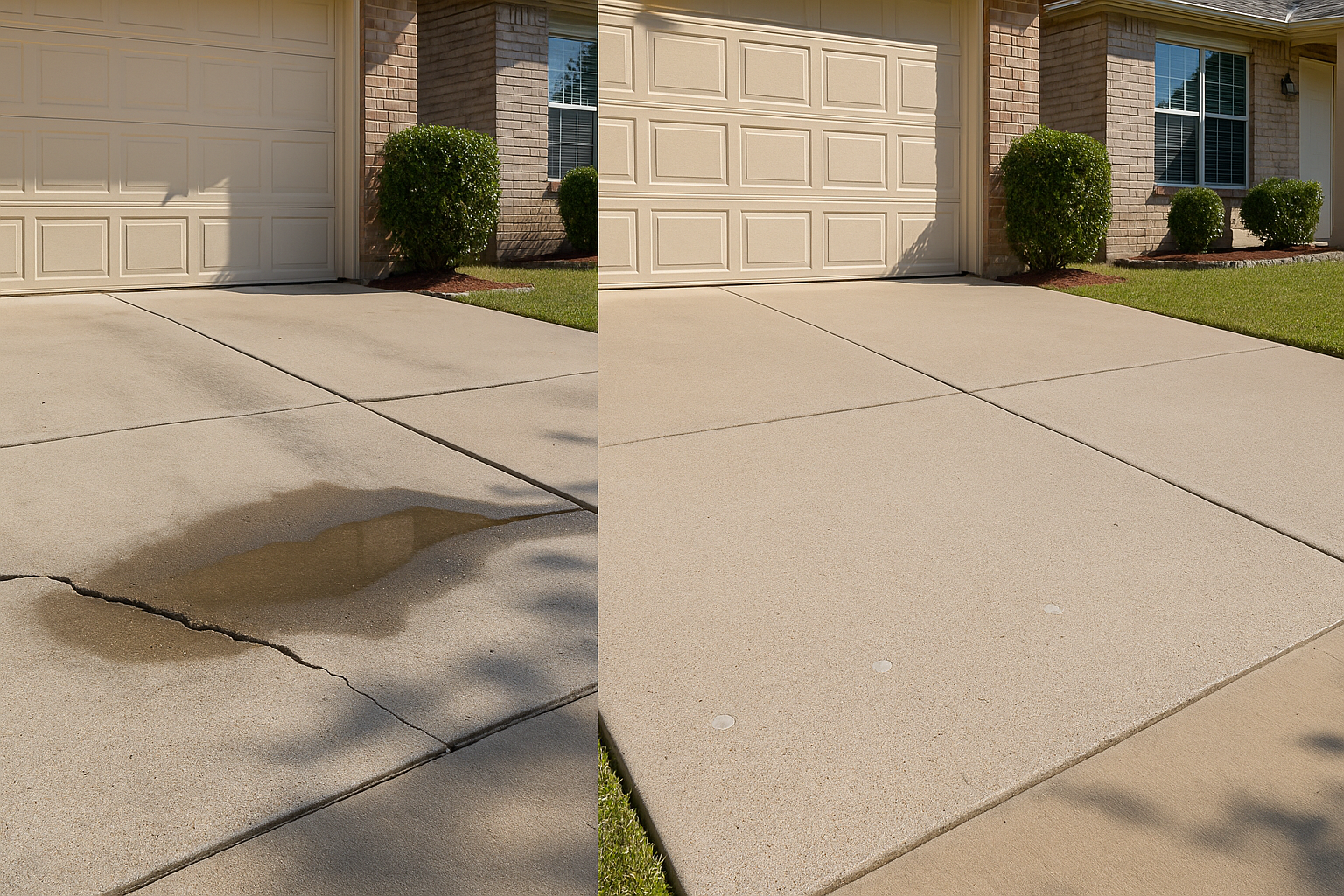
- Water is ponding on the walkway or running back toward the house
- The walkway is pulling away from steps, porches, or the driveway
- Edges are breaking down from movement and traffic
- Expansion joints are missing or failing, letting water get under the concrete
If the issue is mainly settlement, lifting the slab is often the smartest move. If there are open joints, failed sealant, or gaps where water is getting below the concrete, it also makes sense to address those at the same time. You can learn more about proper joint protection at /expansionjoints or get more joint sealing information from sealmyjoints.com.
What Causes Walkways to Sink or Crack in Texas?
Texas concrete moves because Texas soil moves. That is the short version. Around Central Texas, we deal with highly expansive clay that swells when it gets wet and shrinks hard when it dries out. In other parts of the state, you can also run into sandy soils, rocky caliche, and fill dirt that was never compacted the way it should have been.
Some of the most common causes include:
Expansive Clay Soil
In places like Austin, Round Rock, Georgetown, and Cedar Park, clay-heavy soils expand and contract throughout the year. During drought, the soil shrinks and leaves voids under the slab. After rain, the soil can soften, shift, or swell unevenly. That movement puts stress on walkways and causes settling, cracking, and separation.
Poor Drainage
If your downspouts dump near the walkway or your yard grades toward the house, water can wash out the support soils under the concrete. Once voids develop, the slab starts rocking, dropping, and cracking. Even a small drainage issue can create a bigger repair later.
Tree Roots
Large trees are great for shade, but roots can lift one section while drying out soil under another. That is a common reason walkways become uneven in older neighborhoods throughout Central Texas.
Weak Base or Improper Compaction
Sometimes the issue started the day the walkway was poured. If the base was thin, the subgrade was not compacted, or fill soil settled later, the concrete had no real support to begin with. That usually shows up as isolated drops, corner breaks, or uneven slab sections.
Heat, Rain, and Freeze Events
Texas weather is rough on exterior concrete. We get extreme summer heat, sudden heavy rain, and occasional winter freezes. Those swings open cracks, wear out joints, and let more moisture under the slab. Once that happens, movement tends to accelerate.
Concrete Walkway Repair vs Replacement
One of the first questions homeowners ask is whether they need repair or full replacement. The answer depends on the condition of the slab, but a lot more walkways can be repaired than people think.
Repair usually makes sense when:
- The concrete is mostly intact
- The slab has settled but is not shattered
- The cracks are limited and the surface is still usable
- You want to correct trip hazards fast
- You want to avoid tearing up landscaping, irrigation, or nearby structures
Replacement is usually the better choice when:
- The walkway is badly broken into multiple loose pieces
- The concrete is severely spalled or crumbling
- The base failure is widespread across the entire path
- You are changing the layout or width of the walkway
For many Texas homeowners, repair wins on speed and cost. Foam leveling and slab stabilization can often be completed in hours, not days. In many cases, walkway repair costs about 50% to 80% less than full replacement, depending on access, slab condition, and how much lifting is needed. Replacement also usually means demolition, haul-off, new base prep, re-pouring, and waiting on cure time before normal use.
If your goal is to make the walkway safe, level, and clean again without turning the yard into a construction site, repair is usually the first thing we recommend looking at.
How Foam Leveling Repairs Uneven Walkways Fast
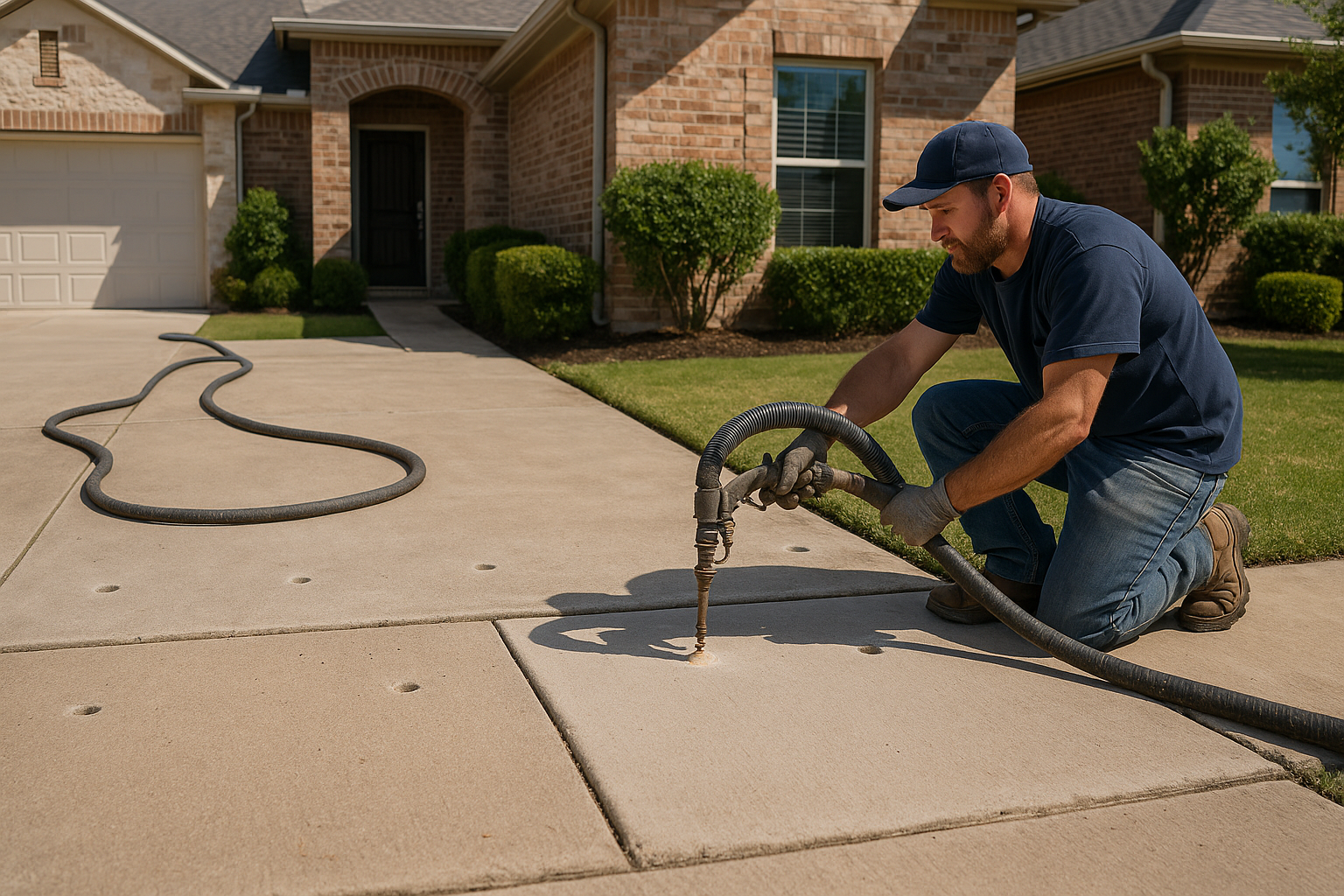
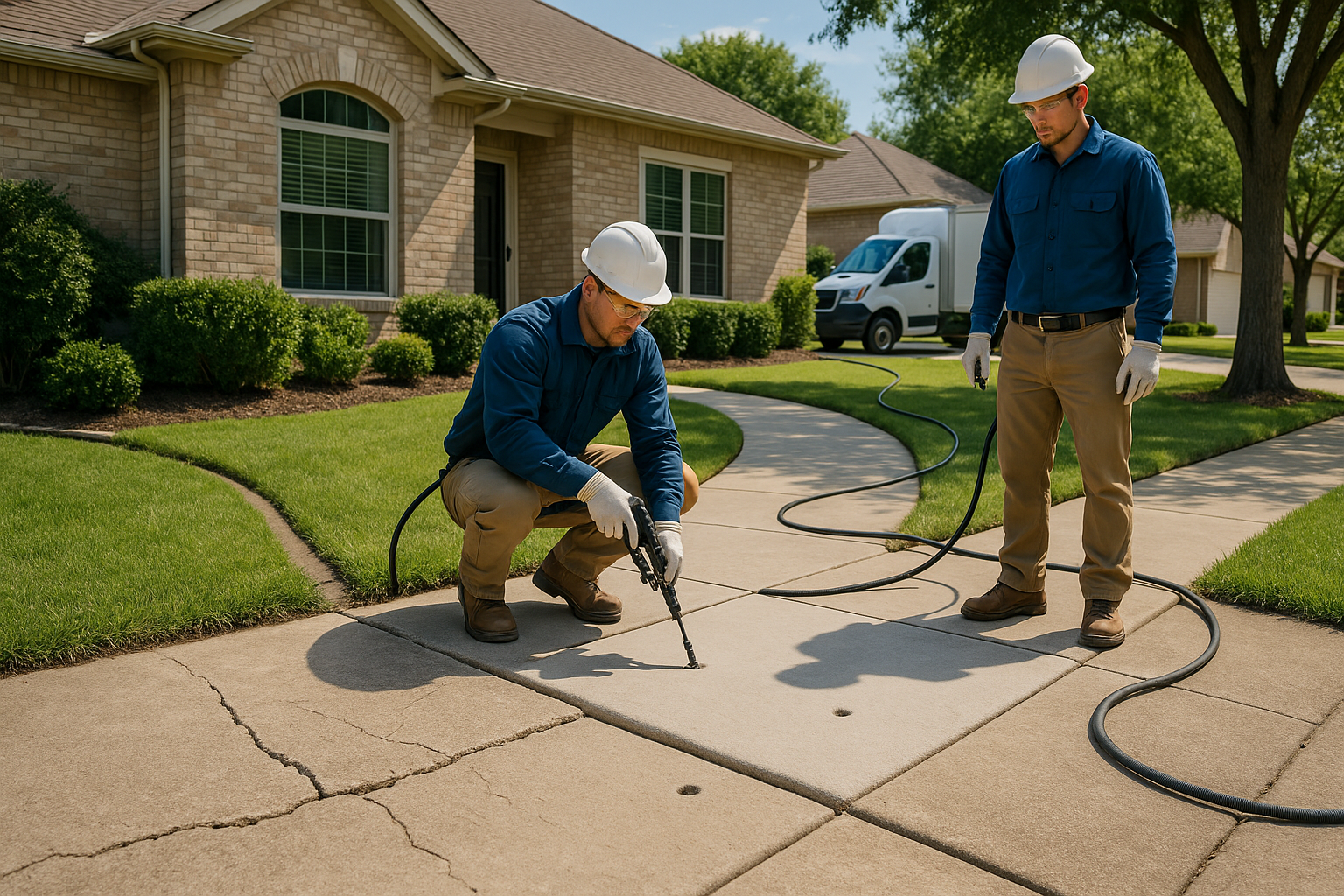
For settled walkways, polyurethane foam injection is one of the best repair methods available. This process lifts concrete by injecting a lightweight expanding foam under the slab through small drilled holes. As the foam fills voids and expands, it raises and supports the walkway with precision.
Here is why it works well in Texas:
- It is lightweight, so it does not add heavy load to already weak soils
- It fills voids under the slab, not just the visible low spot
- It cures fast, so the walkway is often ready for use the same day
- It is less invasive than replacement and easier on landscaping
- It can help improve drainage by restoring proper slope
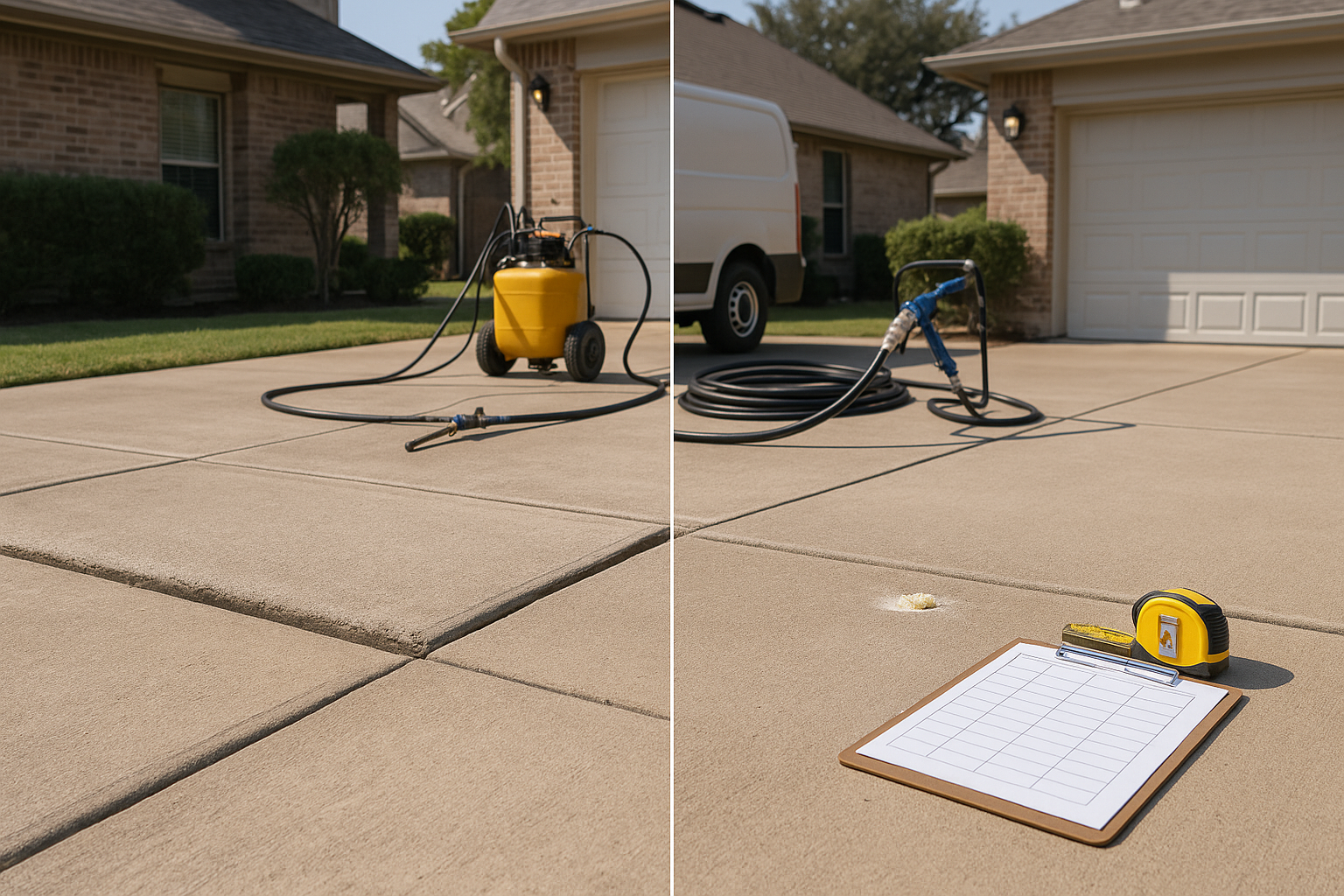
A typical repair starts with evaluating the amount of settlement, checking where water is moving, and identifying whether the slab is a good candidate for lifting. Then we drill small holes, inject foam in controlled stages, monitor the lift, and patch the holes cleanly. Once the walkway is back where it belongs, we recommend sealing joints and cracks where needed so water has a harder time getting back underneath.
That last part matters. A level walkway is good, but a level walkway with protected joints lasts longer. If you have open gaps between slabs or where concrete meets the house, take a look at /expansionjoints and sealmyjoints.com for more information on keeping water out.
Why Texas Homeowners Should Not Wait
An uneven walkway is more than a cosmetic issue. It is a liability, especially around front entries, pool decks, side yards, and paths used by kids, guests, or delivery drivers. Once the slab starts moving, it usually does not stop on its own.
Waiting can lead to:
- Bigger trip hazards and higher fall risk
- More water intrusion under the slab and toward the foundation
- Wider cracks and more edge damage
- Higher repair costs if the concrete becomes too damaged to save
We see this all the time in Central Texas neighborhoods where one settled panel turns into a bigger chain reaction. A front walkway drops, then the porch joint opens, then runoff starts washing the base away. Getting ahead of it early is usually the most cost-effective move.
Get Concrete Walkway Repair in Texas Done Right
If your walkway is sinking, cracked, or uneven, there is a good chance it can be repaired without full replacement. At Hill Country Slabs, we provide practical concrete repair solutions built for Texas soil and weather conditions. We work with homeowners throughout Austin, Round Rock, Cedar Park, and nearby areas to lift settled concrete, reduce hazards, and protect the slab from further movement.
If you are dealing with a walkway, porch approach, or adjoining slab problem, check out our Sidewalk Repair and Concrete Slab Repair services. To schedule an estimate, visit /contact or call (737) 287-4308. We will tell you straight whether your concrete can be repaired and what it will take to get it level again.