In Texas, concrete slabs take a beating. Between long dry spells, sudden heavy rain, expansive clay soils, and day-after-day heat, it does not take much for a slab to shift, settle, or crack. We see it all over Central Texas in Austin, Round Rock, and Georgetown: sidewalks that dip, patios that pull away, driveways that hold water, and porch slabs that become trip hazards.
The good news is a sunken slab does not always need to be torn out and replaced. In a lot of cases, professional Concrete Slab Repair with polyurethane foam leveling can lift and stabilize the slab without the mess, downtime, and cost of full replacement. If you are dealing with uneven concrete in Texas, here is what usually causes it, when repair is the smart move, and how foam injection gets the job done.
What Causes Concrete Slabs to Sink in Texas?
Texas soil is one of the biggest reasons concrete moves. Around Austin and much of the Hill Country, we deal with a lot of expansive clay. That soil swells when it gets wet and shrinks when it dries out. Over time, that constant movement leaves voids under the slab or creates uneven support. Once that support is gone, the concrete starts to settle.
There are a few common causes we run into on slab repair jobs across Texas:
- Expansive clay soils: These soils expand and contract with moisture changes, which is a major driver of slab movement in Central Texas.
- Drought followed by heavy rain: Dry weather causes soil shrinkage, then sudden rain saturates the ground unevenly. That cycle can wash out support under a slab.
- Poor compaction during construction: If the base was not compacted right from the start, the slab can settle faster than it should.
- Drainage issues: Downspouts, negative grading, irrigation leaks, and pooling water can soften subgrade soils and erode material beneath the concrete.
- Tree roots and vegetation: Large trees can pull moisture from one side of a slab, creating uneven drying and settlement.
- Joint failure: When control joints and expansion joints are neglected, water gets below the slab more easily and starts the cycle over again. That is why we also tell property owners to pay attention to expansion joints and proper sealing.
In Texas, settlement is usually not a one-time event. It is a process. A slab may drop a quarter inch one season, then another half inch after a dry summer and wet fall. That is why catching it early matters. A small drop is easier and cheaper to correct than a slab that has been moving for years.
When Concrete Slab Repair Makes More Sense Than Replacement
A lot of folks assume sunken concrete has to be demolished and poured again. Sometimes replacement is necessary, especially if the slab is badly broken, the base is gone over a large area, or the concrete is structurally beyond saving. But in many cases, repair is the better option.
Repair usually makes sense when the slab is still in decent shape overall but has settled because of voids or poor support underneath. Common examples include:
- Driveways with one or two dropped panels
- Patios that slope back toward the house
- Sidewalks with trip hazards
- Pool decks with uneven sections
- Garage or approach slabs that have settled near the edge
- Porches and walkways that have separated from the main structure
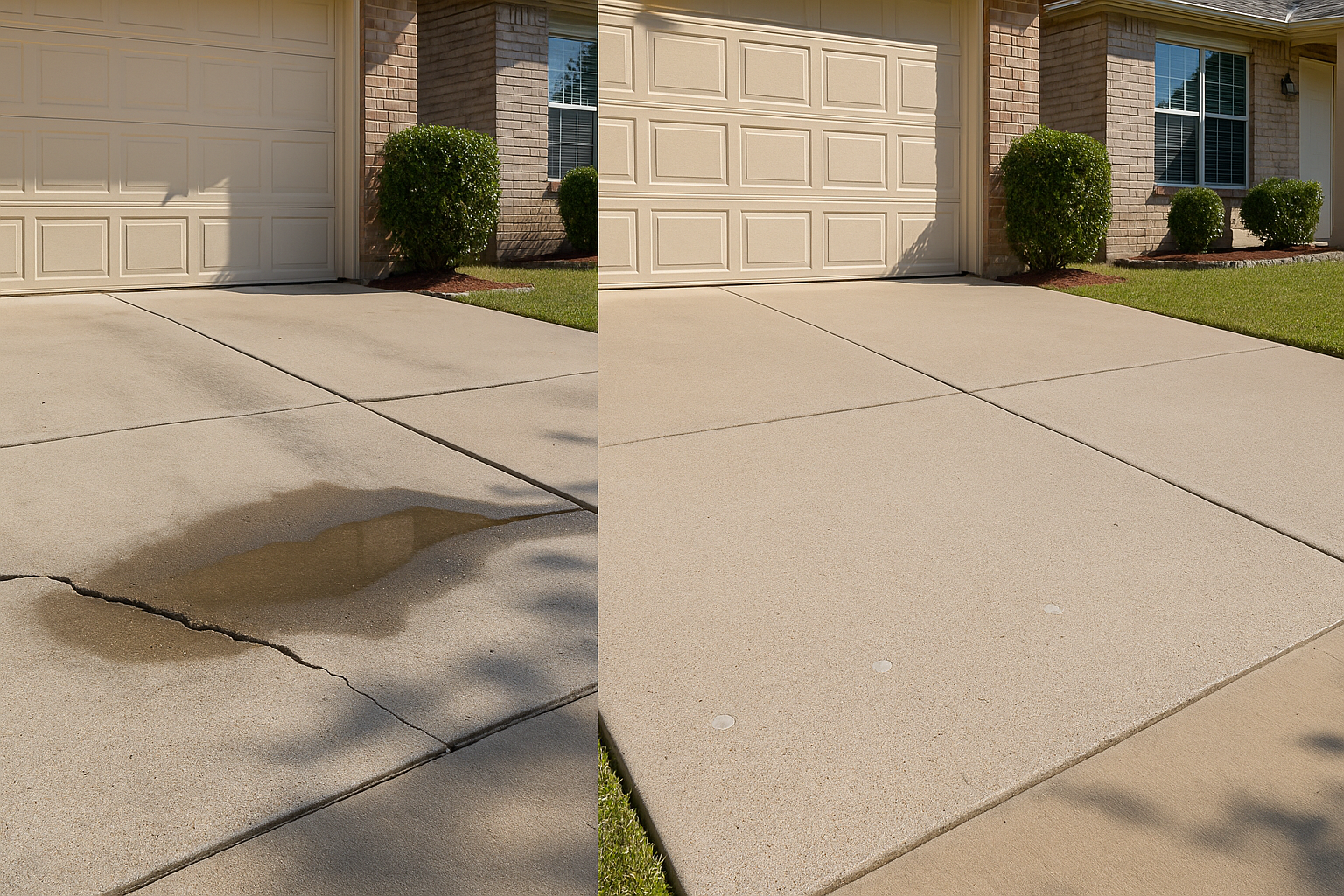
When the concrete surface is mostly intact, lifting the slab back into position is often faster, cleaner, and far more affordable than replacement. For many Texas property owners, slab repair can come in at about half the cost of replacement, depending on access, slab thickness, and how much lift is needed. It also avoids the headache of hauling off debris, re-forming, waiting on a new pour, and hoping the replacement matches the existing concrete.
Another big advantage is downtime. Full replacement can put a driveway, patio, or walkway out of service for days. Foam leveling repairs are often completed in hours, and in many cases the slab is ready for use the same day. For homeowners and commercial property managers, that matters.
If you are trying to decide between repair and replacement, a good contractor should look at a few basics:
- Is the slab mostly intact, or is it shattered?
- Is the settlement caused by voids and soil movement that can be stabilized?
- Are the cracks minor and manageable, or are they signs of major failure?
- Will lifting restore proper drainage and remove trip hazards?
- Is there a joint or edge condition that also needs sealing after the lift?
If the answer points toward a stable lift, repair is usually the practical route. And once the slab is back where it belongs, keeping joints sealed helps protect that investment. We always recommend ongoing joint maintenance, and property owners can learn more at sealmyjoints.com.
How Polyurethane Foam Leveling Repairs Sunken Slabs
Polyurethane foam leveling is one of the best ways to repair settled concrete in Texas. It is a controlled lifting process that fills voids under the slab and raises the concrete back toward its proper elevation. This method works well because it addresses the support problem underneath, not just the surface symptom on top.
Here is how the process typically works:
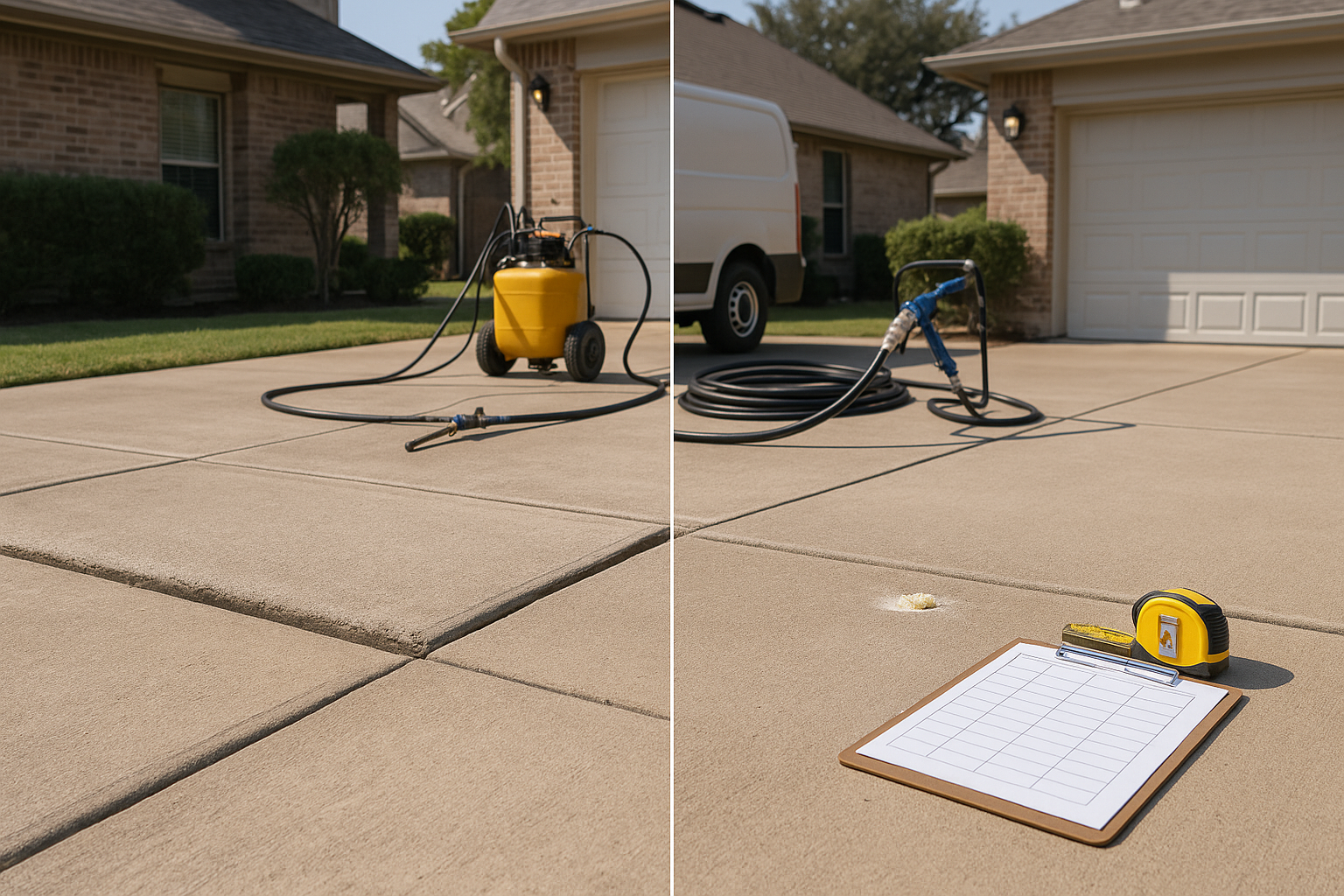
- Inspection and measurement: We identify how far the slab has dropped, where the support is missing, and what caused the movement in the first place.
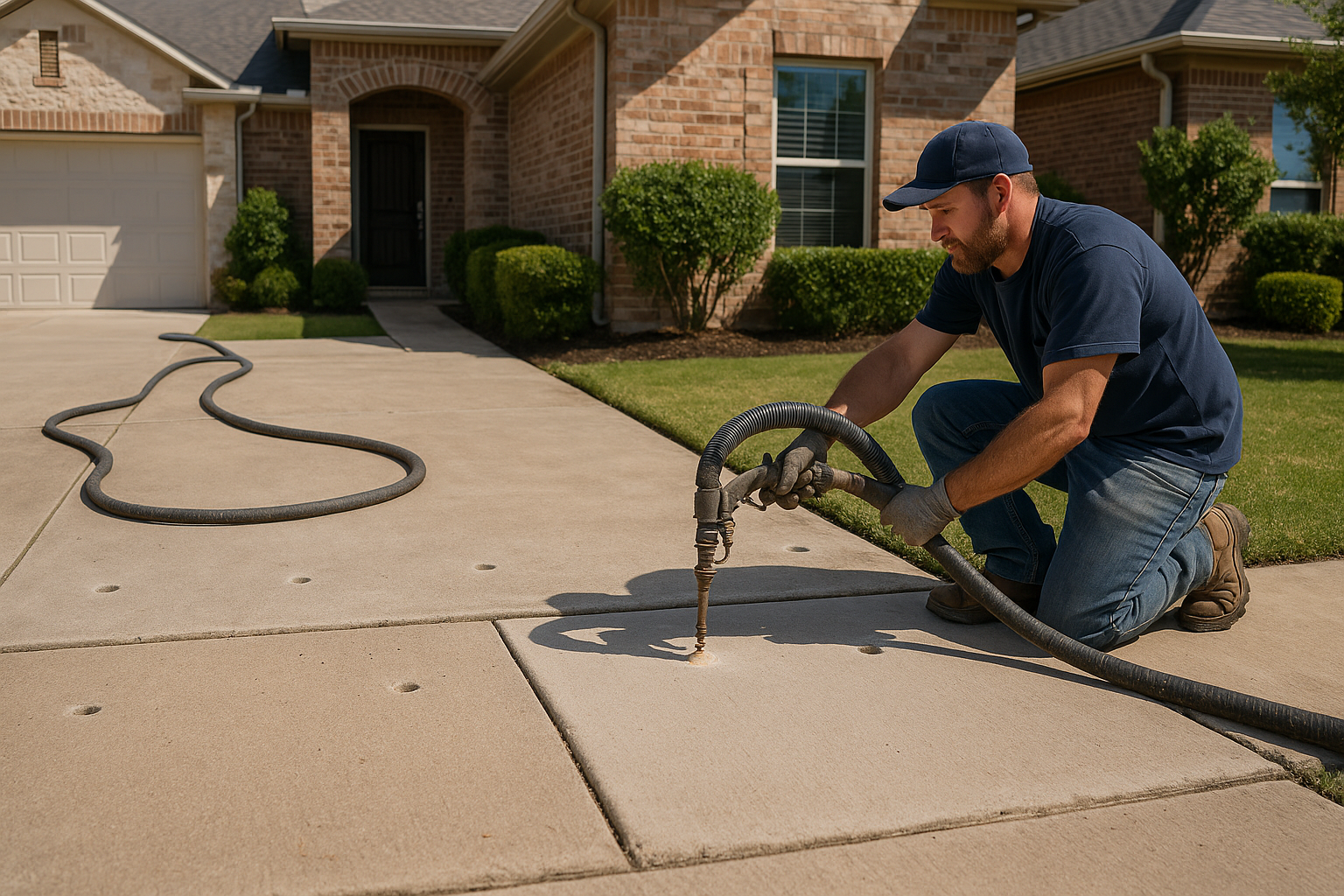
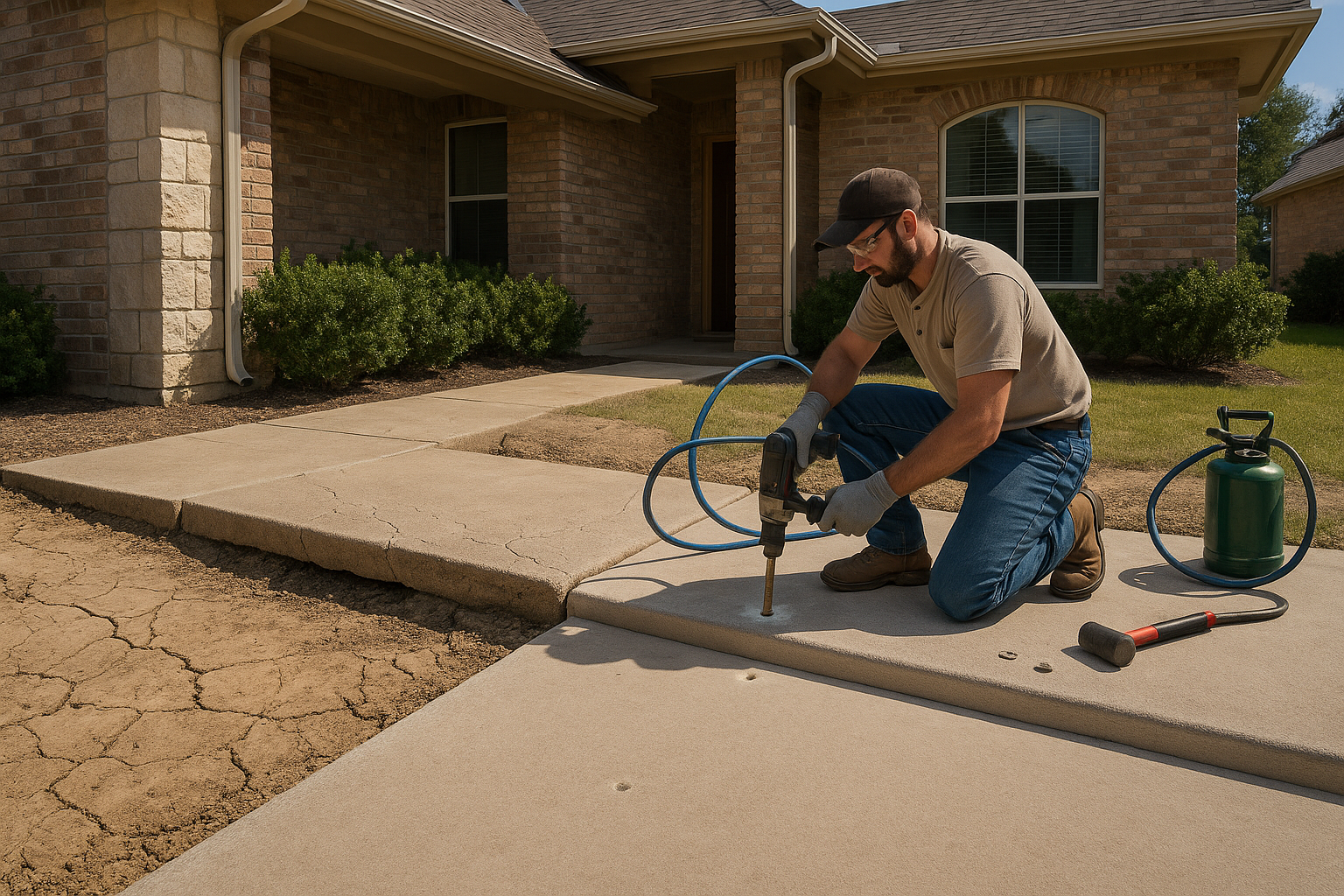
- Small access holes are drilled: These are much smaller than what you would see with older mudjacking methods.
- Foam is injected beneath the slab: The material expands, fills voids, and creates lift.
- The slab is raised carefully: We monitor the lift as it happens so the slab comes up evenly.
- Holes are patched and the site is cleaned up: No major excavation, no tear-out, and minimal disruption.
The reason foam leveling works so well in Texas is that it is lightweight, strong, and precise. Traditional replacement adds time and labor. Older mudjacking materials can add more weight to already unstable soils. Polyurethane foam gives us better control and does not overload the subgrade the same way heavier fill materials can.
Some of the biggest benefits include:
- Fast turnaround: Many jobs are completed in one day.
- Minimal mess: Small drill holes and no major demolition.
- Accurate lifting: Good for trip hazards, drainage correction, and slab stabilization.
- Lower overall cost: Often significantly less than replacement.
- Long-term support: Fills empty space below the slab where settlement started.
That said, foam leveling is not magic. If drainage problems are left alone, if water keeps getting under the slab, or if open joints stay unsealed, the same conditions can come back. That is why a proper repair plan in Texas should include looking at runoff, grading, irrigation, and joint sealing. In a place where heat and moisture swings are this extreme, prevention matters just as much as the lift itself.
How to Know When to Call for a Free Slab Repair Quote
A lot of slab issues start small. Homeowners notice a little crack, a slight lip between panels, or water pooling where it did not used to. Then one summer later, the problem is worse. If you spot any of the signs below, it is worth getting a professional opinion before the slab settles further.
- One edge of the slab is visibly lower
- Water is draining toward the house instead of away from it
- There is a trip hazard between concrete panels
- Cracks are widening after weather changes
- Gaps are opening at joints or where the slab meets the structure
- You can tell the slab sounds hollow in spots
In Texas, timing matters. Calling before the slab drops another inch can save money and keep the repair simple. Once settlement gets severe, replacement becomes more likely, and that is where costs climb fast. A professional evaluation can tell you whether foam leveling will work, whether there are drainage issues that need to be corrected, and whether your joints should be resealed after the repair.
If your slab is sinking in Austin, Round Rock, Georgetown, or anywhere nearby, the best move is to get it looked at now instead of waiting through another drought-and-rain cycle. At Hill Country Slabs, we provide honest recommendations based on what the concrete is actually doing in Texas conditions.
Need help with a settled driveway, patio, sidewalk, or porch? Learn more about our Concrete Slab Repair service, or contact us today for a free quote. You can also call (737) 287-4308 and we will take a look at your slab and tell you whether repair or replacement makes the most sense.