In Texas, sunken concrete is not a rare problem. We see it every week on driveways, sidewalks, patios, pool decks, and garage floors from Austin to Leander and all across Central Texas. Between long dry spells, heavy rain, shifting clay soils, and day after day of heat, slabs move. The good news is you usually do not have to tear them out and start over.
Concrete raising in Texas is one of the fastest and most cost-effective ways to fix settled concrete. Instead of replacing a slab, we lift it back toward grade by injecting material beneath it. For many homeowners, that means less mess, less downtime, and a much lower bill than full replacement. In a lot of cases, foam lifting can cost 50% to 70% less than replacement, depending on access, slab condition, and how much settlement has occurred.
If you have trip hazards, drainage problems, or a driveway slab that has dropped near the garage, concrete raising may be the right fix. It is especially useful when the slab itself is still in decent shape and the real issue is what happened underneath it.
What Is Concrete Raising?
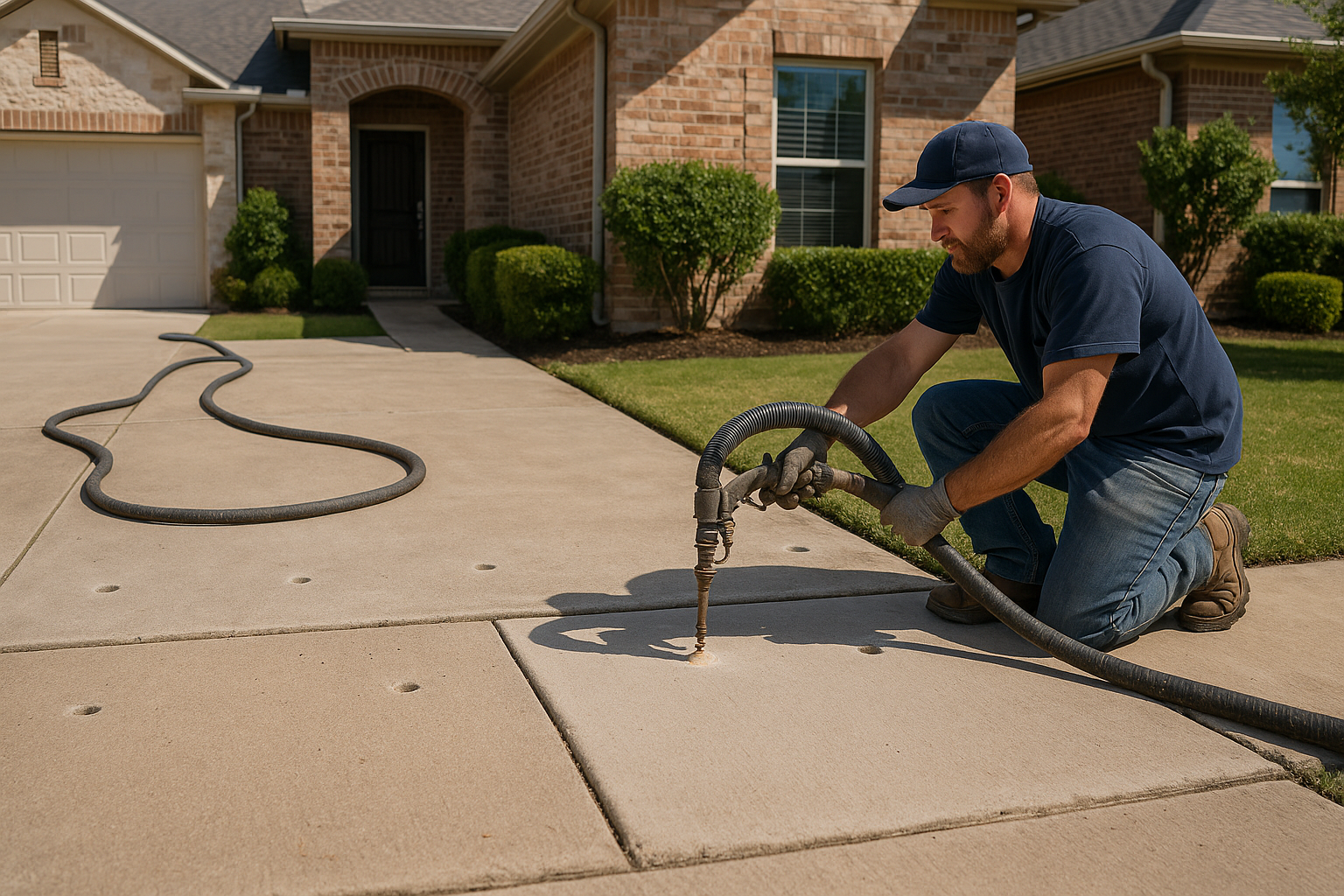
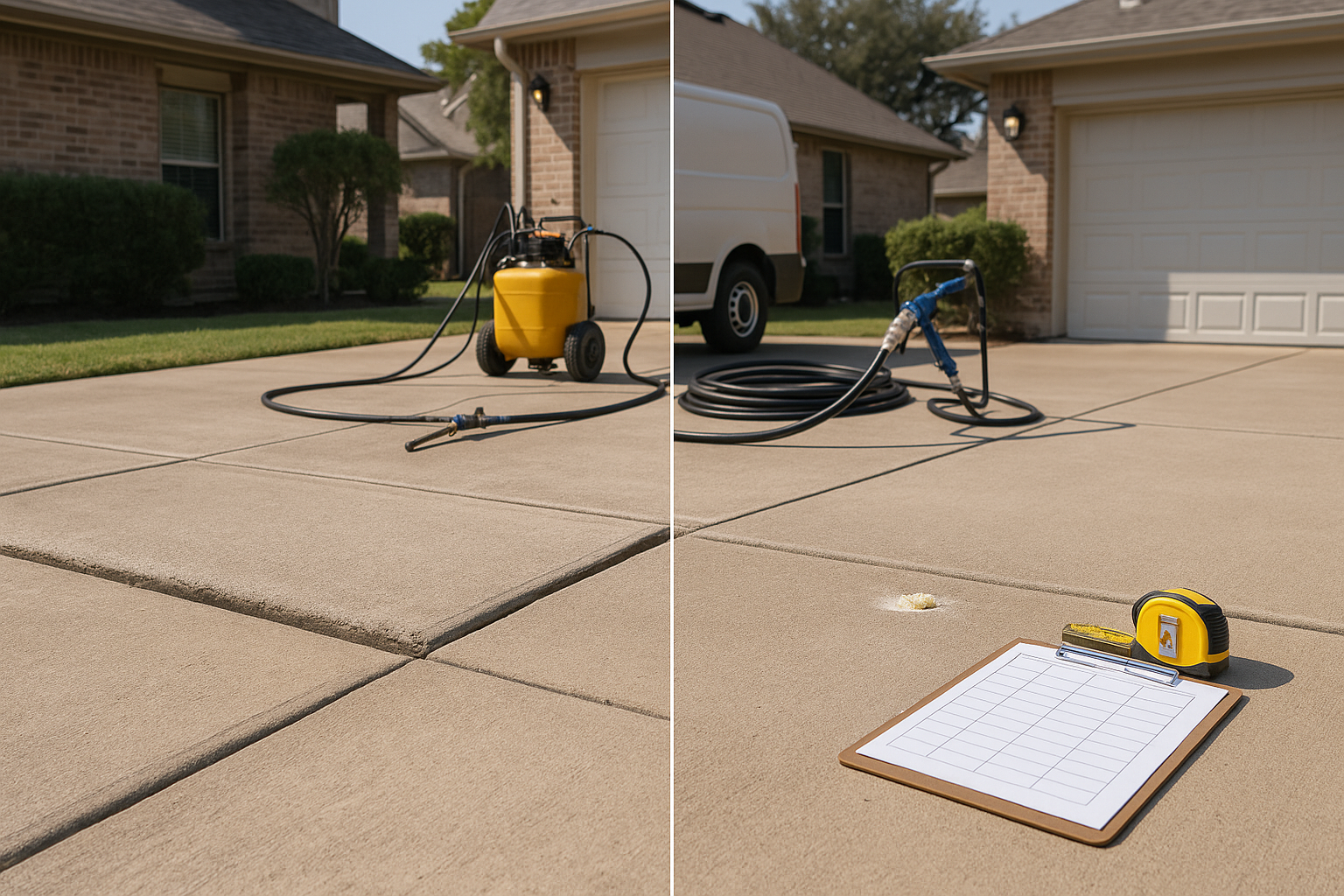
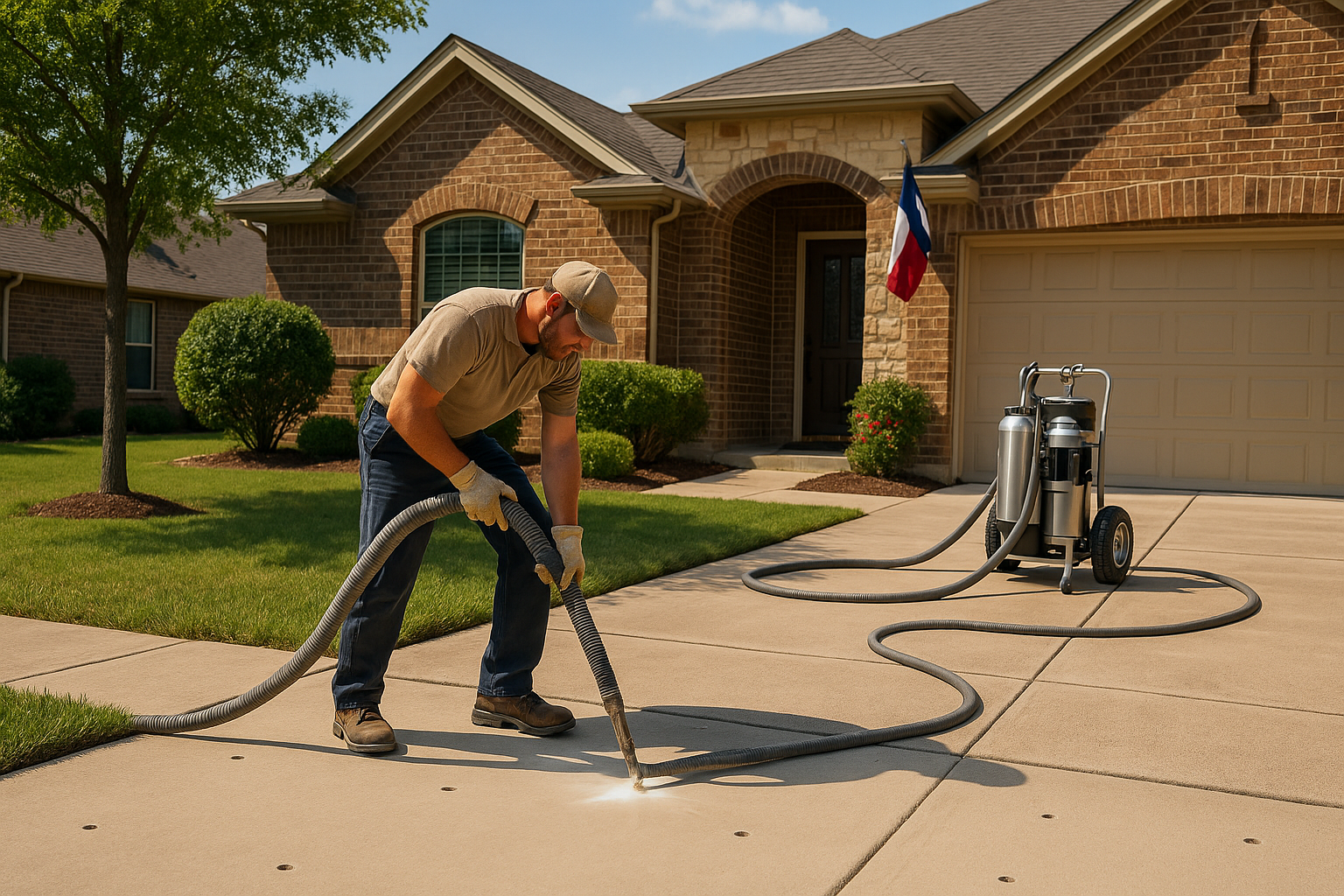
Concrete raising is the process of lifting settled concrete by filling voids below the slab. In Texas, the most common modern method is polyurethane foam injection. We drill small holes in the slab, inject expanding foam under pressure, and bring the concrete back up in a controlled way. Once the slab is aligned, the holes are patched and the area is cleaned up.
This method works well because the foam is lightweight, strong, and precise. It can fill empty pockets caused by erosion, poor compaction, or soil movement without overloading already unstable ground. For homeowners dealing with uneven flatwork, Concrete Lifting in Texas is often the fastest path to a usable surface again.
Texas soils are a big part of the story. In this region, expansive clay is the main culprit. Clay-heavy soils common around Austin, Round Rock, Georgetown, Cedar Park, and Leander swell when wet and shrink when dry. That constant expansion and contraction puts stress on slabs and creates movement over time. In other parts of the state, sandy or silty soils can wash out below concrete after storms, leaving unsupported sections that crack and settle.
Weather adds to the problem. A Texas summer can bake moisture out of the ground for weeks. Then one hard storm dumps water along the slab edge and changes soil conditions overnight. That cycle is rough on driveways and walkways. If drainage is poor or gutters dump water next to the slab, settlement usually gets worse faster.
Signs You Need Concrete Raising in Texas
Most homeowners notice the problem before they know the name for the solution. If you see any of these issues, it is worth having the slab evaluated:
- One section of driveway or sidewalk sits lower than the next
- Trip hazards at panel joints
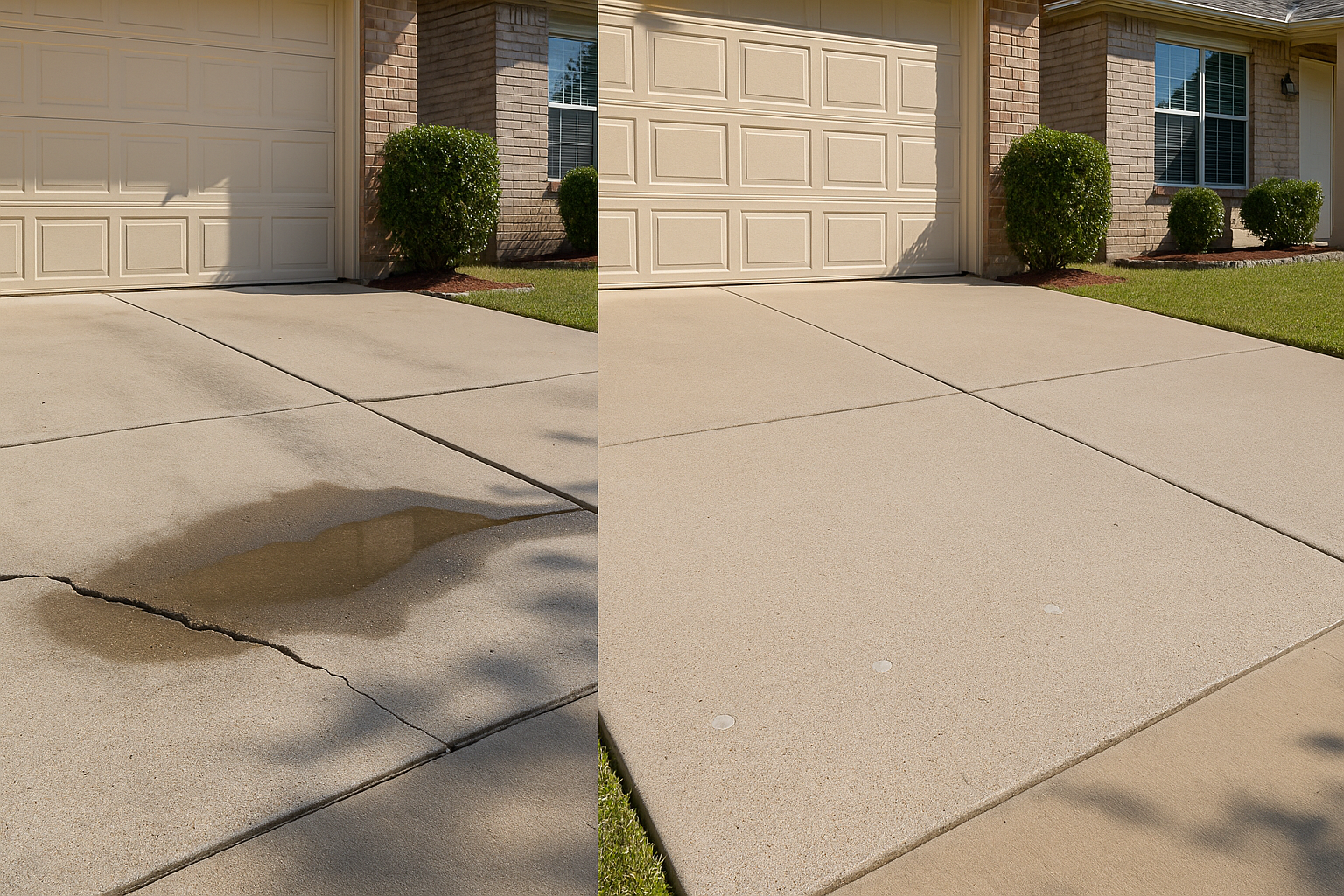
- Standing water near the house after rain
- Patio slabs pulling away from the home
- Garage floor or approach slab settling near the door
- Pool deck slabs dropping and creating uneven edges
- Cracks that seem tied to movement, not just surface shrinkage
Drainage is a major warning sign in Texas. When a slab settles, it can start sending water the wrong direction. Instead of draining away, water may run back toward the foundation. That is where a small flatwork problem can turn into a bigger structural issue. If you already have signs of movement around the home, it is smart to pair slab lifting with an inspection for Concrete Slab Repair in Texas.
Joint condition matters too. Expansion joints and control joints help concrete move and drain properly. When those joints fail or open up, water gets below the slab and softens the subgrade. That is one reason we often tell customers to look at joint maintenance along with raising work. You can learn more at /expansionjoints and sealmyjoints.com.
Concrete Raising vs Replacement
Replacement has its place. If a slab is badly shattered, heaved beyond repair, or built on a base that has completely failed, removal and repour may be the right call. But replacement is not automatically the best answer just because concrete is uneven.
Here is the practical difference:
- Concrete raising keeps the existing slab and lifts it.
- Replacement tears out the slab, hauls off debris, rebuilds the base, forms new concrete, pours it, and waits for cure time.
For a homeowner, that affects budget, schedule, and disruption. A raising project can often be completed in hours, and many slabs are ready for foot traffic the same day. With replacement, you are paying for demolition, disposal, new concrete, labor, and curing time. In Texas, a replaced driveway section can leave you dealing with access issues for days, and color matching old and new concrete is almost never perfect.
Cost is usually the deciding factor. While every job is different, foam concrete raising is often priced well below replacement. Homeowners are commonly looking at hundreds to a few thousand dollars for lifting, while replacement of the same area can climb much higher once demolition and repour are included. On many residential jobs, lifting can save 40% to 70% compared to replacement.
There is also less mess. No jackhammers, no dumpsters full of broken concrete, no major tear-up of landscaping around the slab. If the slab is structurally sound enough to lift, raising is usually the cleaner option.
Why Homeowners Choose Foam Concrete Raising
Foam lifting has become a go-to repair because it solves the actual support problem under the slab while keeping disruption low. That matters in Texas, where so many concrete problems are tied to voids, washout, and moisture swings in the soil.
It is fast
Most residential foam jobs move quickly. We drill small injection holes, lift the slab in controlled stages, and patch the openings. There is no waiting on a truck, no demo crew, and no week-long project stretched across your driveway.
It is precise
Polyurethane foam gives us control during the lift. That precision is important around garage doors, sidewalks leading to entryways, pool coping, and adjacent slabs where elevation matters. We can make fine adjustments instead of guessing.
It is lighter than older fill materials
Traditional mudjacking uses a heavier slurry. Foam is much lighter, which is a real advantage when the subgrade is already weak or moisture-sensitive. On expansive Texas clay, less added weight is generally a good thing.
It helps limit further washout
By filling voids and restoring support, foam can reduce movement and help address the hollow areas that let slabs drop. That said, lifting is only part of the long-term fix if drainage is poor. Gutters, grading, and joint sealing still matter.
It avoids unnecessary replacement
A lot of Texas homeowners are relieved to find out their slab can be lifted instead of replaced. If the concrete surface is still in fair condition, there is no reason to pay for demolition just because one side settled.
That is especially true in neighborhoods with active soil movement. Around Central Texas, homes are constantly dealing with moisture swings. Raising the slab, sealing joints, and managing runoff often make a much smarter package than ripping out good concrete and hoping the same soil does not move again.
The best results come from solving the whole problem, not just the symptom. If we lift a driveway but leave open joints and roof runoff pouring next to it, the slab can settle again. If we restore support and improve water control, the repair holds up much better.
For property owners in places like Austin, Leander, Cedar Park, and Round Rock, concrete raising is usually about safety, drainage, and protecting the rest of the property. A lifted sidewalk removes a trip hazard. A corrected driveway slope can send water away from the house. A stabilized patio makes the outdoor space usable again without tearing up the yard.
If you are looking at uneven concrete and wondering whether it can be saved, the answer is often yes. The slab does not have to be perfect to be a good candidate, but it does need to be evaluated by somebody who understands Texas soils and slab movement. What works in a mild climate with stable soil is not always the right approach here.
At Hill Country Slabs, we focus on practical repair options that make sense for Texas homes. If your concrete has settled, we can help determine whether raising, slab repair, joint sealing, or a combination of those services is the best fit.
Need help with concrete raising in Texas? Contact Hill Country Slabs today at (737) 287-4308 or visit /contact to schedule an inspection.