In Texas, concrete does not stay put forever. Between long dry spells, sudden heavy rain, expansive clay, and day-after-day heat, slabs start moving. We see it on driveways, sidewalks, patios, pool decks, garage floors, and even sections around commercial buildings. If you have a slab that has dropped, tilted, or created a trip hazard, concrete lifting in Texas is usually the fastest way to get it back in shape without tearing everything out.
For a lot of property owners, the first thought is replacement. But in many cases, that is not the best first move. If the concrete is still structurally decent and not broken all to pieces, lifting the slab can restore grade, improve drainage, and make the surface safer for a whole lot less money and mess. That is why polyurethane foam leveling has become a go-to repair across Central Texas and beyond.
At Hill Country Slabs, we work on concrete that has moved because Texas soil moves. Around Austin, Round Rock, Georgetown, San Marcos, New Braunfels, Temple, Waco, and throughout the Hill Country, the combination of clay-rich soils and shifting moisture levels creates ideal conditions for settlement and voids under slabs. The good news is that many of these problems can be corrected without full replacement.
What Is Concrete Lifting in Texas?
Concrete lifting is a repair process that raises sunken concrete back toward its original position. Instead of demolishing and repouring the slab, we inject material beneath it to fill empty space and apply controlled lift. In Texas, the most common and most effective modern method is polyurethane foam injection.
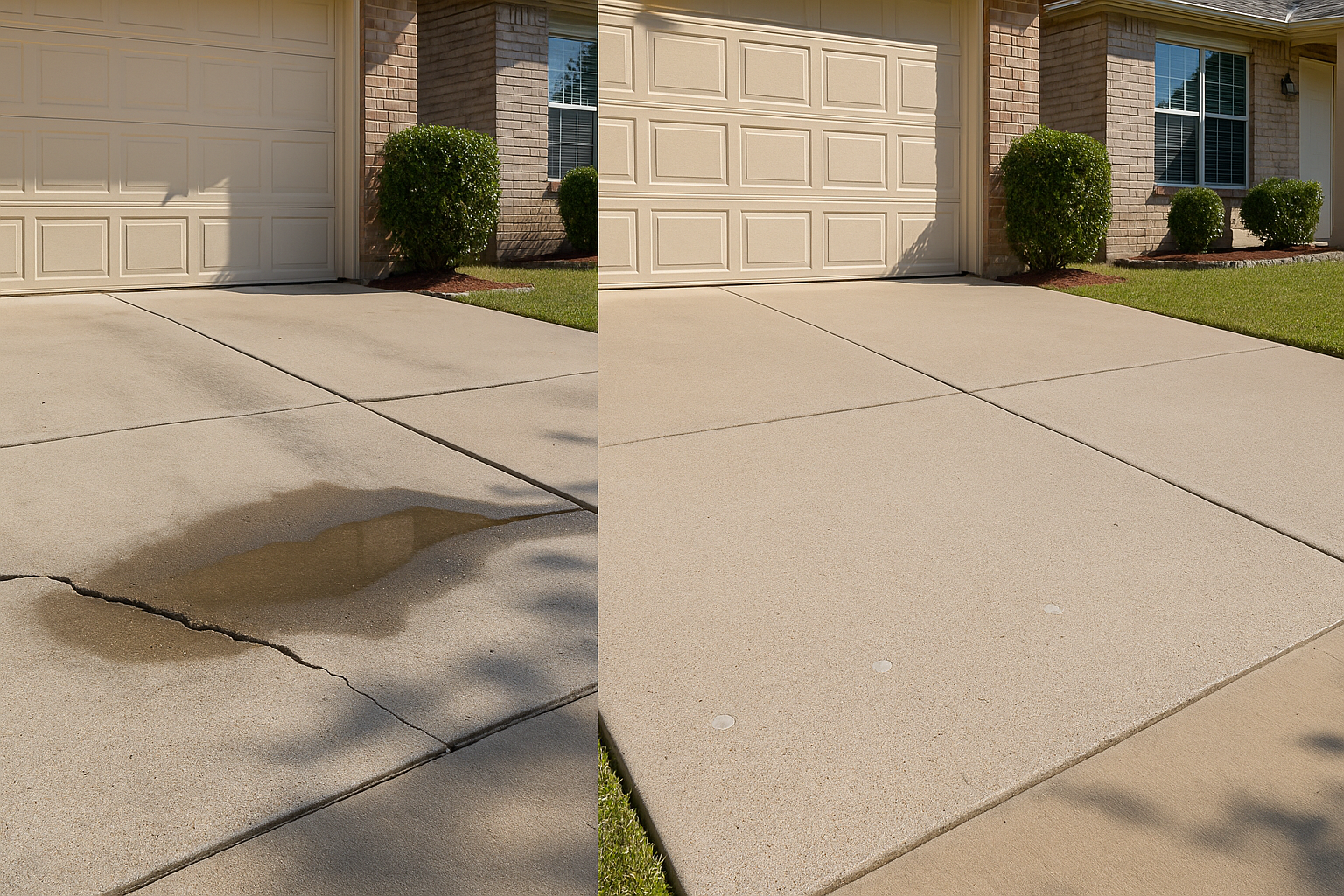
This approach works well because it addresses what is happening under the slab. When soil shrinks during drought, washes out during storms, or settles over time, the concrete loses support. That unsupported concrete starts to crack, dip, or separate. By filling the voids and lifting the slab, we restore support and improve the surface elevation.
Concrete lifting in Texas is commonly used for:
- Driveways with dropped panels near the garage or sidewalk
- Sidewalks with trip hazards
- Patios pulling away from the house
- Pool decks with uneven sections
- Garage floors with settled corners
- Approaches, walkways, and light commercial flatwork
In areas with blackland clay and other expansive soils, the problem is rarely just the concrete itself. The real issue is movement below the slab. That is why lifting can be a smart repair when the slab surface still has good integrity. If you want to see related repair options, take a look at our Concrete Slab Repair and Driveway Leveling services.
When to Lift Concrete Instead of Replace It
Not every slab should be lifted, but a lot more can be saved than most folks think. The key question is whether the concrete is still a good candidate structurally. If the slab is intact enough to lift and there is a clear settlement issue underneath, lifting is often the better call.
Concrete lifting is usually the right option when:
- The slab has settled but is not severely shattered
- You have one or more uneven sections causing drainage or safety problems
- You want to avoid demolition, disposal, and long cure times
- The drop is caused by voids, soil shrinkage, or washout
- You need a faster repair with minimal disruption
Replacement may make more sense when:
- The concrete is badly broken into many loose pieces
- The slab is too thin or poorly built to support lifting
- The area has major base failure that needs excavation
- You are already planning a full redesign or layout change
For many Texas homeowners, the cost difference matters. Full replacement involves demo, haul-off, base prep, forming, pouring, finishing, and curing. Concrete lifting skips most of that. In many cases, lifting costs 40% to 70% less than replacement, depending on slab size, access, and how much correction is needed. It is also common to complete the work in hours instead of days.
Another advantage is cleanup. A replacement project turns into a bigger construction job fast. Foam lifting uses small injection holes, specialized equipment, and controlled material application. That means less mess, less downtime, and no waiting a week to use the area again. Most surfaces can often be returned to service the same day.
We also tell property owners to look at the surrounding signs. If your driveway or sidewalk is sinking, check the joints and water flow. Failed joints let water down below the slab, and in Texas that repeated water intrusion can soften subgrade, wash out fines, and accelerate settlement. Good sealing matters. Learn more at /expansionjoints and visit sealmyjoints.com for additional joint sealing information.
Texas Conditions That Cause Concrete Settlement
Texas is tough on slabs. In Central Texas and across the I-35 corridor, we deal with highly active clay soils that swell when wet and shrink when dry. During summer, long heat stretches pull moisture out of the ground. Then a hard rain hits and water runs into cracks, edges, and weak spots. That cycle repeats over and over.
- Expansive clay soils: Common around Austin, Round Rock, Temple, and Waco
- Drought and rapid rehydration: Causes shrink-swell movement under slabs
- Heavy downpours: Can erode support and create voids
- Poor drainage: Sends roof runoff and surface water below flatwork
- Improper compaction: Leaves weak areas that settle over time
If you are in Austin or Round Rock, you have probably seen this firsthand. One panel drops, water starts ponding, and then the neighboring slab starts moving too. Catching it early usually means a cleaner and more affordable repair.
How Polyurethane Foam Lifting Works
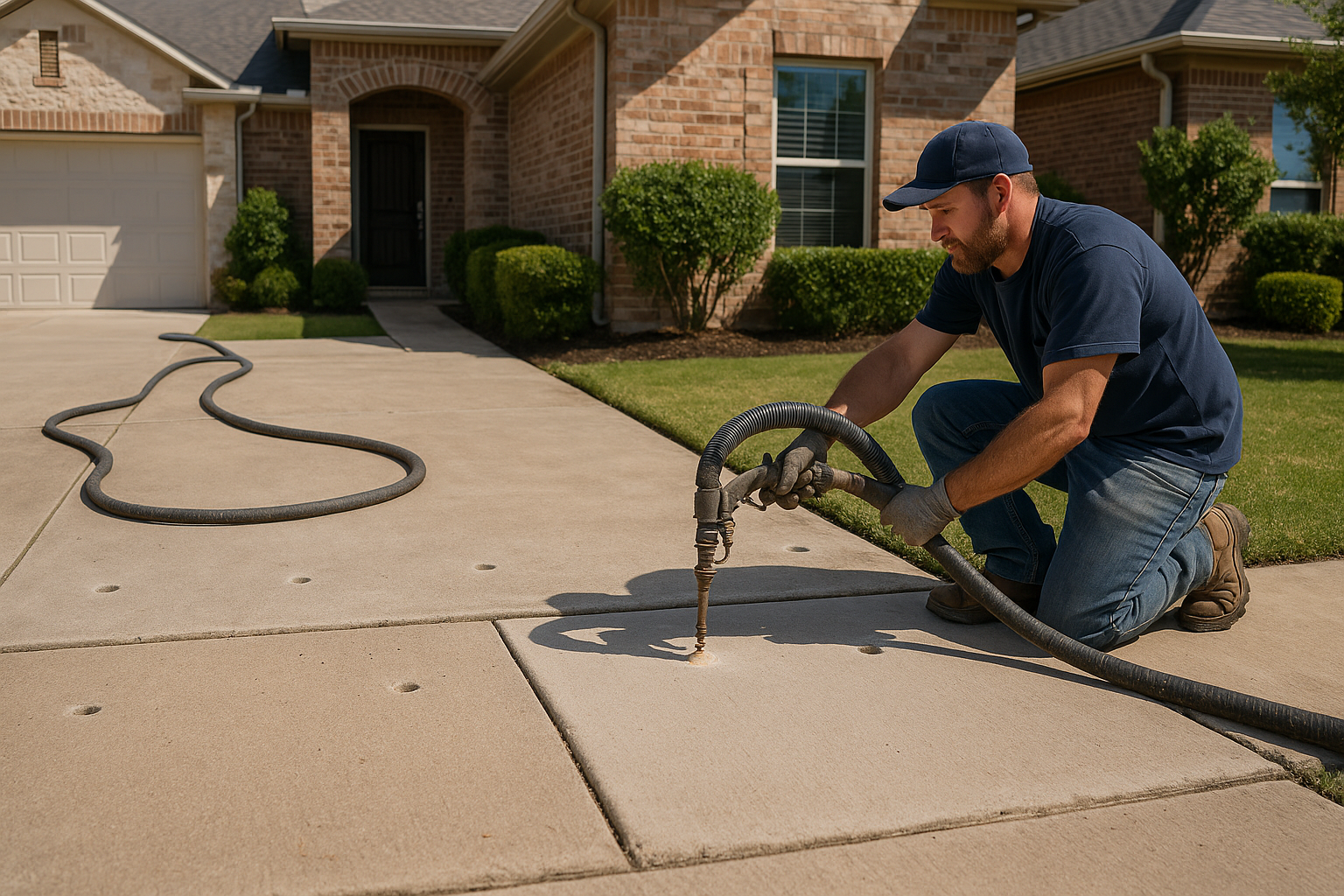
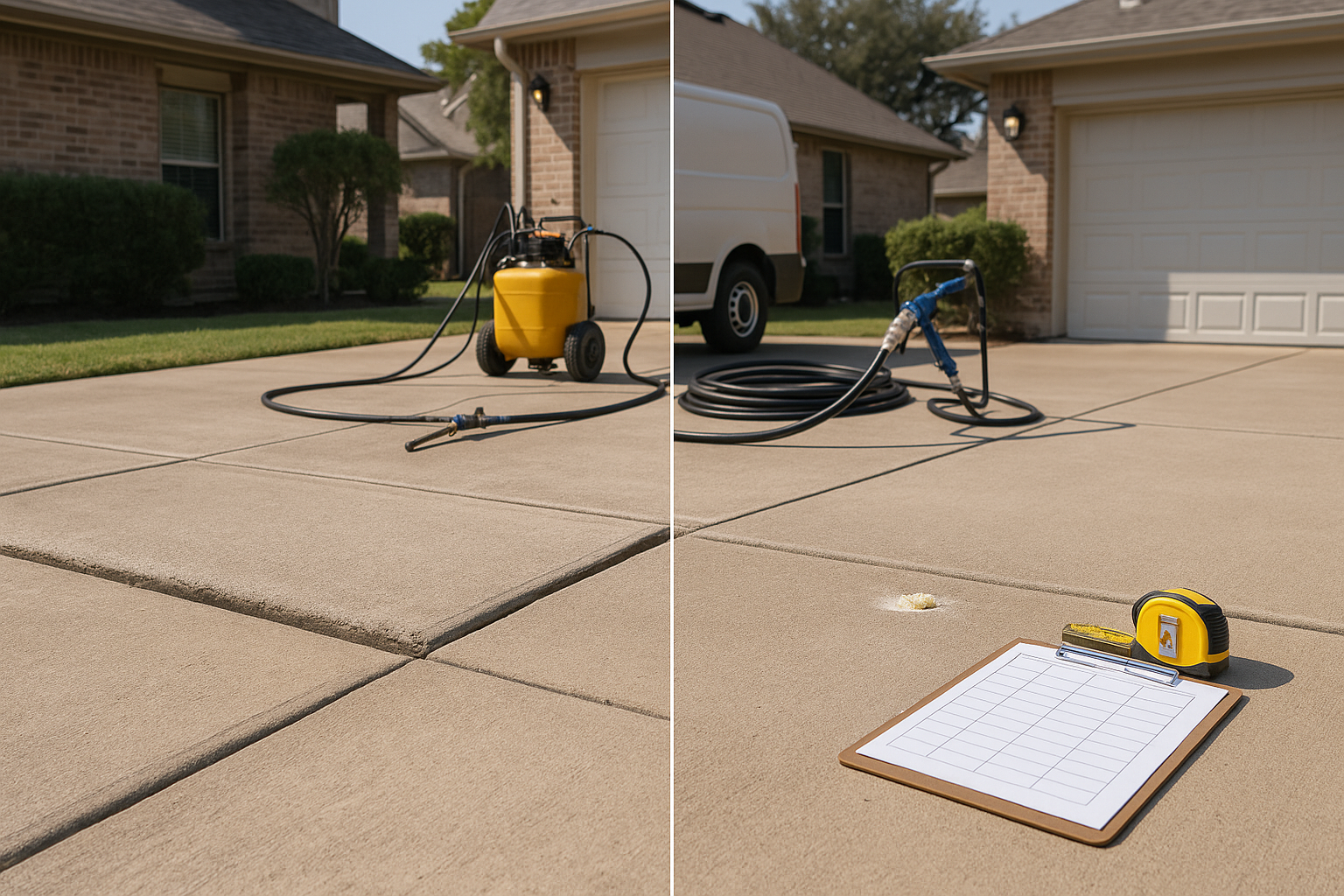
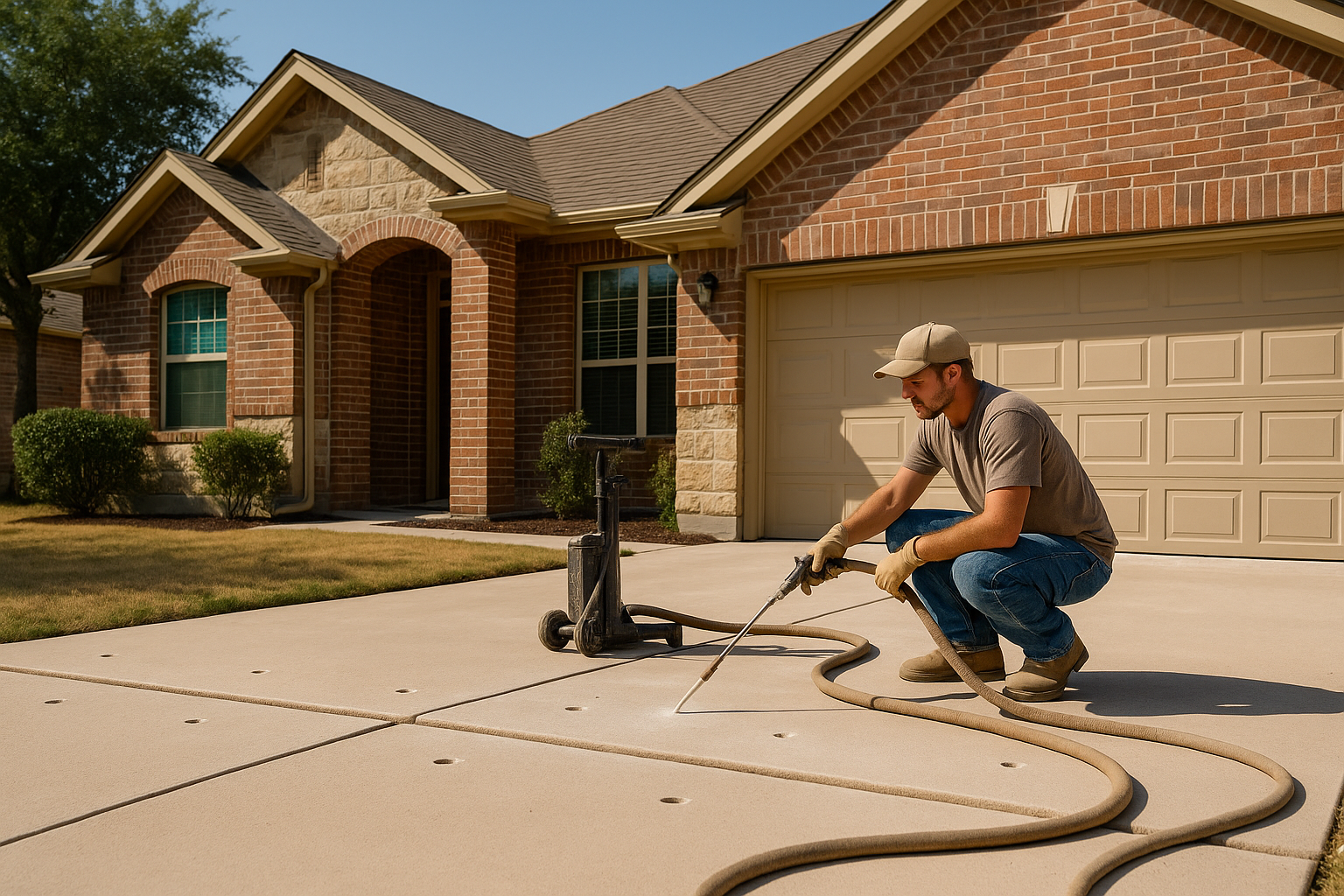
Polyurethane foam lifting is a controlled injection process designed to fill voids and raise settled concrete. We drill small holes through the slab, inject a two-part expanding foam beneath the surface, and monitor the lift as the material expands. The foam seeks out empty space, compacts loose soil, and applies upward pressure to bring the slab back up.
- We inspect the slab, measure elevation changes, and identify likely void areas.
- Small injection holes are drilled in strategic locations.
- Foam is injected beneath the slab in controlled stages.
- The slab is lifted carefully to improve alignment and support.
- The holes are patched, and the area is cleaned up.
This method works well in Texas because the foam is lightweight, water-resistant, and fast curing. Unlike older mudjacking methods that use heavier slurry, polyurethane adds very little weight to already stressed soils. That matters on sites where subgrade movement is part of the problem.
Property owners like foam lifting because it is practical:
- Fast turnaround: Many jobs are completed in a single visit
- Minimal disruption: Small holes instead of major demolition
- Lower cost: Often significantly less than replacement
- Cleaner process: No big tear-out and haul-off mess
- Same-day use in many cases: Great for busy homes and commercial properties
Now, to be straight about it, lifting is not magic. The goal is to improve elevation, support, and function. Some slabs lift nearly perfect. Others improve substantially but still show existing cracks or cosmetic wear. If the concrete already has cracking, we discuss that upfront. What matters most is getting rid of the trip hazard, restoring support, and stopping the problem from getting worse.
Just as important, lifting should be paired with water management. If downspouts dump next to the slab, if the grade runs back toward the house, or if open joints are pulling in water, the underlying cause needs attention too. Otherwise, you are fixing the symptom without dealing with what started it.
Get a Free Concrete Lifting Quote in Texas
If you have sunken concrete in Texas, do not assume replacement is your only option. A lot of driveways, sidewalks, patios, and slabs can be lifted safely and quickly for a fraction of the cost of tearing them out. When the slab is still worth saving, concrete lifting is often the smartest move.
At Hill Country Slabs, we look at the actual cause of movement, not just the surface problem. We consider the slab condition, the amount of settlement, drainage around the area, and the kind of Texas soil you are dealing with. Then we tell you straight whether lifting makes sense or whether replacement is the better long-term call.
If you are seeing uneven concrete in Austin, Round Rock, or surrounding Texas communities, now is the time to address it before the drop gets worse and water starts doing more damage. A quick evaluation today can save you from a larger repair later.
Contact Hill Country Slabs for a free quote on concrete lifting in Texas. Visit /contact or call (737) 287-4308 to get your slab, driveway, or walkway looked at by a crew that understands Texas concrete movement.