If you are comparing concrete leveling vs replacement in Texas, the right answer usually comes down to the condition of the slab, the soil under it, and how fast you need the problem handled. Around Central and South Texas, we see concrete move all the time from expansive clay, drought, heavy rain, bad compaction, and plain old age. In places like Austin and San Antonio, one season can dry the ground out hard and the next can soak it fast. That cycle is rough on driveways, sidewalks, patios, and foundation-adjacent flatwork.
Some slabs can be lifted and stabilized without tearing them out. Others are too far gone and need full replacement. The trick is knowing which situation you are dealing with before you spend money. At Hill Country Slabs, we like giving homeowners the straight answer. If leveling will solve it, we will say so. If replacement is the smarter long-term move, we will tell you that too.
What’s the Difference Between Concrete Leveling and Replacement?
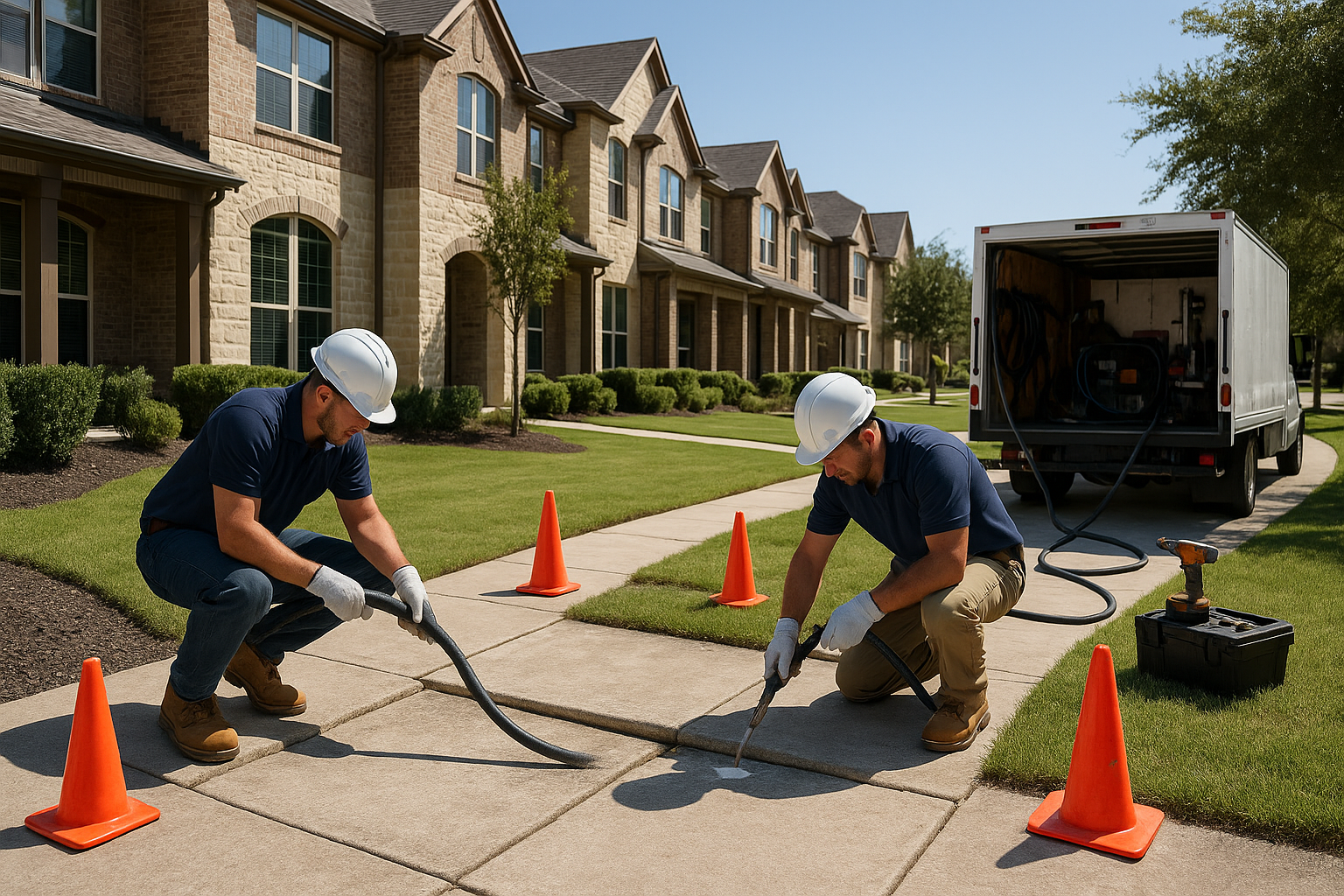
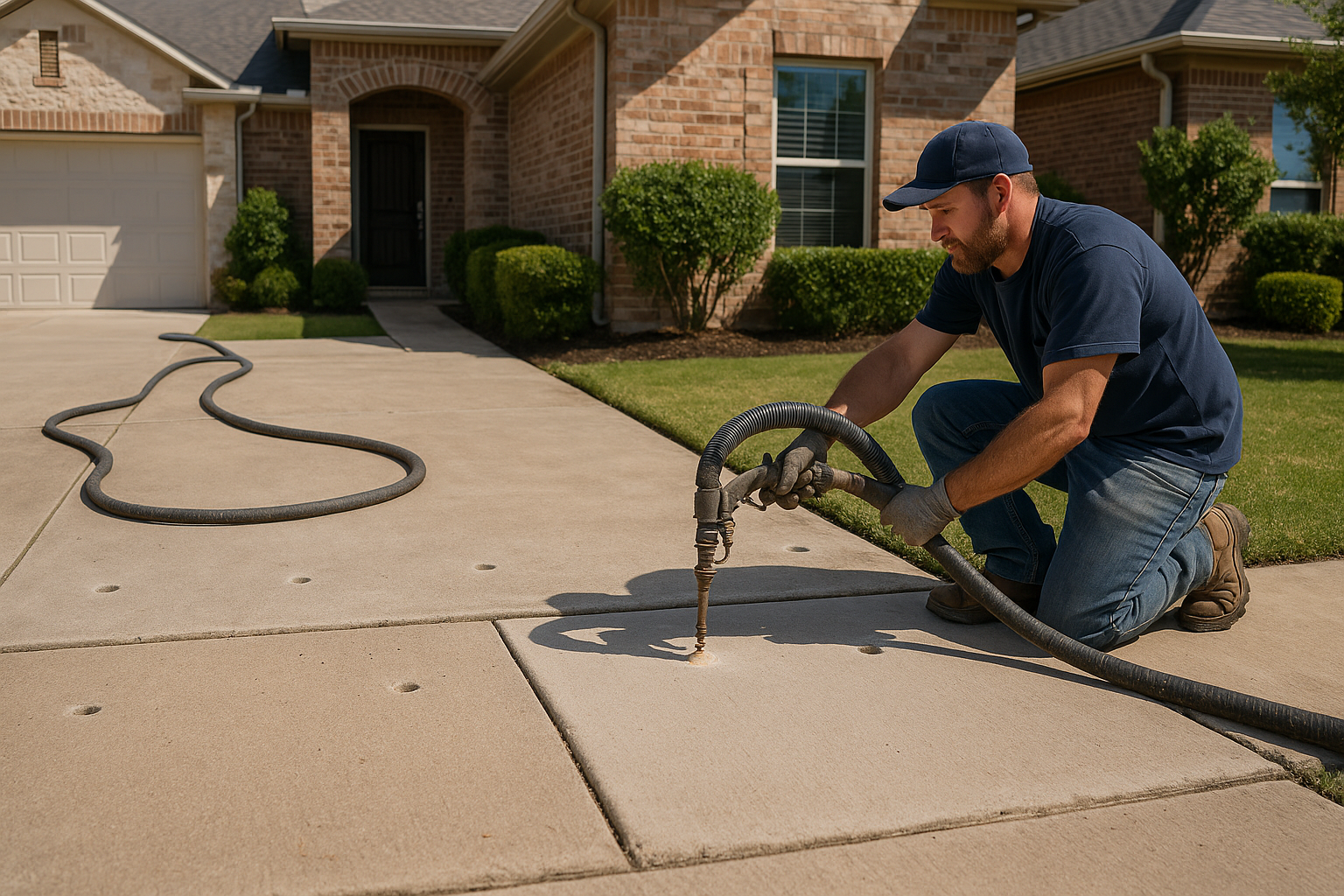
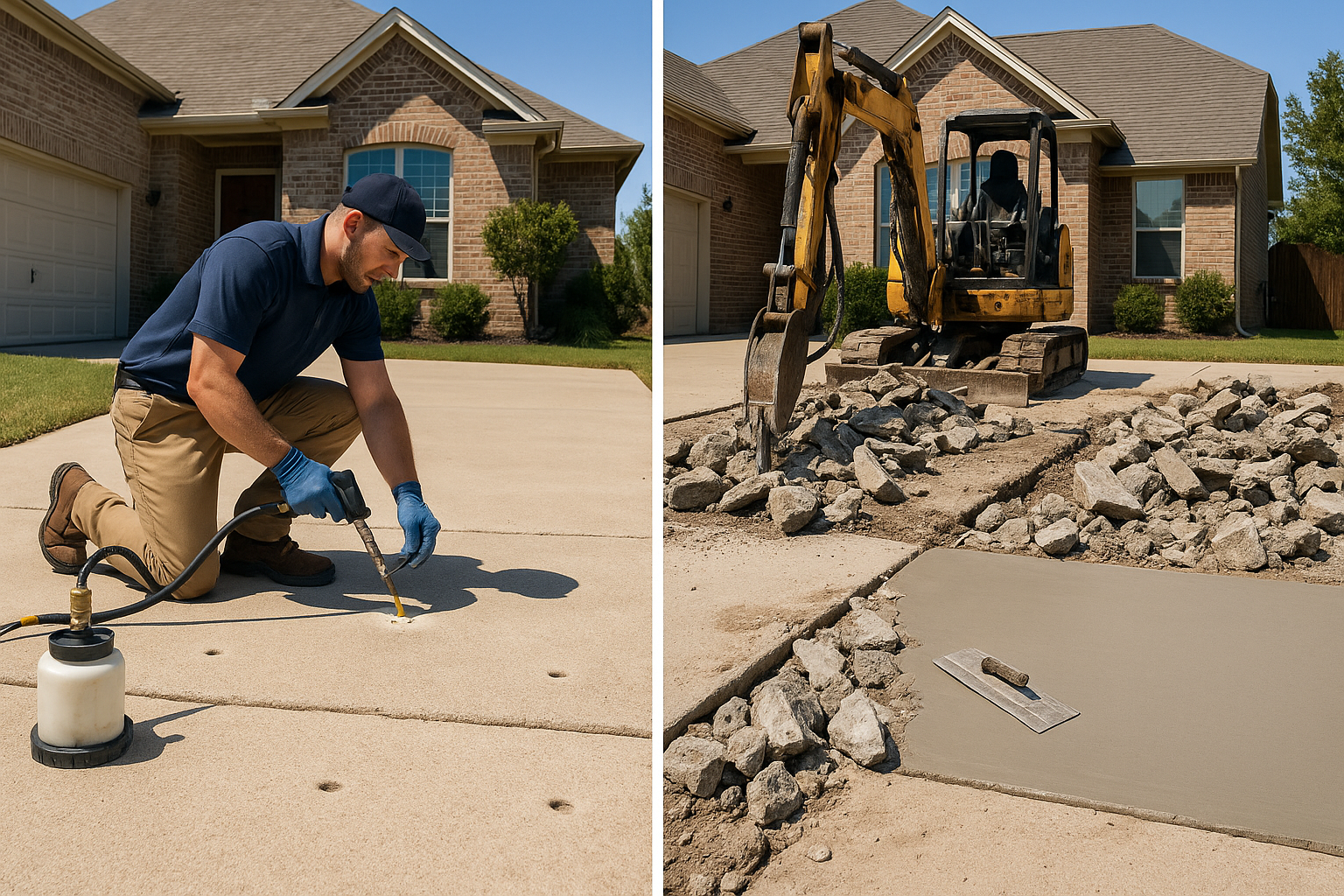
Concrete leveling is a repair process. The existing slab stays in place, and we raise settled sections back toward grade by addressing the voids or weak support underneath. In many cases, that means lifting the slab through small injection points instead of demolition. For homeowners dealing with trip hazards or drainage issues, leveling is often the faster and less disruptive fix.
Concrete replacement is exactly what it sounds like. The damaged slab gets demolished, removed, the base is reworked, and new concrete is poured and finished. Replacement is a bigger project, but sometimes it is the only option when the slab is badly broken, structurally compromised, or has failed past the point where lifting makes sense.
Here is the simple contractor version:
- Leveling keeps the slab and corrects settlement.
- Replacement removes the slab and starts over.
The reason this matters so much in Texas is our soil. Expansive clay soils across Central Texas shrink when dry and swell when wet. In rocky areas west of Austin, support conditions can change fast from one part of a property to another. In blackland prairie zones and mixed fill lots, differential movement is common. That is why one panel of concrete may sink while the one next to it stays put.
If the concrete itself is still in decent shape, leveling can be a smart way to restore function without the mess and cost of replacement. If the slab has major cracking, surface breakdown, or edge failure, replacement may be the better investment.
When Concrete Leveling Is the Better Option
Concrete leveling usually makes the most sense when the slab is sound but unsupported underneath. We see this a lot with sidewalks, driveways, pool decks, patios, and approach slabs where erosion or soil shrinkage left a void below the concrete. The slab settled, but it did not completely fall apart.
Leveling is often the better choice when:
- The concrete has sunk but is still largely intact.
- Cracks are minor and not spread across the entire panel.
- You want to eliminate trip hazards quickly.
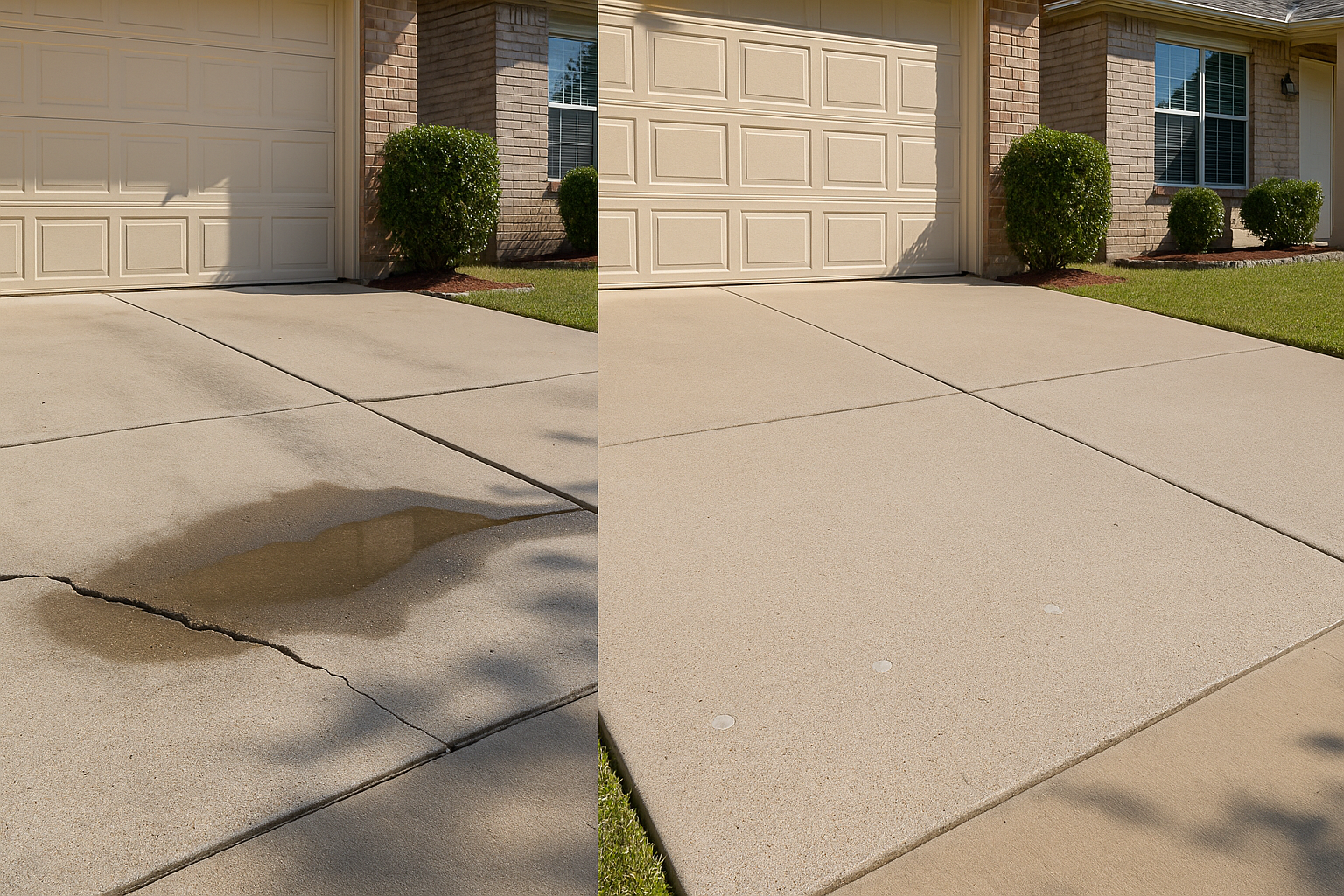
- Water is draining toward the house because one section dropped.
- You want less downtime and less disturbance to landscaping.
For many homeowners, the biggest advantage is cost. In a lot of Texas repair scenarios, leveling comes in at significantly less than full replacement. It can also be completed much faster. A leveling job may take hours instead of days, and the area is often ready for use much sooner than newly poured concrete.
That is why services like Driveway Leveling and Concrete Slab Repair are popular when the slab is still worth saving. You are correcting settlement without paying for demolition, haul-off, formwork, reinforcement, and cure time.
Another issue we talk about with homeowners is joints. A slab can be lifted successfully, but if open joints are left unsealed, water can keep washing soil out from below. That is one reason we often recommend paying attention to expansion joints and proper joint sealing. If you want more information on keeping water out around concrete joints, sealmyjoints.com is a useful resource.
In short, if your concrete is sunken but not destroyed, leveling is often the cleanest and most economical answer.
When Concrete Replacement Makes More Sense
There are times when lifting a slab is not the right call. We do not believe in trying to save concrete that is already too far gone. If the slab is badly deteriorated, replacement gives you a better long-term result.
Replacement usually makes more sense when:
- The slab is broken into multiple loose sections.
- Cracks are wide, offset, and running throughout the panel.
- The surface is spalling, flaking, or scaling badly.
- The slab was poured too thin or without a proper base.
- Tree roots, plumbing issues, or major washout have caused severe damage.
- The concrete has repeated movement and prior repairs have failed.
We also look at drainage, subgrade prep, and surrounding structures. If the original installation was poor, replacing the slab without correcting the base can just reset the clock on the same problem. In Texas, especially after long dry spells followed by heavy storms, the support soil can shift enough that a replacement project needs proper grading, compaction, and joint planning to perform well.
Another reason replacement may be necessary is appearance. If a front walkway or driveway has major patchwork, mismatched sections, and broad cracking, some homeowners decide a fresh pour is worth it for curb appeal alone. That is especially common in neighborhoods where resale value matters and the old concrete is visibly worn out.
The downside is the larger scope. Replacement is more invasive, more expensive, and slower. There is demolition noise, debris removal, prep work, new placement, finishing, and cure time. In hot Texas weather, timing and moisture management during placement matter too. A rushed pour in summer heat can create its own problems if the crew does not handle it right.
Cost, Timing, and What Texas Homeowners Should Expect
For most homeowners, the first question is price. While every job is different, concrete leveling is commonly the lower-cost option when the slab is structurally salvageable. Replacement costs more because you are paying for tear-out, disposal, material, labor, forming, and finishing.
As a general rule in Texas:
- Leveling is often the more budget-friendly option for settled but intact concrete.
- Replacement is usually the higher-cost option, but necessary when the slab itself has failed.
On timing, the difference can be just as important as cost. A leveling project may be completed in a single visit. Replacement can stretch across several days once you factor in demolition, prep, pouring, and curing before normal use.
Here is what Texas homeowners should realistically expect:
- Inspection comes first. You need to know whether the problem is settlement, structural failure, drainage, poor base prep, or a combination of those issues.
- Soil conditions matter. Expansive clay, fill soil, erosion, and drought movement all affect the recommendation.
- Drainage is part of the repair. If water keeps getting under the slab, the problem can come back whether you level or replace.
- Joint protection matters. Sealed joints help reduce water intrusion and soil loss.
- Not every low slab needs replacement. A lot of sunken concrete in Texas can be corrected without full tear-out.
We also tell customers to think about use. If the concrete is creating a safety hazard, catching water against the house, or making a garage or driveway hard to use, delaying the repair usually does not save money. Small settlement issues can turn into bigger base problems if water keeps moving through open cracks and joints.
The best decision is the one based on the actual condition of the slab, not just the sticker price. Sometimes spending less on leveling is the smart move. Other times, replacement avoids throwing money at concrete that is already at the end of its life.
If you are not sure which direction makes sense, Hill Country Slabs can take a look and give you a practical recommendation for your property in Austin, San Antonio, or surrounding Texas areas. If the slab can be saved, we will tell you. If it needs to be replaced, we will explain why. Contact us at /contact or call (737) 287-4308 to schedule an evaluation.