If you need concrete leveling in San Antonio, TX, the main thing to know is this: most sunken concrete can be lifted and stabilized without tearing it out and starting over. Around San Antonio, we see sinking driveways, uneven sidewalks, dropped patios, pool decks, and slab-on-grade surfaces all the time. In a lot of cases, foam lifting is the faster and more cost-effective fix.
At Hill Country Slabs, we work in Central Texas conditions every day. Between long dry stretches, hard rain, shifting subgrade, and expansive soils in pockets around Bexar County, concrete movement is common. The good news is that leveling can usually restore trip hazards and drainage issues with minimal downtime. If you are comparing repair options, this guide will help you understand what causes settlement, what signs to look for, and when leveling makes more sense than replacement.
Why Concrete Sinks in San Antonio
San Antonio has a mix of soil and site conditions that are tough on flatwork. Depending on the neighborhood, you may have clay-heavy soils, caliche, rocky limestone-based subgrades, or fill material that was never compacted as well as it should have been. In newer developments and older established areas alike, we often find concrete slabs that settled because the soil under one section lost support.
One of the biggest local factors is moisture swing. During drought, clay soils shrink and pull away. When heavy rain finally comes through, water can move into those voids and soften the base. That repeated expansion and contraction creates movement under driveways, sidewalks, and patios. It is common to see this across San Antonio and in nearby areas like Austin and Round Rock, where the same Texas weather pattern works against concrete year after year.
We also see settlement caused by poor drainage. If downspouts discharge next to the slab, if the yard slopes back toward the house, or if water runs through control joints and open cracks, the base can wash out over time. That is why joint condition matters. Keeping water out of slab gaps with proper maintenance and, when needed, sealing through expansion joints and resources like sealmyjoints.com can help reduce future erosion under the concrete.
Tree roots, plumbing leaks, and old trench lines are other common causes. We especially pay attention to sections near utility cuts, additions, and driveway tie-ins where the soil was disturbed at some point. Once a void forms under the slab, traffic loads make the problem worse. A driveway that starts with a small drop can turn into a bigger separation if it keeps getting driven on every day.
Signs You Need Concrete Leveling
Not every crack means a slab has to be replaced. A lot of times, the real issue is settlement. If the concrete is structurally decent but one section has dropped, leveling is usually worth a close look.
- One slab panel sits lower than the next, creating a lip in the driveway or sidewalk.
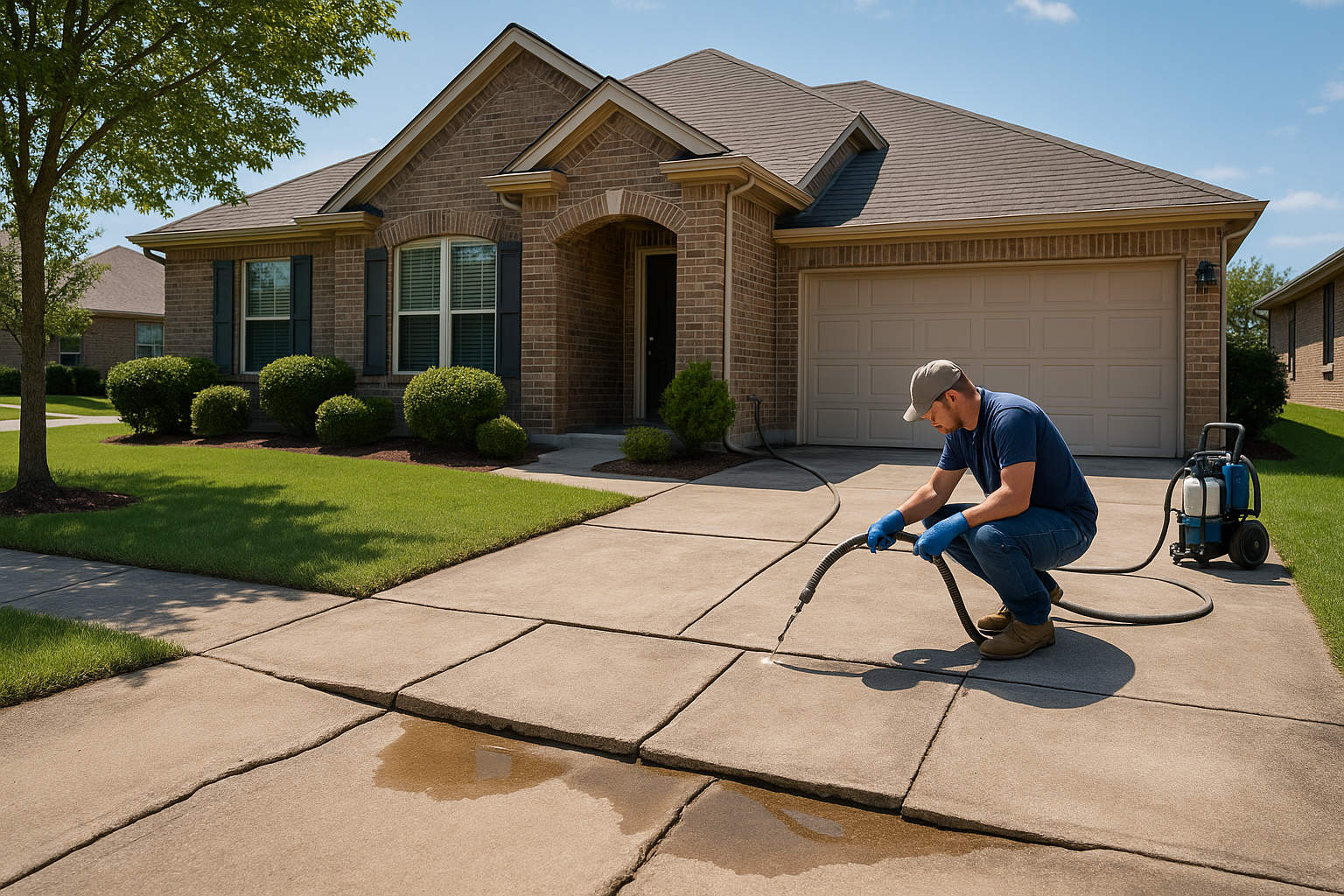
- Water ponds against the house, garage, or patio because the concrete no longer drains the right direction.
- Trip hazards show up at walkways, steps, and pool decks, especially where guests or kids walk every day.
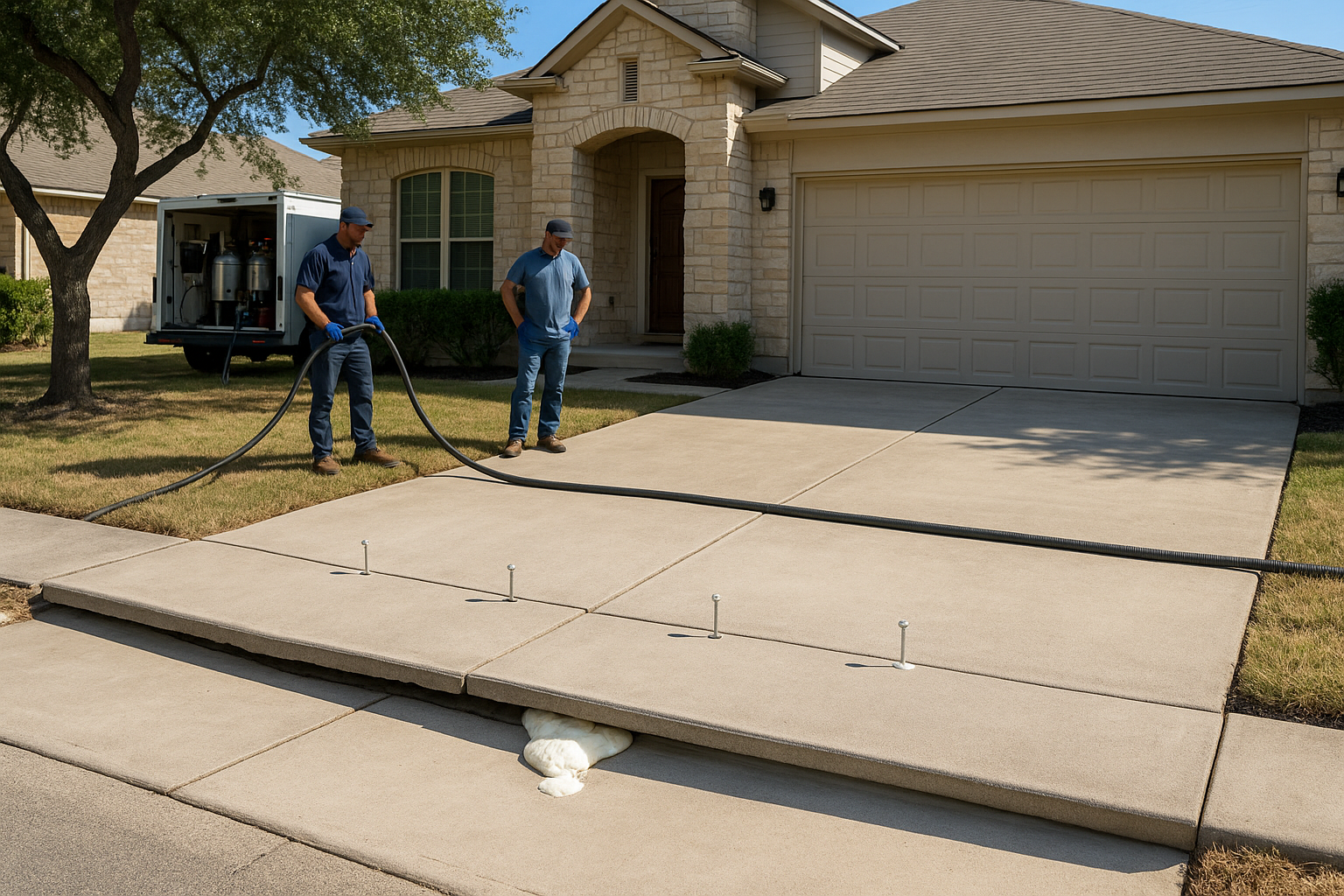
- Gaps form under the slab edge, showing loss of support below.
- Cracks continue to open at joints as one side settles.
- Garage approach slabs dip, causing a rough transition for vehicles.
In San Antonio, we commonly level residential flatwork like Driveway Leveling and Sidewalk Repair, but the same process can help on patios, porches, and other exterior slabs. The key question is whether the concrete can still be lifted safely and whether the soil issue can be addressed enough to keep the slab supported.
As a general rule, if the slab is only settled, not completely broken apart, leveling is often the better first option. Replacement may still be needed if the concrete is severely fractured, too thin, or deteriorated from age. But if the slab is in fair shape and just dropped because of voids or weak support, foam lifting can save a lot of time and money.
For many homeowners, cost is a big part of the decision. Full tear-out and replacement usually means demolition, haul-off, base work, forming, pouring, finishing, and cure time. That can push projects into the thousands to tens of thousands of dollars depending on size. By comparison, leveling is often a more targeted repair. While every job is different, foam lifting is commonly the lower-cost option when the existing slab is still worth saving.
How Foam Leveling Works
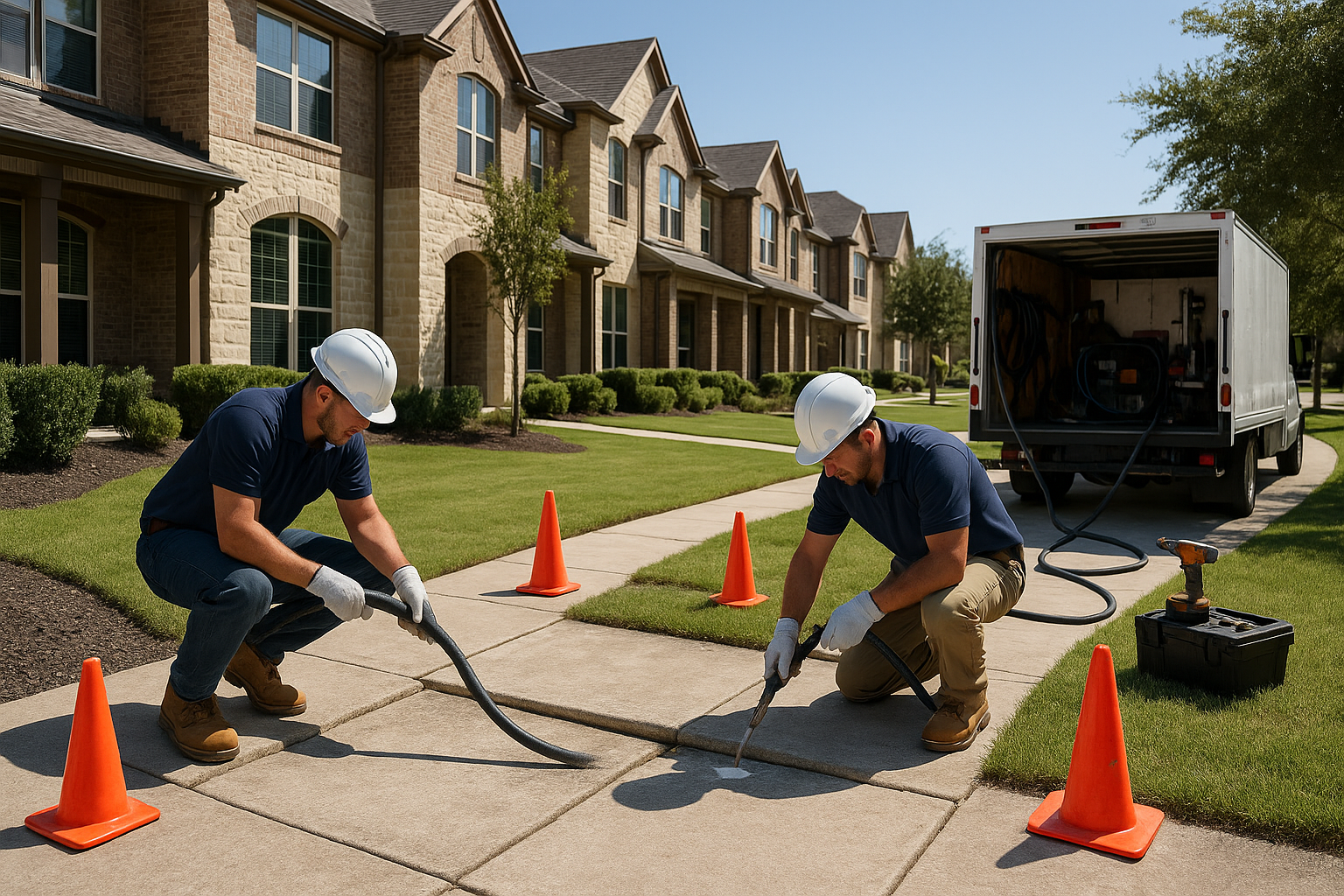
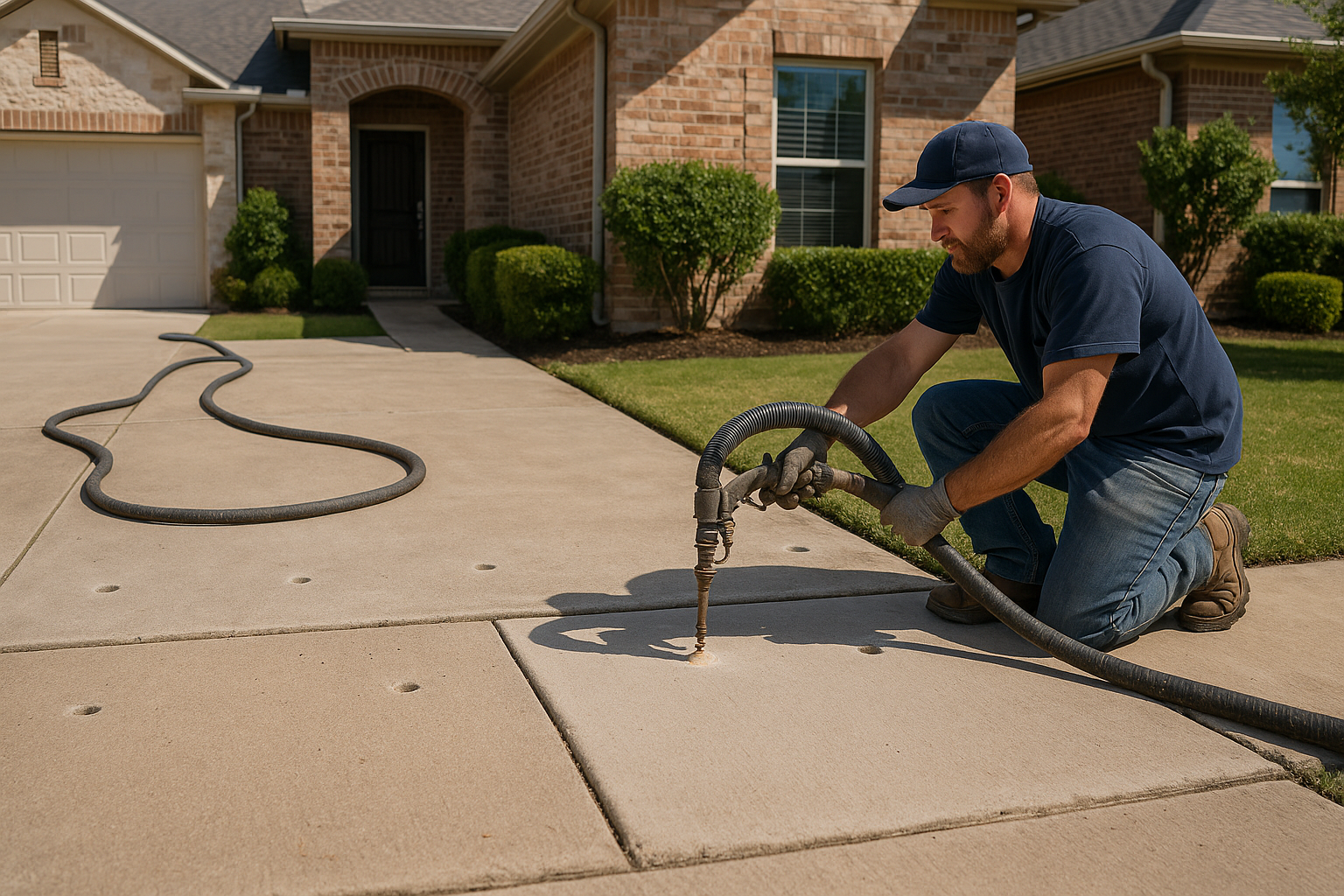
Foam leveling, also called polyurethane concrete lifting, works by injecting a high-density expanding foam beneath the slab through small drilled ports. The material fills voids, adds support, and gently raises the concrete back toward grade. When it is done right, the lift is controlled and precise.
- We inspect the slab, measure the settlement, and identify likely causes like erosion, drainage issues, or soil shrinkage.
- Small injection holes are drilled in the affected slab sections.
- Polyurethane foam is injected below the concrete to fill empty space and build bearing support.
- The slab is lifted gradually, checking elevation and alignment as we go.
- The holes are patched, and the area is cleaned up.
One reason homeowners like foam leveling is the speed. Most jobs can be completed much faster than replacement, and the slab is typically ready for use the same day or shortly after. There is no waiting on a new pour to cure. That matters when the slab is your main driveway, front walk, or a busy area around the house.
Foam is also lighter than older mudjacking materials, which helps when working over weaker soils. In parts of San Antonio where subgrade conditions vary from one lot to the next, keeping added weight down can be an advantage. The goal is not just to lift the slab, but to re-establish support underneath it.
That said, leveling is not magic. If water keeps getting under the slab, or if the surrounding grade keeps funneling runoff to the same spot, movement can return. That is why we talk with homeowners about prevention too. Good drainage, maintaining joints, and controlling water discharge are all part of protecting the repair. If the concrete has open joint gaps, getting them sealed can help reduce future washout and moisture infiltration.
Another question we hear a lot is whether lifting will make cracked concrete look brand new. The answer is no. Leveling corrects elevation and support problems. Existing cracks may still remain visible, though bringing the slab back into position can keep them from worsening. If your main problem is unevenness, trip hazards, or poor drainage, leveling is usually aimed at function first and appearance second.
When Leveling Makes Sense
- The slab is mostly intact and settlement is the main issue.
- You want to avoid replacement downtime and get the area back in service quickly.
- The concrete drop is causing drainage or safety problems.
- You want a repair that is often less expensive than replacement.
When Replacement May Be Better
- The slab is badly broken up with multiple failures.
- The concrete is too deteriorated or too thin to lift reliably.
- The base failure is severe enough that reconstruction is the better long-term solution.
Get a Free Concrete Leveling Quote in San Antonio
If you have a sinking driveway, uneven sidewalk, or dropped patio, do not wait until the gap gets bigger and the repair gets more expensive. In a lot of San Antonio cases, concrete leveling is the practical fix. It is faster than replacement, less disruptive, and often the best way to restore safety and drainage without starting from scratch.
At Hill Country Slabs, we look at the actual cause of movement, not just the surface symptom. We will tell you if foam lifting is a good fit, what kind of results to expect, and whether there are drainage or joint issues that should be handled at the same time. If your slab can be saved, leveling is often the smartest way to do it.
Need help with concrete leveling in San Antonio, TX? Contact Hill Country Slabs for a free quote at /contact or call (737) 287-4308 today.