If you’ve got a driveway, sidewalk, patio, or slab that’s dropped in Pflugerville, you’re not alone. We see it all over this part of Central Texas. One section settles, water starts pooling, somebody catches a toe on the edge, and before long you’re wondering if the whole thing needs to be torn out. Most of the time, it doesn’t.
For a lot of homeowners and property managers, concrete leveling in Pflugerville, TX is the faster and more cost-effective fix. With polyurethane foam injection, we can lift settled concrete, stabilize the soil below, and get the surface back closer to grade without the mess and downtime of replacement. Whether it’s a front walk in a neighborhood near Weiss Lane, a driveway off Kelly Lane, or a patio slab behind a home closer to SH 130, the problem usually comes down to the same thing: the soil under the concrete has moved.
At Hill Country Slabs, we work with the kind of slab movement that’s common across Pflugerville, Austin, Round Rock, and Georgetown. Our area gets long dry stretches, hard rain events, and highly reactive clay soils. That combination is tough on flatwork. If you need help with a driveway, take a look at Driveway Leveling. If the issue is a trip hazard along a walkway, our Sidewalk Repair service may be the right fit. For larger settled surfaces, we also handle Concrete Slab Repair.
Signs You Need Concrete Leveling in Pflugerville
The most obvious sign is one slab panel sitting lower than the one next to it. But there are a few other things we tell customers to watch for before the problem gets worse.
- Trip hazards of 1 inch or more at sidewalks, driveways, and entry paths
- Water pooling against the house, garage, or patio after rain
- Driveway sections that have settled near the garage apron or street
- Patio slabs tilting toward the foundation instead of away from it
- Void sounds or a hollow feel when you walk across the slab
- Expansion joints separating or opening wider than they should
In Pflugerville neighborhoods, it’s common to see one corner of a driveway panel sink first. Sometimes the soil washes out near downspouts. Other times, repeated shrink-swell movement in the clay slowly leaves a gap under the slab. Once there’s unsupported space under the concrete, traffic and moisture usually make the settlement worse.
If your concrete has started pulling away at the joints, it’s smart to address joint protection too. We recommend keeping joints sealed and maintained, especially where runoff is getting underneath the slab. You can learn more at /expansionjoints and see additional joint sealing information at sealmyjoints.com.
What Causes Concrete to Sink in Pflugerville, TX?
Pflugerville sits in a part of Texas where soils can be a real challenge. Around Central Texas, we regularly deal with clay-heavy soils that expand when wet and shrink when dry. That movement doesn’t just affect foundations. It also affects driveways, sidewalks, pool decks, patios, and other slab-on-grade concrete around the property.
Here are the main causes we see in Pflugerville and nearby cities like Austin, Round Rock, and Georgetown:
Expansive Clay Soil
When the clay takes on moisture, it swells. When it dries out in summer heat, it contracts. That repeated cycle leaves the soil uneven and can create air pockets beneath the slab. In a year with a dry summer followed by heavy storms, movement can happen fast.
Poor Drainage
If water from gutters, downspouts, irrigation, or yard grading concentrates in one area, it can soften the supporting soil or wash fines out from under the concrete. Once the base loses support, the slab starts to settle.
Soil Erosion and Washout
Fast runoff during Texas storm events can carry soil away from slab edges and joints. This is especially common along driveways, sidewalks next to landscaping beds, and patios where the grade funnels water toward one side.
Improper Compaction
Some slabs settle because the fill material under them was never compacted well in the first place. You may not see the problem for a few years, but once the material consolidates, the concrete drops.
Tree Roots and Organic Breakdown
In some older properties, roots can displace one area while decay of buried organic material causes settlement in another. That leaves the slab uneven and unsupported.
The key point is this: sunken concrete is usually a support problem under the slab, not a concrete-strength problem on top. If the slab is still in decent shape and not shattered beyond repair, leveling often makes more sense than replacement.
How Polyurethane Foam Leveling Works
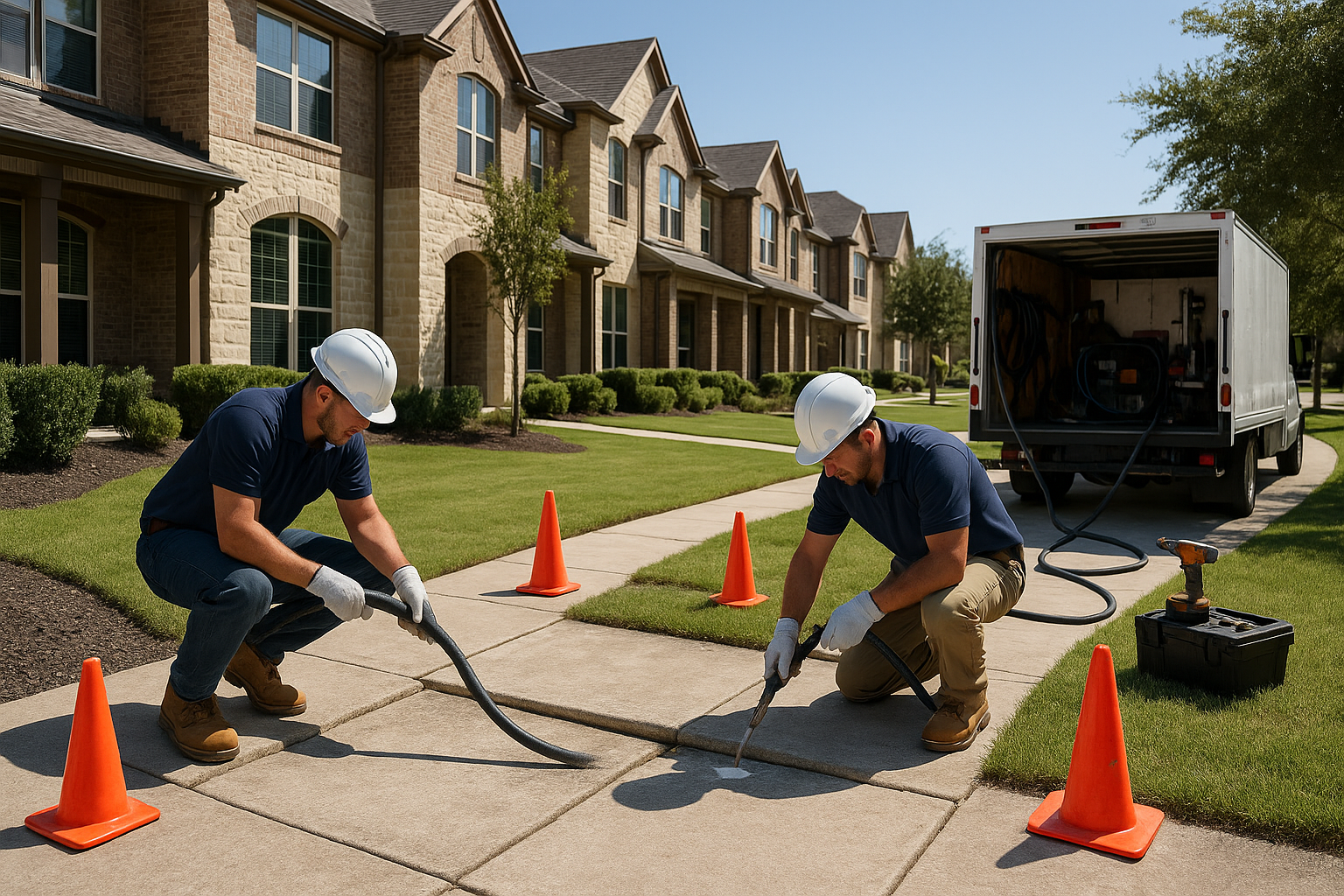
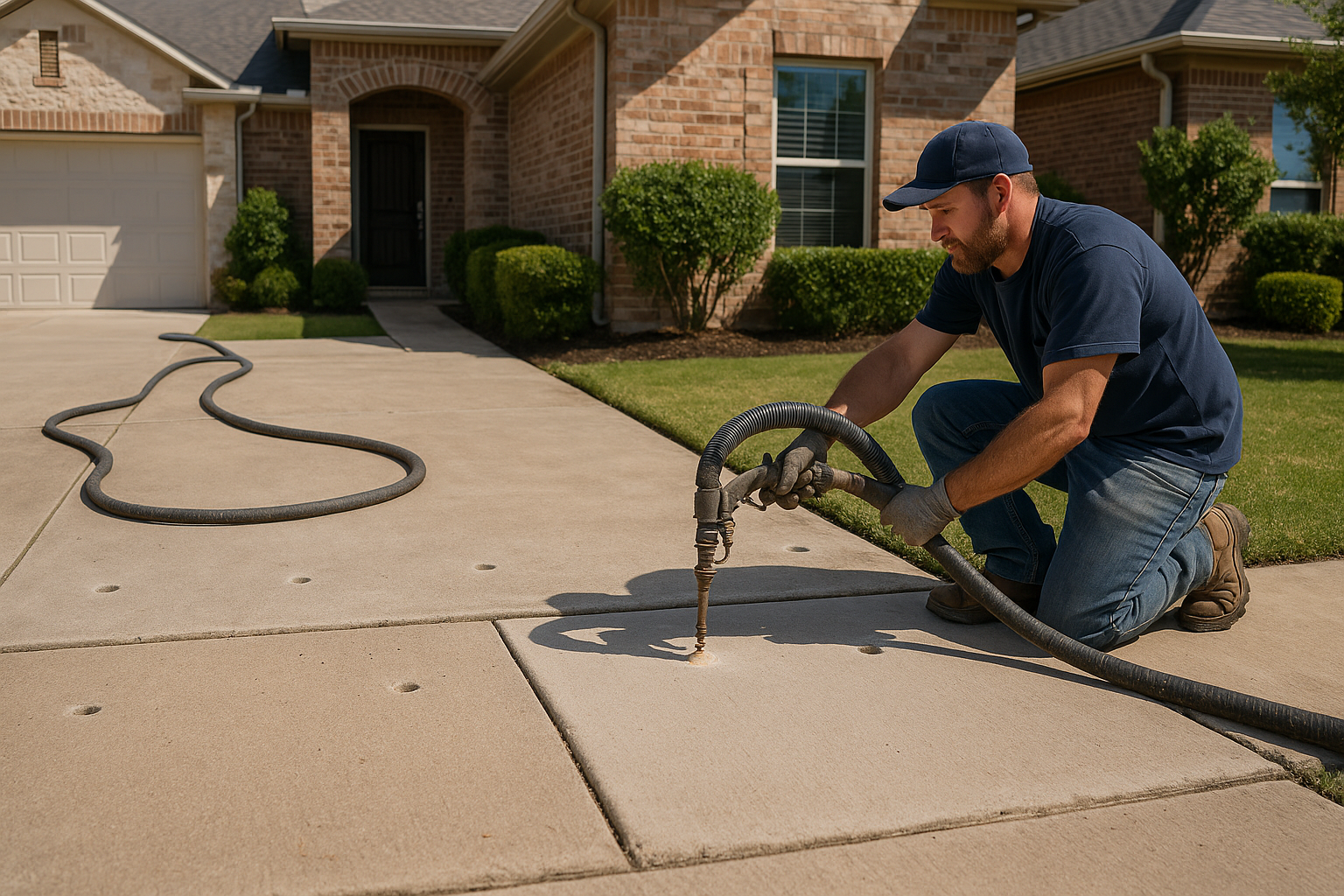
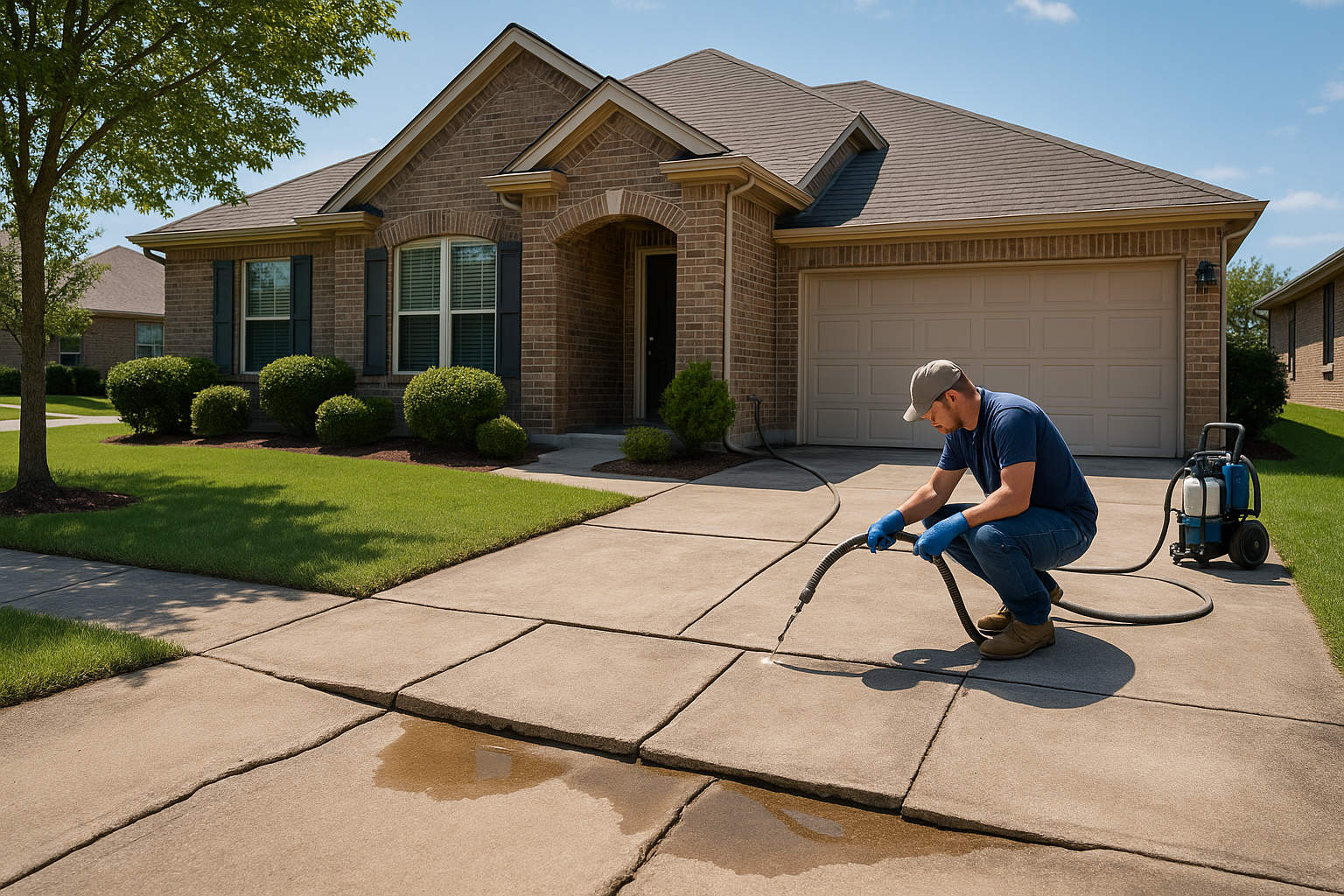
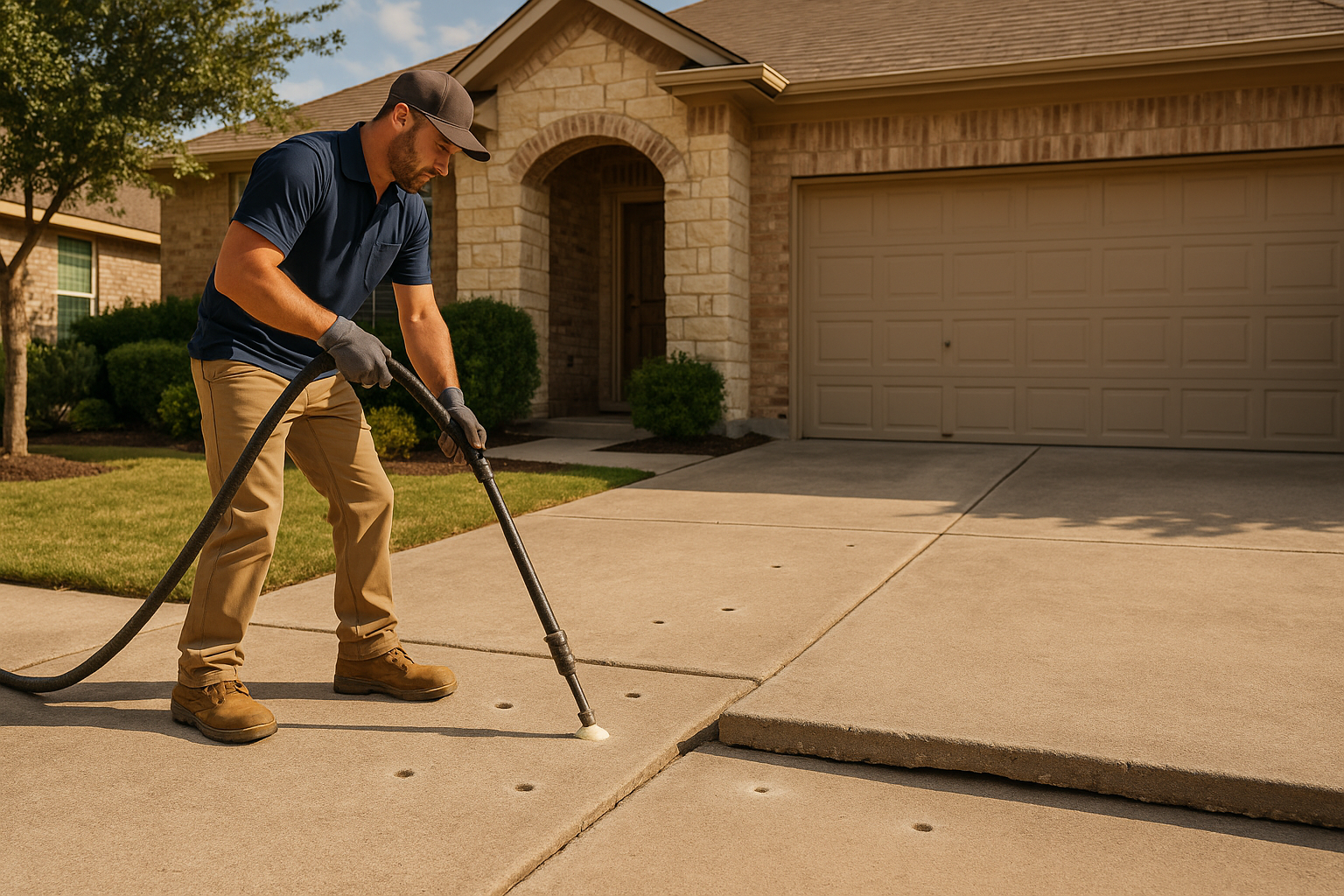
Polyurethane concrete leveling is a clean repair process designed to lift and support settled slabs. Instead of ripping out the concrete, we drill small injection holes, pump structural-grade foam beneath the slab, and raise the section in a controlled way.
- We inspect the slab, check the amount of settlement, and identify where support has been lost.
- We drill small holes through the concrete in strategic locations.
- We inject polyurethane foam under the slab.
- The foam expands, fills voids, and begins lifting the concrete.
- We make fine adjustments until the slab is as close as practical to the proper height and alignment.
- The holes are patched, and the area is ready for use much sooner than replacement.
This method works well because the foam is lightweight, water-resistant, and strong enough to support the slab after lift. It also cures quickly. In many cases, the repaired area can be walked on the same day and driven on shortly after, depending on the application.
Compared to old-school mudjacking, polyurethane foam uses smaller holes and adds less weight to the soil below. That matters in areas where the subgrade is already unstable. It’s one reason more property owners in Pflugerville are choosing foam leveling for driveways, sidewalks, and patios.
We also like the control it gives us during lift. When a slab has settled near a garage, front porch, or walkway, precision matters. The goal is not just to raise concrete. The goal is to improve drainage, reduce trip hazards, and restore support without creating new problems.
Why Homeowners Choose Repair Over Replacement
When people first see a dropped slab, they often assume replacement is the only real fix. In some cases, replacement is necessary. But if the concrete is still structurally intact, leveling is usually the better first option.
- Costs are often 50% to 70% lower than full tear-out and replacement
- Repairs are usually completed in hours, not days
- You avoid demolition, haul-off, and long cure times
- Existing concrete, landscaping, and nearby structures stay in place
- The process addresses voids and support loss below the slab
For many Pflugerville homeowners, that cost difference is the deciding factor. A replacement driveway section can get expensive once you add demolition, disposal, forming, pouring, finishing, and wait time. A leveling repair is often the smarter way to correct settlement when the slab itself is still usable. In many cases, homeowners find that leveling comes in at thousands less than replacement.
It’s also a practical choice when you need to reduce liability around the property. Uneven sidewalks and entry paths can be a real issue for families, tenants, customers, and delivery traffic. Lifting the slab helps make the surface safer without putting the area out of service for a week.
Another benefit is drainage correction. A patio or walkway that pitches the wrong way can push water back toward the home. By lifting and re-establishing a better slope, leveling can help reduce standing water and keep runoff moving away from the structure.
That said, not every slab is a candidate. If the concrete is badly broken, heaved, or deteriorated throughout, we’ll tell you. But when the issue is settlement from soil movement or voids, polyurethane foam leveling is often the right answer for concrete leveling in Pflugerville, TX.
Local Conditions Matter in Pflugerville
Concrete repair in Central Texas is never one-size-fits-all. Pflugerville gets hot summers, periods of drought, and sudden heavy rain. Those swings are hard on expansive soils. Add irrigation overspray, poor drainage at downspouts, and normal wear from vehicles, and it’s easy to see why one driveway panel or sidewalk section starts moving before the rest.
That’s why we always recommend looking at the full picture: where the water goes, how the joints are performing, whether the surrounding soil is staying too wet or too dry, and what kind of traffic the slab handles. A good repair is not just about lifting the panel. It’s about helping the slab stay supported after the work is done.
If you’ve got settled concrete in Pflugerville, Hill Country Slabs can take a look and let you know whether leveling is the right fix. We serve homeowners and property managers across the area, including nearby communities in Austin, Round Rock, and Georgetown.
Need help with a sunken driveway, uneven sidewalk, patio, or slab? Contact Hill Country Slabs today to schedule an evaluation. Visit /contact or call (737) 287-4308 and we’ll help you figure out the best next step.