If you have been searching for concrete leveling near me in Texas, chances are you have a slab that is starting to sink, tilt, or create a trip hazard. We see it all over Central Texas, from older neighborhoods in Austin to newer developments in Round Rock. One section of sidewalk drops, a driveway panel settles, or a patio starts holding water after every rain. It usually starts small, then gets worse through one hot summer and one wet season.
In Texas, slab movement is common because our soil does not stay put. Expansive clay, sandy loam in some areas, drought cycles, and hard rain events can all wash out support under concrete or cause the ground to shrink and swell. That is why leveling a slab is often a better move than tearing it out. In many cases, foam leveling can restore the concrete quickly, with minimal downtime and far less disruption than replacement.
If your slab is still structurally decent and just uneven, lifting it is usually the first option worth looking at. At Hill Country Slabs, we handle issues tied to Concrete Slab Repair and Driveway Leveling across Texas properties that deal with shifting soils, drainage problems, and everyday wear.
When to Search for Concrete Leveling Near Me
Most folks do not start searching until the problem becomes impossible to ignore. A slab that was only down 1/2 inch last year may now be off by 1 to 2 inches. That is enough to crack an edge, throw water toward the house, or create a bad step where people walk every day.
Here are some signs it is time to call a concrete leveling contractor:
- One side of a driveway or sidewalk panel has dropped
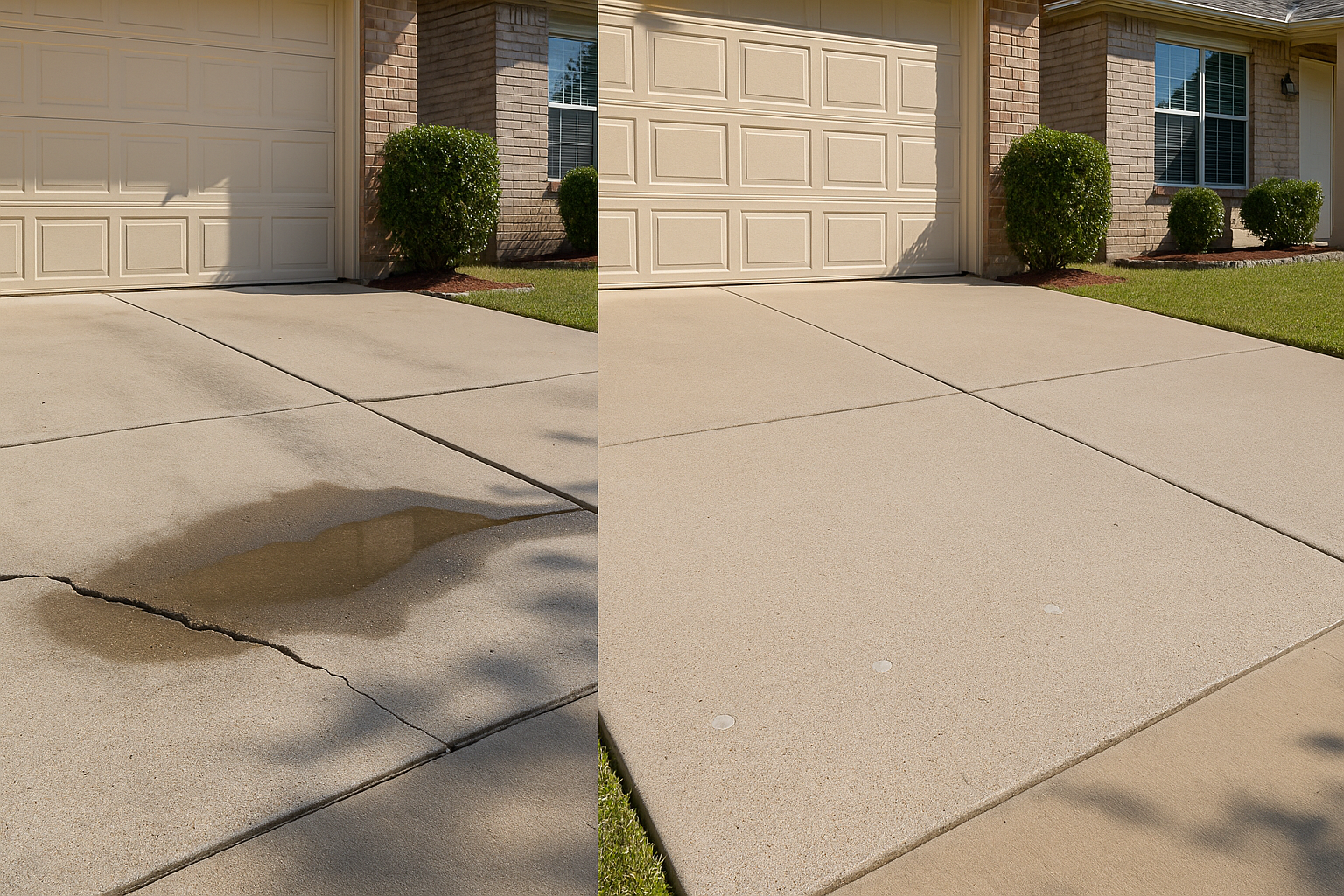
- Water pools against the house, garage, or patio after rain
- You have a lip between slabs that creates a trip hazard
- Your porch, walkway, or pool deck feels uneven underfoot
- Cracks are showing up because one slab section is no longer supported
- Garage approaches or entry paths have settled and make drainage worse
In Texas, we also tell people to pay attention after long drought periods followed by heavy storms. Dry clay soils around places like Austin, Georgetown, Round Rock, Temple, and San Antonio can shrink in the heat, then shift fast when moisture returns. That movement can leave voids under concrete. Once traffic keeps hitting the slab, it settles more.
The sooner you catch it, the better. A slab with minor settlement is usually easier to lift and stabilize than one that has been moving for years. That can help avoid bigger repair costs later. In many cases, leveling costs are far below replacement, especially when the slab surface is still in decent condition. Homeowners are often surprised to learn they can fix the issue without demolition and without being out of service for days.
What Problems Foam Leveling Can Fix
Polyurethane foam leveling is a solid option for a lot of residential and light commercial concrete in Texas. It is not the right fit for every slab, but it works extremely well when settlement is caused by weak support, erosion, or soil movement under otherwise usable concrete.
Common problems foam leveling can fix include:
- Sunken driveways
- Uneven sidewalks and walkways
- Settled patios
- Garage floor transitions that have dropped
- Front porch and stoop settlement
- Pool deck sections that have moved
- Void-filled slabs where support has washed out underneath
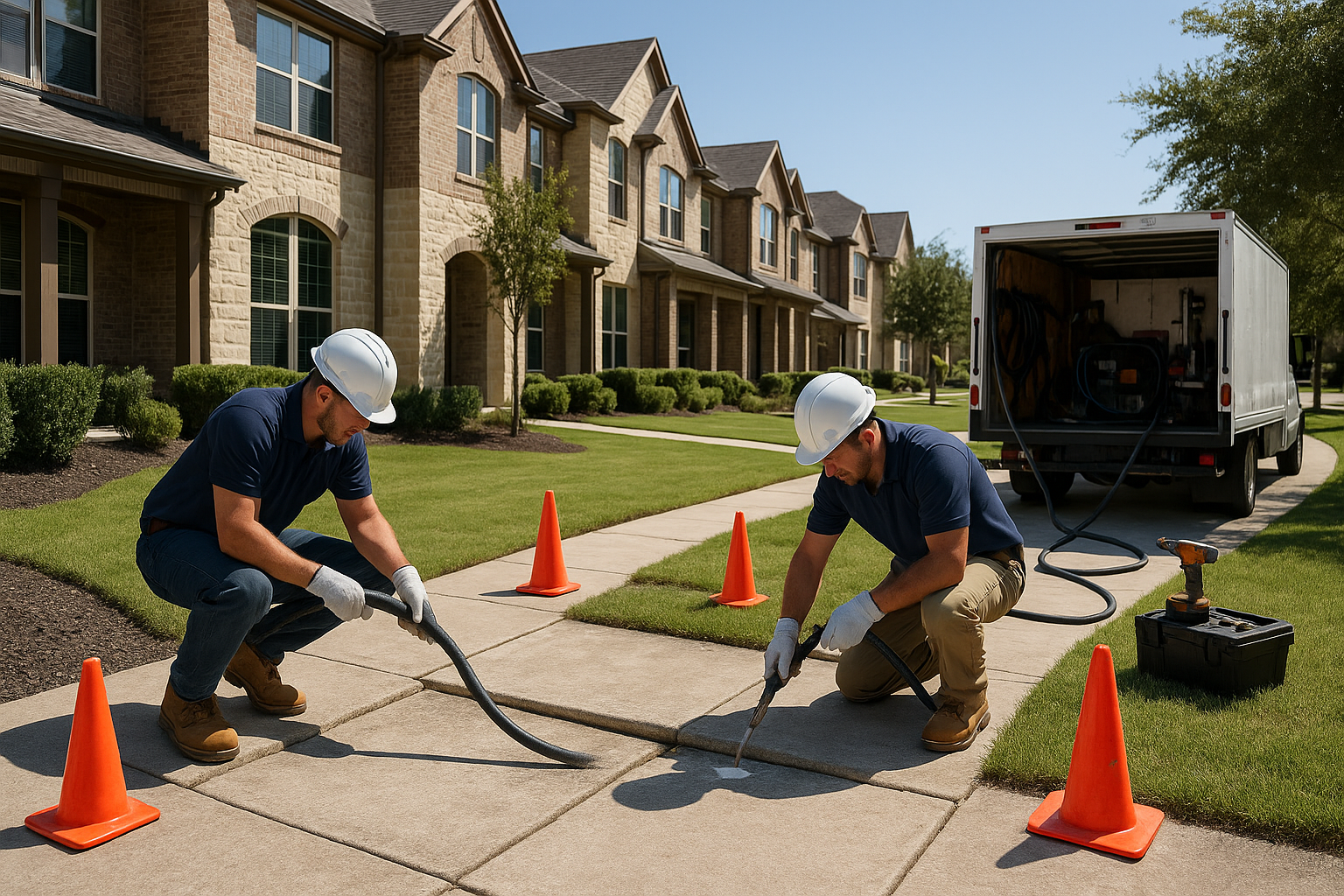
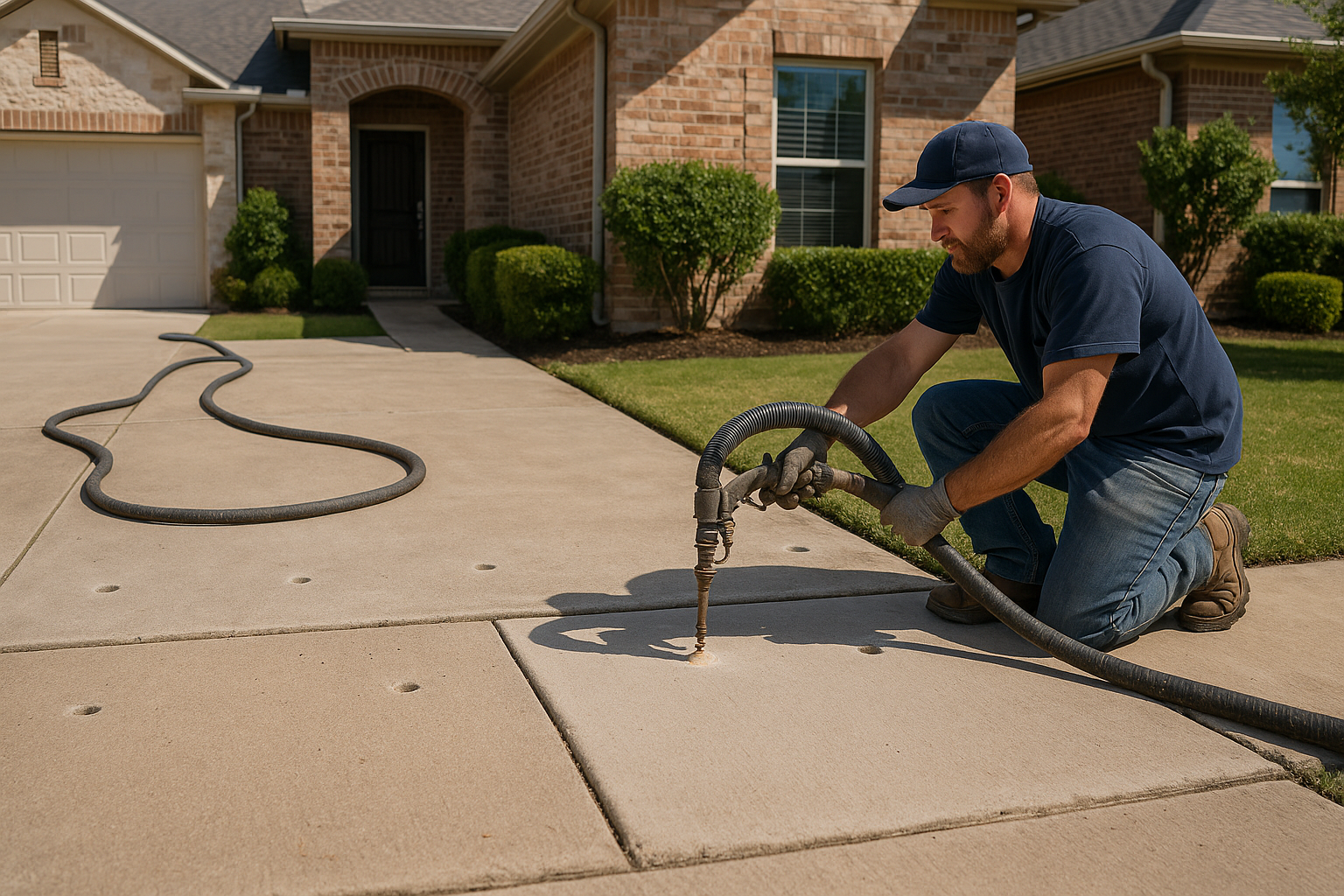
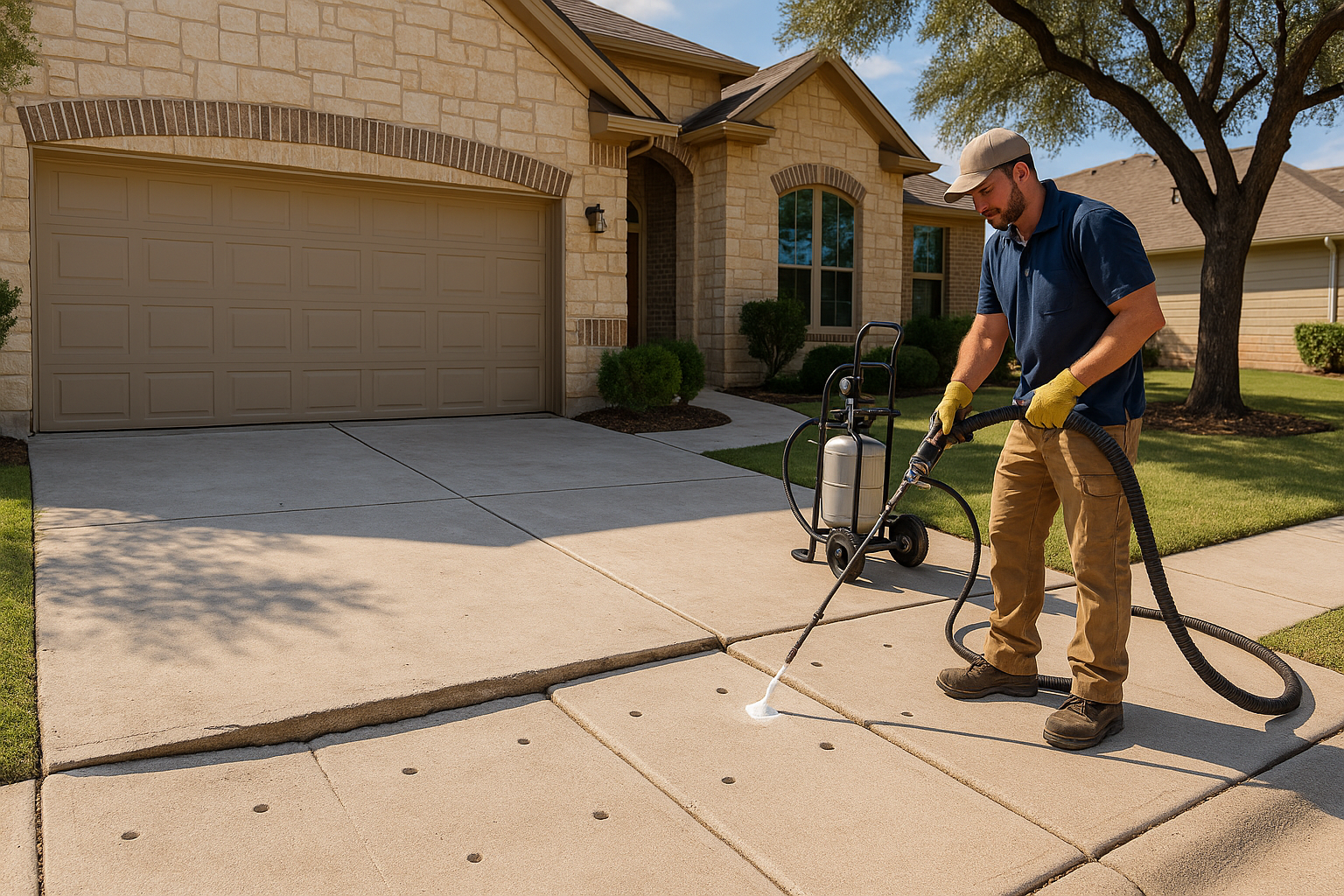
The big advantage is that foam does two jobs at once. It lifts the slab and helps fill the empty space below it. Instead of tearing out concrete and repouring, we drill small access holes, inject expanding material underneath, and bring the slab back up in a controlled way. The result is fast, clean, and usually ready to use much sooner than replacement.
That said, not every slab should be lifted. If the concrete is badly shattered, broken into multiple loose pieces, or failing because of major structural problems, replacement may make more sense. A good contractor should tell you that honestly. But if the slab is mainly just settled, leveling is often the better value.
We also look at what caused the settlement in the first place. If water has been getting under the slab because of drainage issues or failed joint lines, it is smart to deal with that too. This is where proper joint protection matters. If your concrete joints are open or deteriorating, take a look at expansion joints. For more information on sealing and protecting joint lines, visit sealmyjoints.com.
How Concrete Leveling Works in Texas
Leveling concrete in Texas is not just about raising a slab. It is about understanding what the soil is doing under it. Around Central Texas and the Hill Country, we deal with highly active clay soils, limestone-influenced subgrades, and runoff patterns that can change quickly during storms. In some neighborhoods, builders placed slabs over fill that later settled unevenly. In others, poor drainage keeps washing support away year after year.
Here is the basic process for foam leveling:
- Inspect the slab and identify the cause of settlement
- Measure how far the concrete has dropped and where support is missing
- Drill small holes in strategic locations
- Inject high-density polyurethane foam beneath the slab
- Lift the concrete gradually to a practical target elevation
- Patch the drill holes and confirm drainage and surface transition
The foam expands under the slab, fills voids, and applies upward pressure. Because the material is lightweight, it does not add the same kind of heavy load that some older fill methods can add. It also cures fast, which means most slabs can be used again much sooner. For many projects, that means a driveway, walkway, or patio can be back in service in hours, not days.
Cost depends on access, slab thickness, amount of settlement, and how much area needs support. In Texas, a small leveling repair may cost a fraction of replacement, while larger jobs still often come in well below demolition, haul-off, form work, and new concrete placement. The exact numbers vary job to job, but homeowners regularly find that lifting a settled slab is the more practical option when the concrete itself is still sound.
Weather matters too. Texas heat can dry soils out fast, especially in summer. Then fall or spring rains can change moisture conditions again. That is why we do not just look at the slab surface. We look at runoff, downspouts, grading, nearby beds, irrigation patterns, and open joints. Lasting results come from fixing the slab and reducing the reason it moved.
How to Choose the Right Concrete Leveling Company
When you search for a contractor, do not just look for the cheapest number. Look for a company that understands Texas slab behavior and can explain why your concrete settled. Anyone can say they lift slabs. The better question is whether they can identify the soil, drainage, and support conditions that caused the problem in the first place.
Here is what to ask before you hire anyone:
- Do you use polyurethane foam for leveling, and why?
- What caused my slab to settle?
- Is my concrete a good candidate for leveling or does it need replacement?
- Will you check drainage and joint conditions too?
- How soon can the slab be used after repair?
- Do you handle Texas soil-related slab issues regularly?
A good concrete leveling company should also be familiar with local conditions in places like Austin, Round Rock, Cedar Park, Leander, Georgetown, and San Marcos. Expansive clay behaves differently from one area to the next, and neighborhood drainage patterns matter. A contractor who works in Texas every day will usually spot the warning signs faster.
You also want straightforward recommendations. Sometimes the best answer is leveling. Sometimes it is a broader Concrete Slab Repair plan. Sometimes a driveway needs targeted lifting tied to Driveway Leveling and joint sealing so water does not keep working underneath the slab.
The bottom line is simple. If your concrete is sinking but not destroyed, leveling is often the smart first move. It is faster, cleaner, and often more affordable than replacement. And in Texas, where heat, rain, and active soils are constantly working on slabs, getting ahead of settlement early can save you a lot of trouble.
If you are looking for concrete leveling near me and want an honest assessment, contact Hill Country Slabs. We will tell you whether your slab can be lifted, what caused it to move, and what it will take to help it stay that way. Visit /contact or call (737) 287-4308 to get your concrete checked.