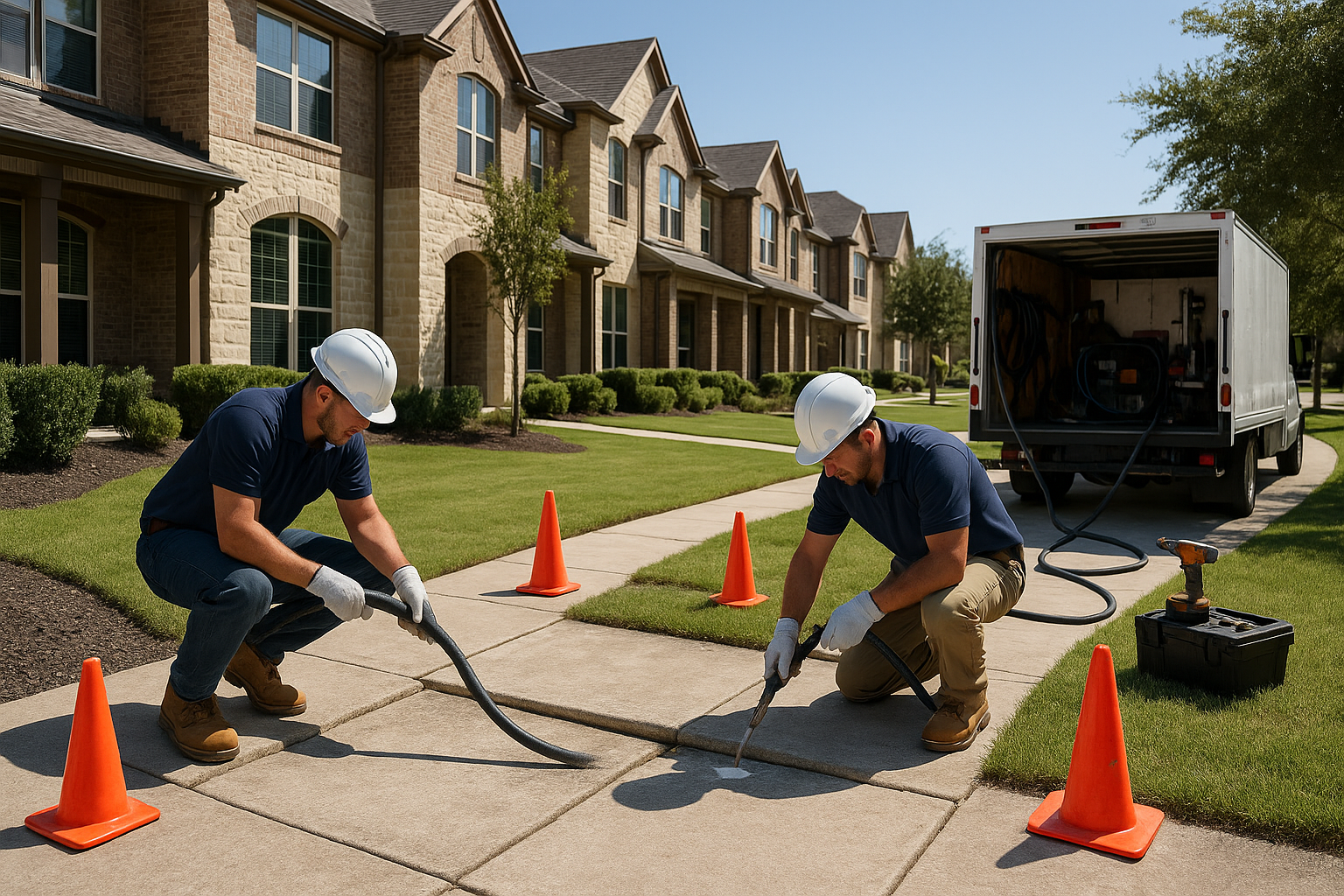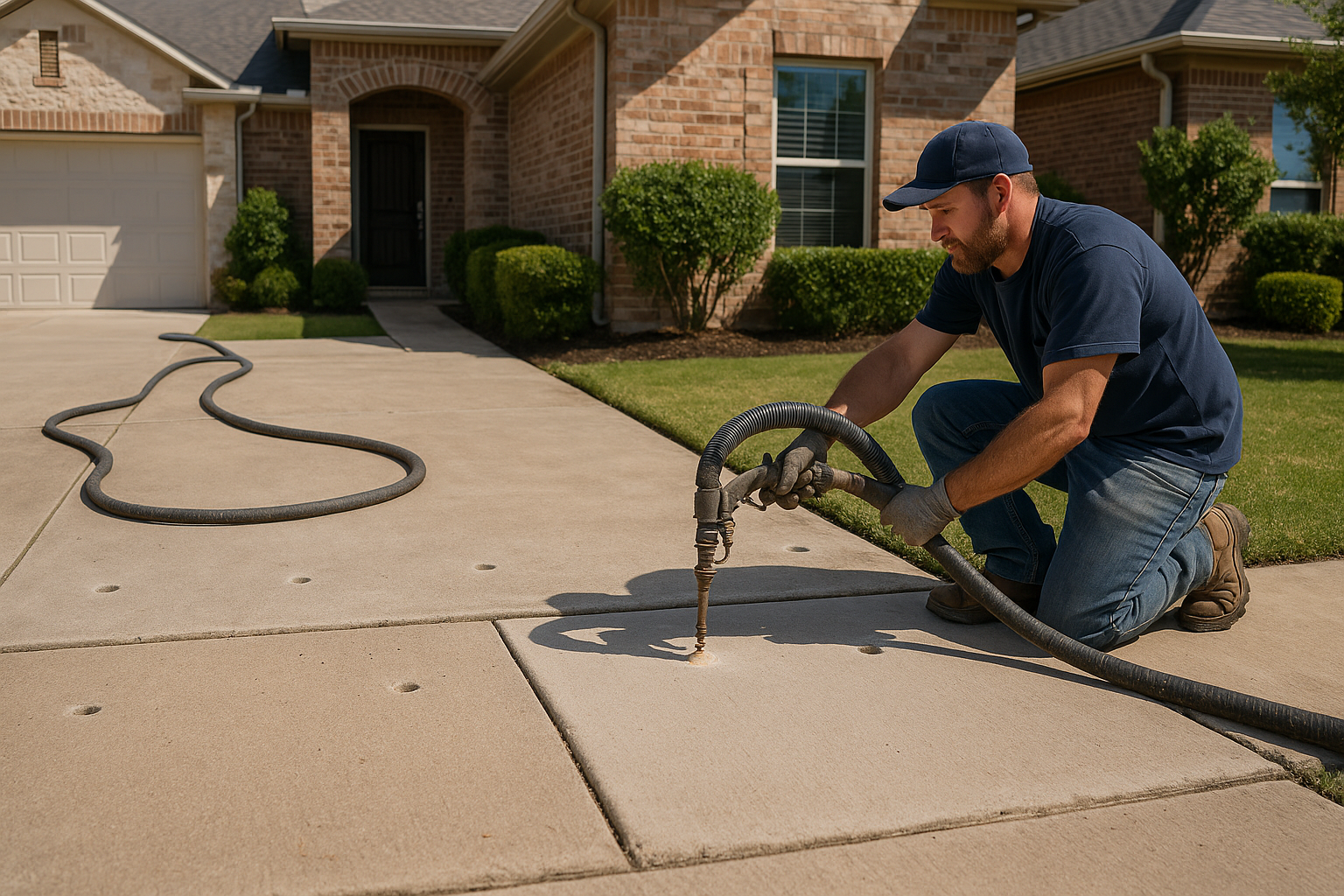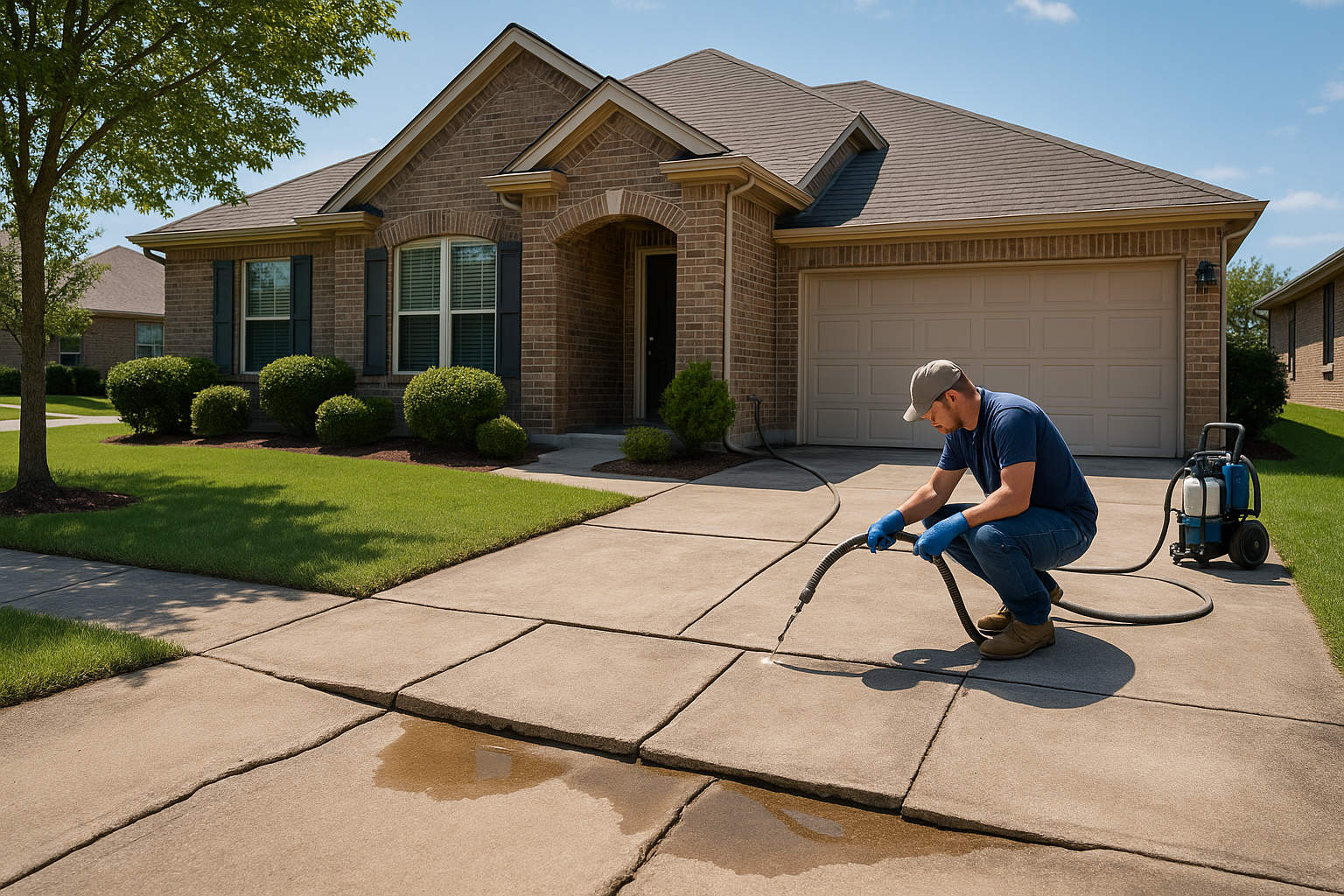
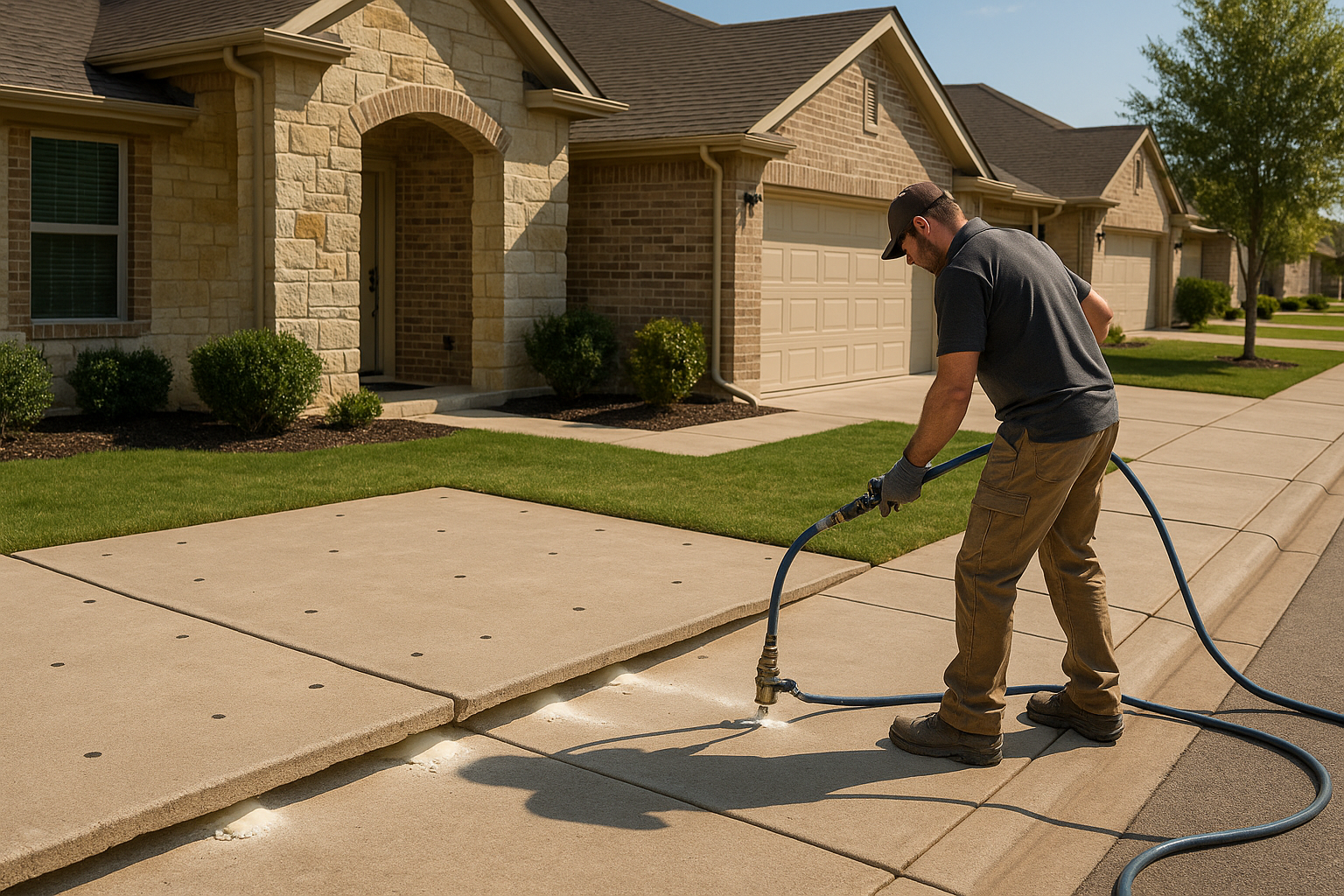
If you need concrete leveling in Georgetown, TX, the main thing to know is this: most sunken concrete can be lifted and stabilized without tearing it out. Around Georgetown, we see settled driveways, uneven sidewalks, dropped patios, and garage approach slabs all the time. Between Central Texas heat, clay movement, limestone-based soils, and hard rain events that wash out support under the slab, concrete does not stay perfectly put forever.
For a lot of homeowners, polyurethane foam leveling is the fastest way to fix the problem. We drill small holes, inject structural foam beneath the slab, fill voids, and bring the concrete back up to a safer, more usable height. In many cases, the work is done in a few hours, and the slab is ready for use the same day. That is a big reason folks in Georgetown, Round Rock, and Cedar Park call for leveling before they start pricing full replacement.
Signs You Need Concrete Leveling in Georgetown
Not every crack means a slab has to be replaced. But when the concrete has dropped, tilted, or created a lip between sections, it is time to take a closer look. In Georgetown neighborhoods with older flatwork, we commonly see settlement show up first in driveways, sidewalks, and patio edges where water runs off the roofline or irrigation keeps the soil cycling wet and dry.
- Trip hazards of 1 inch or more between sidewalk or driveway panels
- Water standing against the house, garage, or patio after rain
- Driveway sections that have sunk near the street or in front of the garage
- Patio slabs pulling away from the home
- Void areas under the slab that sound hollow
- Cracks caused by movement, especially when one side sits lower than the other
If the slab is still structurally decent, leveling is often the smarter fix. We look at the amount of settlement, the condition of the concrete, drainage around the area, and whether expansion joints are doing their job. If joints are open or failing, it also helps to address them after lifting. You can learn more about that at /expansionjoints and at sealmyjoints.com.
Why Concrete Slabs Sink in Central Texas
Georgetown sits in a part of Central Texas where soil movement is a constant issue. Depending on the property, you may have expansive clay, rocky limestone shelves, thin topsoil over caliche, or fill material that was never compacted as well as it should have been. That mix creates uneven support under concrete flatwork.
Expansive clay is one of the biggest culprits. When clay soils take on water, they swell. When they dry out in summer, they shrink and pull away. That cycle is rough on slabs. Add in long hot stretches, drought conditions, sudden downpours, and roof runoff concentrated in one area, and you get voids under the concrete. Once there is unsupported space under a slab, vehicle traffic and foot traffic can push it down farther.
We also see settlement where drainage was never corrected. A driveway in Georgetown may look fine for years, then one wet season changes everything. Water gets under the edge, erodes base material, and the slab starts dropping near the approach or by the garage door. Sidewalks and patios are especially vulnerable when downspouts discharge too close, sprinkler heads oversaturate one zone, or grading sends water back toward the house.
In nearby areas like Round Rock and Cedar Park, the same story shows up over and over: shifting soils, poor drainage, and washout under the slab. That is why a good repair is not just about lifting concrete. It is also about understanding why it moved in the first place.
How Polyurethane Foam Leveling Works
Polyurethane foam leveling is a clean, controlled way to raise settled concrete. Instead of removing the slab and starting over, we drill small injection holes through the concrete and pump high-density expanding foam underneath. The foam travels into voids, compacts loose material, and applies enough lift to bring the slab upward.
- We inspect the slab, measure settlement, and identify likely voids.
- Small holes are drilled in the affected section.
- The foam is injected under pressure beneath the slab.
- The expanding material fills empty spaces and lifts the concrete gradually.
- The holes are patched, and the area is cleaned up.
The big advantage is speed. Most jobs can be completed in a matter of hours, not days. There is no long demolition process, no hauling off broken concrete, and no waiting on a brand-new pour to cure. For many residential jobs, that means you can walk or drive on the slab the same day.
It is also less invasive than replacement. If you have a settled Driveway Leveling issue, an uneven walkway needing Sidewalk Repair, or a dropped patio or approach slab that needs Concrete Slab Repair, foam leveling can often correct the height problem while keeping the existing concrete in place.
On the cost side, leveling is usually far more affordable than replacement. While every project is different, homeowners are often looking at about one-half to one-third the cost of full tear-out and replacement, especially when you factor in demolition, disposal, forming, repouring, and cure time. If the slab is a good candidate, that is usually money well spent.
Why Homeowners Choose Leveling Over Replacement
Replacement has its place. If the concrete is badly broken, heaved beyond repair, or crumbling from age and wear, replacing it may be the right call. But in Georgetown, a lot of slabs are not ruined. They are just unsupported and out of level. That is exactly where polyurethane leveling shines.
Faster turnaround
Most homeowners do not want their driveway or walkway torn up for several days. With leveling, the repair is typically completed fast, and the slab can often be used the same day. That matters for busy households, rental properties, and homes where access is tight.
Lower overall cost
When you compare lifting versus replacement, the savings can be significant. Many projects come in at 40% to 70% less than replacement, depending on slab size, access, and severity of settlement. You avoid demolition costs and preserve what is still working.
Cleaner repair
Foam leveling uses small drill holes instead of heavy tear-out. That means less mess, less disruption to landscaping, and less impact on nearby fencing, irrigation, and hardscape features. In established Georgetown neighborhoods, that is a big plus.
Improved safety and drainage
Leveling helps reduce trip hazards and can improve the way water moves off the concrete. If a slab has settled toward the home or garage, correcting the pitch can help keep runoff from pooling where it does not belong. That is especially important in Central Texas, where one hard storm can dump a lot of water in a hurry.
After the slab is lifted, we also recommend keeping joints sealed and drainage under control. Expansion joints matter more than most people realize. They help limit water intrusion below the concrete and reduce edge breakdown over time. If yours are dried out, split open, or missing sealant, take a look at /expansionjoints for more information.
What Georgetown Homeowners Should Do Next
If you are seeing sunken concrete around your home, do not wait until the trip hazard gets worse or the drainage starts affecting the foundation edge. Early repair is usually simpler and more affordable than letting the slab continue to settle. The key is figuring out whether the concrete is a solid candidate for lifting and whether any drainage or joint issues need to be handled along with it.
At Hill Country Slabs, we help homeowners across Georgetown and the surrounding Central Texas area evaluate settled concrete and recommend the right fix. If the slab can be saved, leveling is often the fastest path back to safe, functional concrete without the headache of replacement.
If you need concrete leveling in Georgetown, TX, contact Hill Country Slabs today at (737) 287-4308 or visit /contact to schedule an estimate.