If you need concrete leveling in Dripping Springs, TX, the good news is a lot of settled slabs can be lifted without tearing everything out and starting over. Around Dripping Springs, we see driveways, sidewalks, patios, and pool decks drop out of place for a bunch of reasons, but the biggest ones are shifting soils, water movement, and the long stretches of Texas heat that dry everything out hard as a rock.
In most cases, sunken concrete does not mean the slab is ruined. If the concrete is still structurally decent, foam leveling can raise it back into position fast, clean, and with a lot less mess than replacement. That means less downtime, less demolition, and in many cases a much lower price tag. If you are comparing options, take a look at our Concrete Leveling in Texas service page to see where this fits.
We work with property owners all over the Hill Country and greater Central Texas, including Austin, Lakeway, and Dripping Springs. The conditions out here are different than what you see in other parts of the country. Between limestone terrain, expansive clay pockets, drainage issues, and heavy storm runoff, slabs take a beating.
Why Concrete Sinks in Dripping Springs, TX
Dripping Springs sits in a part of Texas where soil conditions can change a lot from one neighborhood to the next. Some properties have shallow rock and thin topsoil. Others have clay-heavy sections that expand when wet and shrink when dry. That constant movement under a slab is one of the main reasons concrete starts settling.
Here are the most common causes we see:
- Expansive clay soil: When clay takes on water, it swells. When it dries out in summer, it shrinks and leaves voids under the slab.
- Poor drainage: If downspouts dump water near the driveway or patio, runoff can wash away supporting soil.
- Hill Country erosion: Sloped lots in Dripping Springs can move water fast during storms, especially after long dry spells when the ground is hard.
- Improper compaction: If the base material was not compacted well when the concrete was poured, settlement can show up sooner than expected.
- Tree roots and moisture imbalance: Oaks and other mature trees can pull moisture from the soil unevenly, which changes support under slabs.
Texas weather makes all of this worse. We can go from drought conditions to heavy rain in a hurry. That wet-dry cycle is rough on flatwork. A slab may sit fine for years, then after one bad season you start seeing one corner drop, water ponding, or a sidewalk panel turning into a trip hazard.
Another piece of the puzzle is joint performance. Control joints and expansion joints help concrete move where it is supposed to move. When they are missing, damaged, or no longer sealed, water gets below the slab and creates more trouble. If your joints are open or failing, it is worth looking at expansion joint repair. For joint sealing products and more information, visit sealmyjoints.com.
Signs You Need Concrete Leveling
A lot of homeowners wait too long because they think a little settlement is just cosmetic. Sometimes it starts that way, but it usually gets worse. Catching it early can keep a smaller issue from turning into a replacement job later.
Watch for these signs:
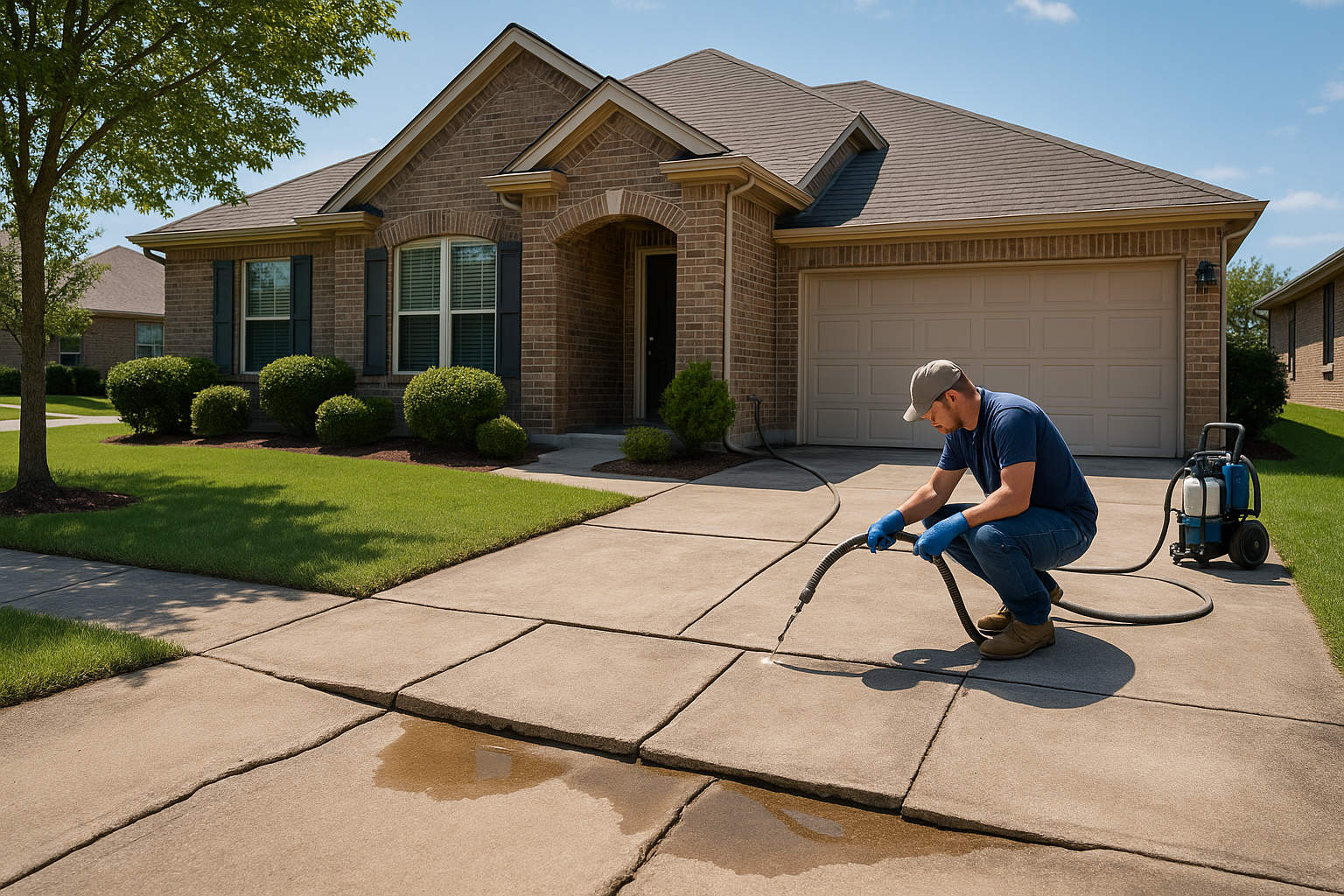
- One slab panel sitting lower than the one next to it
- Trip hazards on sidewalks, walkways, or porch approaches
- Driveway sections settling near the garage or street
- Patios or pool decks sloping toward the house
- Water pooling where it used to drain off
- Gaps forming under the slab edge
- Cracking caused by uneven support
- Concrete that rocks or sounds hollow in spots
In Dripping Springs, we commonly see settlement around driveways, back patios, and pool areas because those surfaces catch runoff and are exposed to strong sun. A pool deck with even a small drop can become both a drainage issue and a safety issue. The same goes for sidewalk panels out front. Even a height difference of 1/2 inch to 1 inch can create a real trip hazard.
If the slab is broken into too many pieces, badly shattered, or has severe subgrade failure, replacement might be the better route. But if the concrete is mostly intact, leveling is often the smarter fix.
How Foam Leveling Works
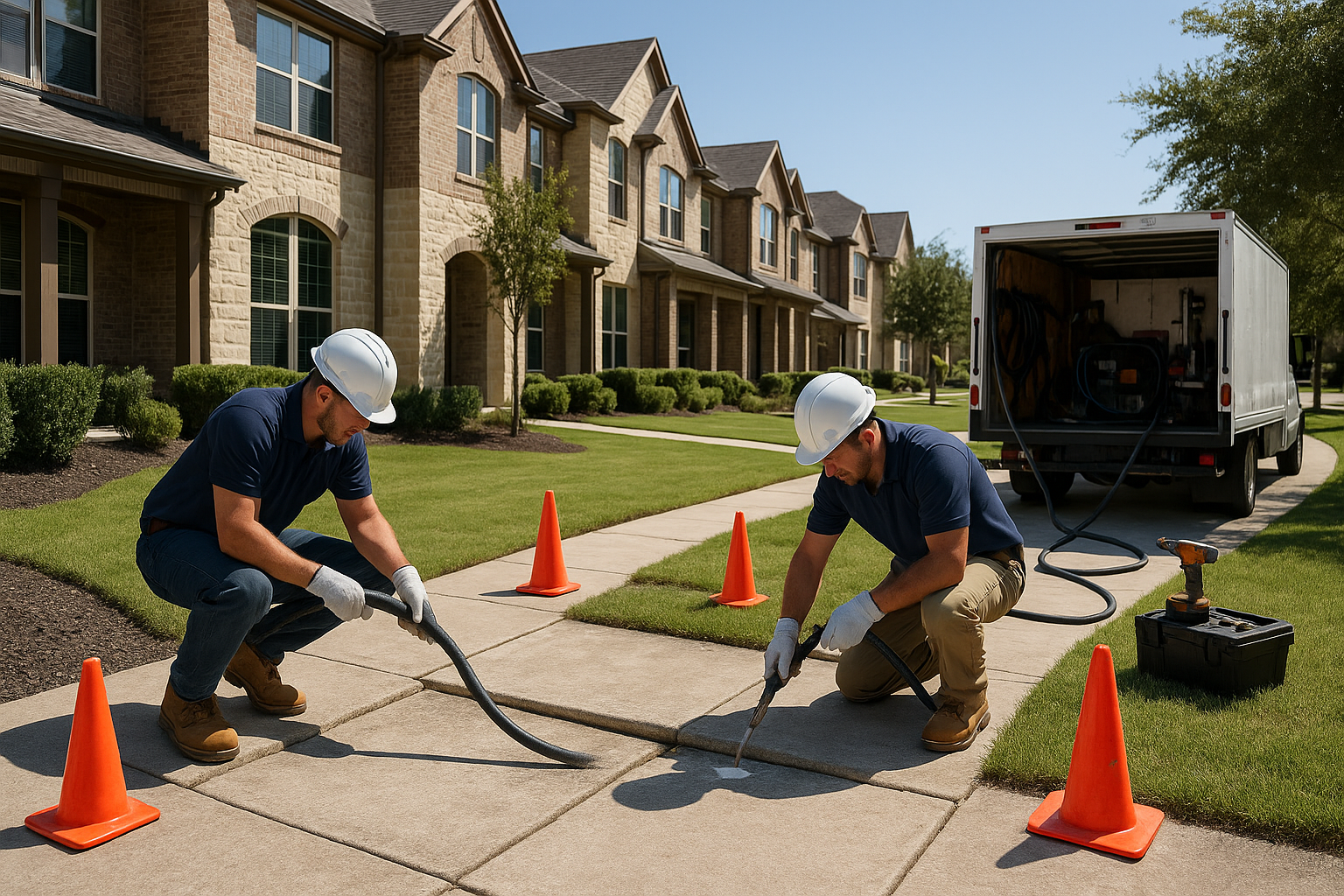
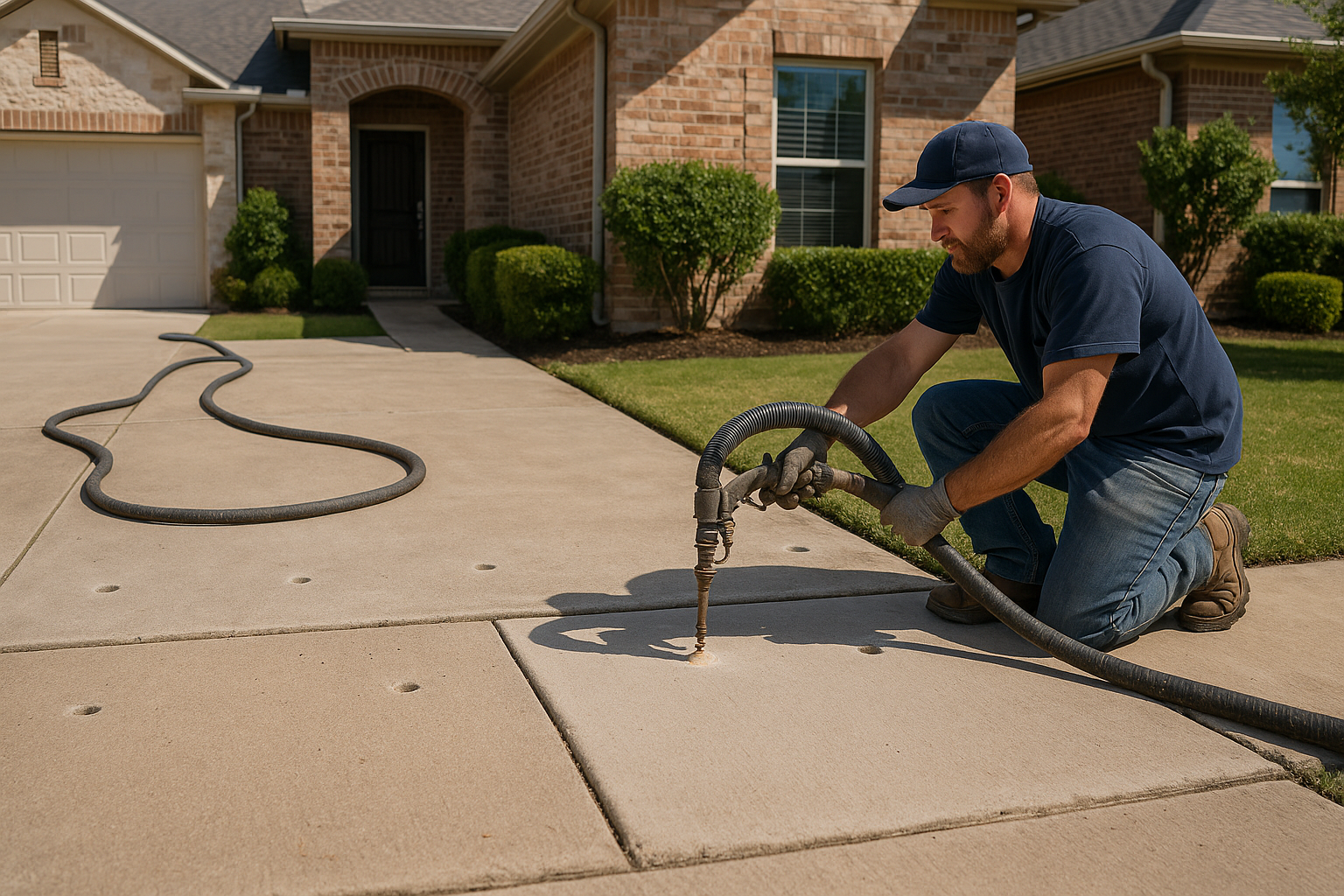
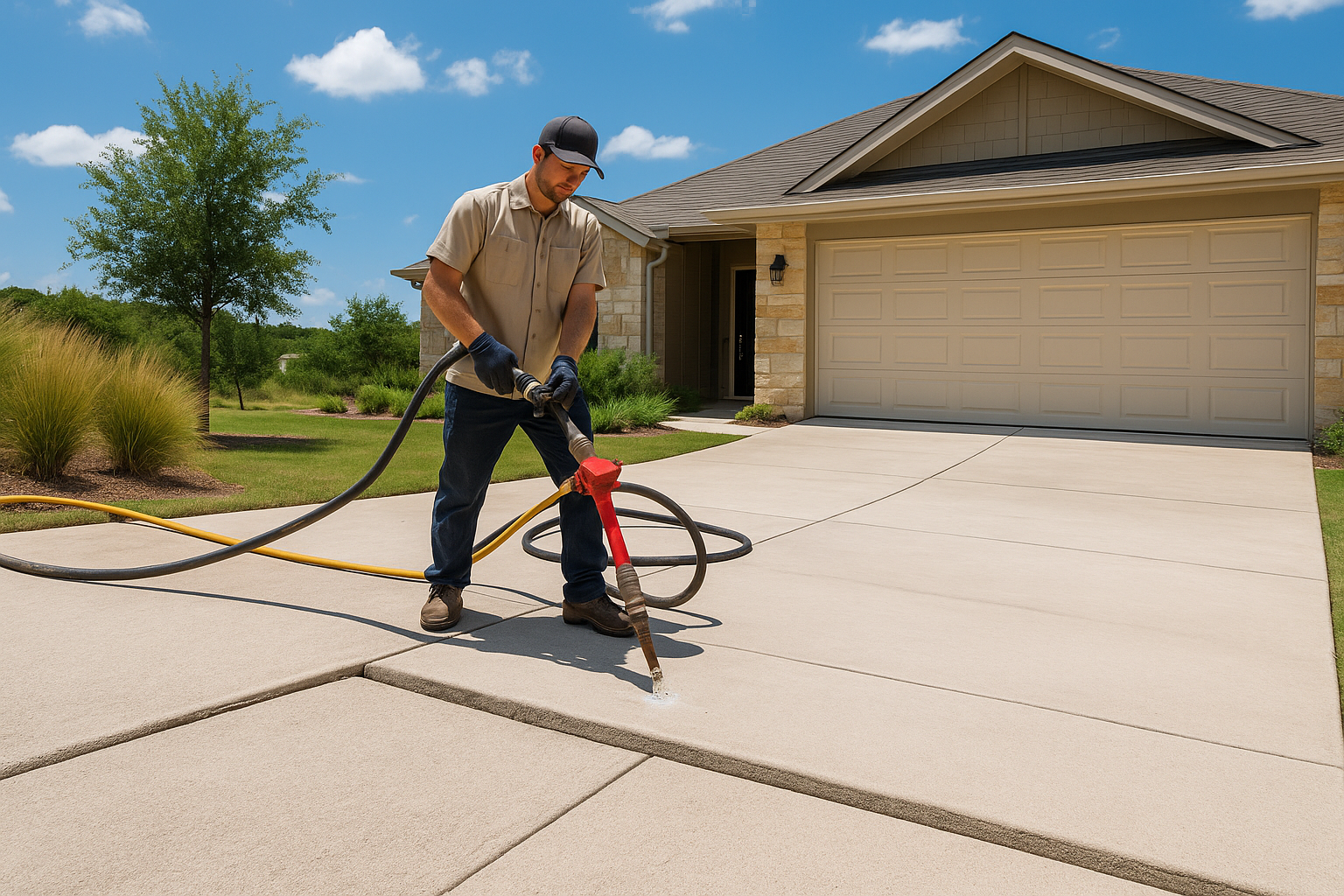
Foam leveling, also called polyurethane concrete lifting, is a process where we inject high-density expanding foam beneath the slab. The foam fills voids, stabilizes the base, and lifts the concrete back toward grade. It is a precise repair when done right.
Here is the basic process:
- We inspect the slab, measure settlement, and identify likely voids and water issues.
- Small injection holes are drilled through the concrete.
- Polyurethane foam is injected below the slab.
- The foam expands, fills empty space, and applies controlled lift.
- We monitor the slab elevation as it rises.
- The holes are patched and the area is cleaned up.
One reason property owners like this method is speed. In many cases, the slab can be used again the same day. There is no long cure time like you would have with a fresh replacement pour. There is also much less disruption to landscaping, fencing, gates, and nearby structures.
Foam leveling is a good fit for:
- Driveways
- Sidewalks and walkways
- Patios
- Pool decks
- Garage floors
- Porch slabs
It is also lighter than older mudjacking material, which matters when you are trying not to add more weight to already unstable soil. On a lot of Dripping Springs properties, especially those with slope and drainage challenges, that lighter material is a real advantage.
That said, leveling the slab is only part of the fix if water is still getting underneath. We always tell folks the same thing: if drainage and joints are ignored, settlement can come back. Make sure runoff is directed away, joints are maintained, and surrounding grade is doing what it should.
Concrete Leveling vs Replacement Cost
For most homeowners, cost is the first question. The short version is leveling usually costs a lot less than demolition and replacement, provided the slab is still worth saving.
While every job is different, here is the general comparison:
- Concrete leveling: often about 30% to 70% less than full replacement
- Replacement: includes demolition, haul-off, base prep, forming, pouring, finishing, and cure time
On top of direct cost, replacement usually comes with more downtime and more risk of affecting nearby surfaces. If you have a decorative patio, tight driveway approach, or pool deck with limited access, replacement can get expensive fast.
Here is where leveling usually wins:
- Lower upfront cost
- Faster turnaround
- Minimal demolition
- Less mess
- Use the slab again quickly
Here is where replacement may still make sense:
- The slab is severely cracked or crumbling
- The concrete was poured too thin for the application
- The base failure is extensive
- You want to completely redesign the area
In our experience, a lot of sunken flatwork in Dripping Springs can be saved if it is addressed in time. We have seen homeowners ready to replace an entire driveway when the real issue was a settled section near the garage or an edge washed out by runoff. In those cases, leveling can deliver a strong result without the cost of starting over.
Why Local Conditions Matter
This is not a one-size-fits-all market. Work in Dripping Springs has to account for Hill Country grades, sudden rain events, heat, and mixed soil conditions. A repair plan that ignores drainage, joint condition, and nearby soil movement is incomplete. That is why local experience matters whether the property is in Dripping Springs, out toward Bee Cave, or over in Austin and Lakeway.
If you are noticing settlement, do not wait until it becomes a bigger hazard or starts sending water back toward the house. The earlier you catch it, the better chance you have of stabilizing the slab and avoiding replacement.
If you need help with concrete leveling in Dripping Springs, TX, Hill Country Slabs can take a look and tell you straight whether the slab should be lifted or replaced. Contact us at /contact or call (737) 287-4308 to schedule an estimate.