If you need concrete leveling in Cedar Park, TX, the main thing to know is this: most sunken concrete can be lifted and stabilized without tearing it out. Around Cedar Park, we see settled driveways, uneven sidewalks, dropped patios, and garage approach slabs all the time. Between long dry spells, sudden heavy rain, and the movement you get from Central Texas soils, concrete does not always stay where it was poured.
For a lot of homeowners, the first sign is a trip hazard at the front walk or a driveway edge that starts catching tires. In other cases, water begins draining back toward the house instead of away from it. That is when leveling makes sense. With polyurethane foam injection, we can raise many slabs quickly, with minimal disruption, and usually at a much lower cost than full replacement. If you are comparing options in Cedar Park or nearby areas like Austin and Round Rock, here is what to look for.
Signs You Need Concrete Leveling in Cedar Park, TX
Concrete rarely sinks all at once. Most of the time, it drops a little at a time until the problem becomes obvious. If you catch it early, you can often avoid bigger damage and more expensive repairs.
- One side of a sidewalk panel sits higher than the next, creating a trip hazard.
- The driveway has low spots where water ponds after a rain.
- Your patio slopes toward the house or holds water against the foundation.
- The garage entry slab has settled, causing a bump when you pull in.
- Expansion joints are widening or pulling apart as the slab moves.
- Voids form under the slab, leading to hollow-sounding concrete.
These are common conditions on residential properties in Cedar Park, especially in neighborhoods with aging flatwork or drainage issues. If the slab is still in decent shape structurally, leveling is often the smarter fix. We regularly help homeowners with Driveway Leveling, Sidewalk Repair, and Patio Leveling before a small settlement issue turns into broken concrete.
What Causes Concrete to Sink in Cedar Park?
Cedar Park sits in the same general Central Texas band of soils that gives contractors and homeowners plenty to deal with. You have areas with clay-heavy soil, limestone influence, rocky fill, and pockets where moisture conditions change fast. That matters because slab support depends on what is happening underneath the concrete, not just the concrete itself.
Expansive clay soil movement
Clay soils in this part of Texas swell when they get wet and shrink when they dry out. During a hot summer, the soil can pull back and leave gaps below the slab. Then when a big storm comes through, the same soil can shift again. Over time, that cycle creates settlement, voids, and uneven support.
Poor drainage and washout
When gutters discharge near the slab, sprinkler systems overwater one area, or grading sends runoff across flatwork, water can wash out the base material below the concrete. We see this a lot on sidewalks, driveway edges, and patios where water keeps finding the same path. Cedar Park storms can dump a lot of rain in a short window, and that fast runoff does damage.
Improper compaction during construction
Some slabs sink because the base underneath was never compacted properly in the first place. It might take a few years to show up, but eventually traffic loads, weather, and soil movement expose the weak spot. That is common on approach slabs, walkways, and add-on patios.
Tree roots and changing moisture
Large trees can dry out surrounding soil unevenly. In some cases, roots also create pressure that affects slab elevation from one area to another. The result is not always cracking right away. Sometimes it shows up first as a settled corner or a section that starts holding water.
Another issue we always pay attention to is the joint system. If your joints are open, failing, or missing sealant, water can keep getting below the slab and feeding the problem. That is why it makes sense to maintain expansion joints and, when needed, seal them properly with help from sealmyjoints.com.
How Polyurethane Foam Leveling Works
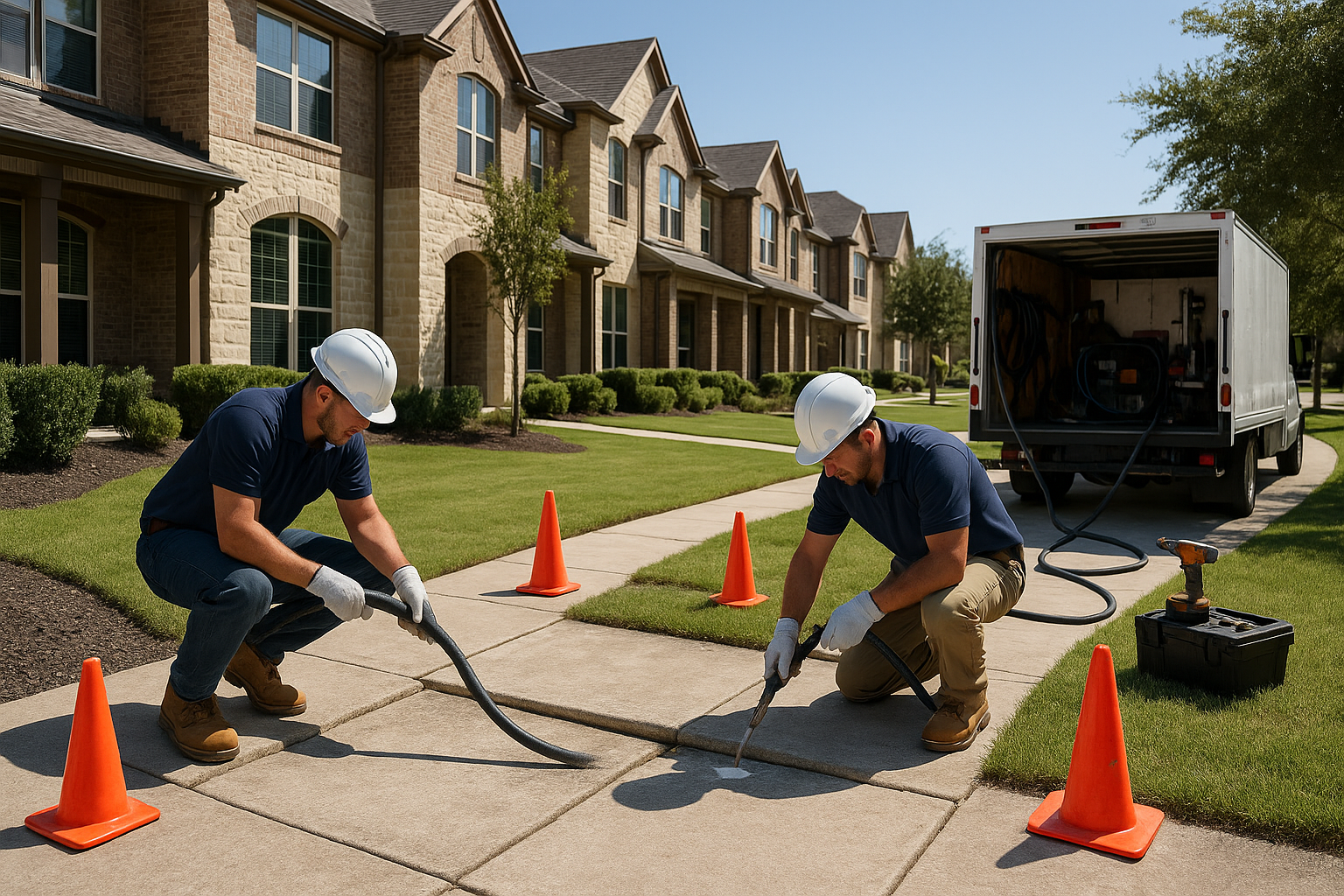
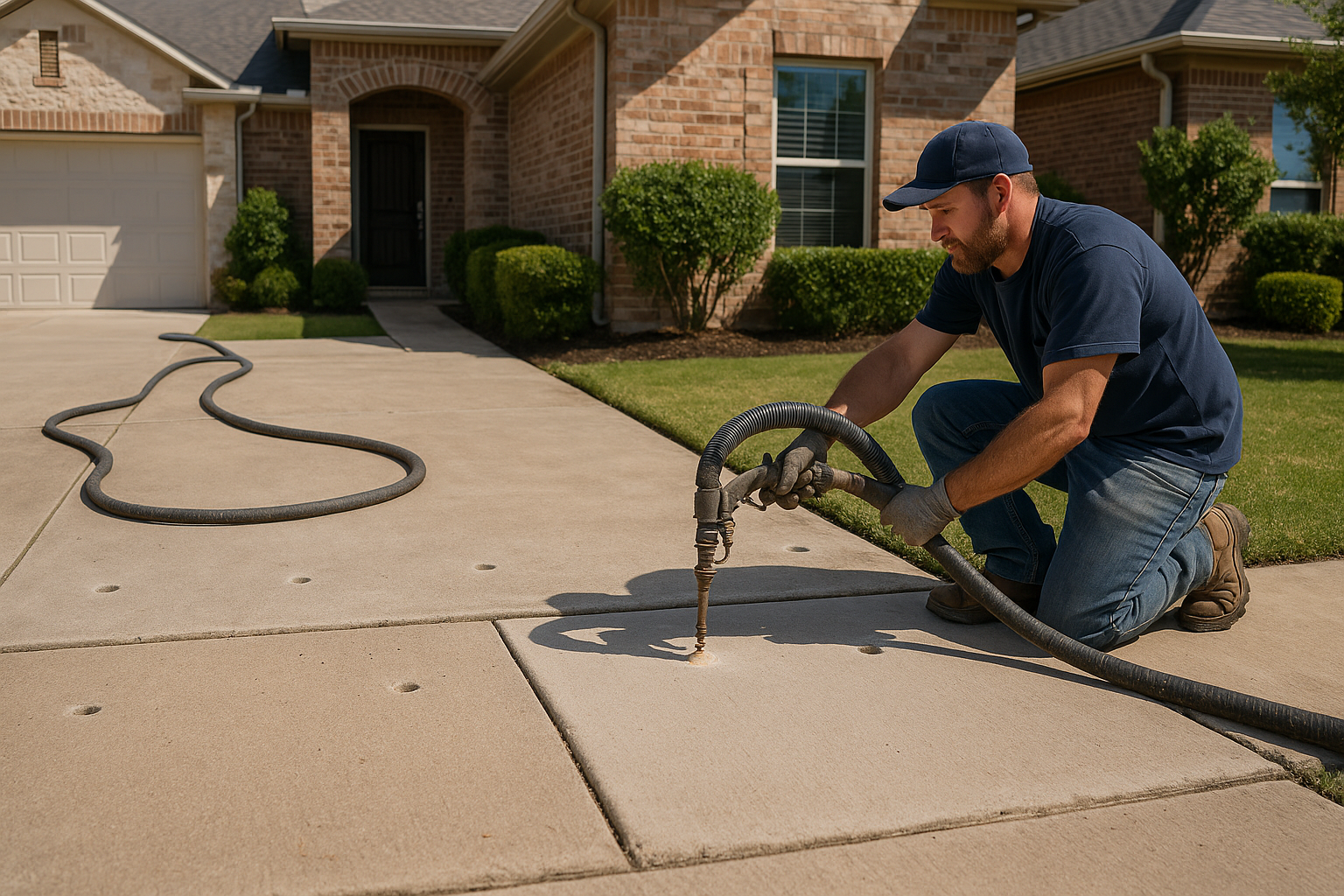
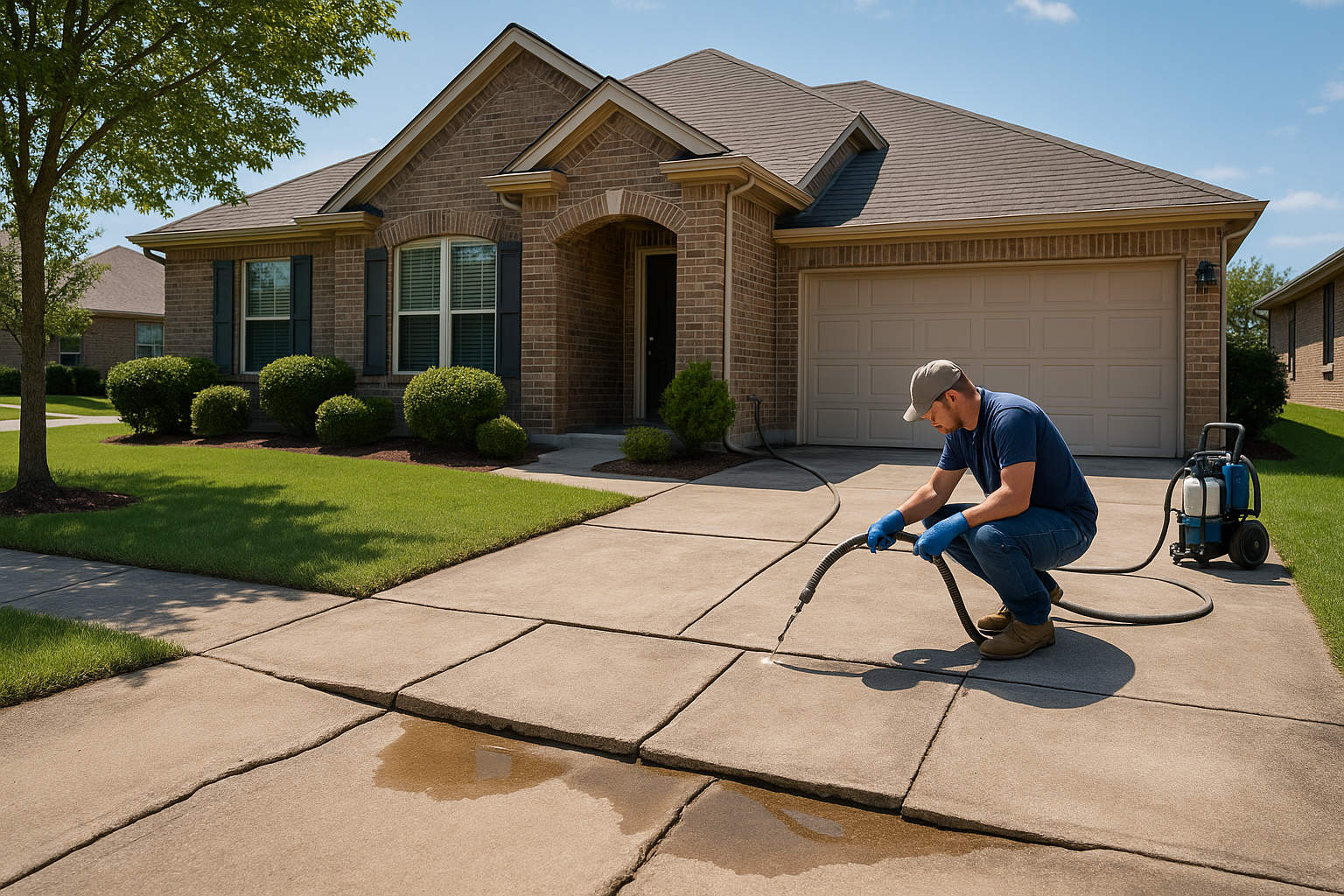
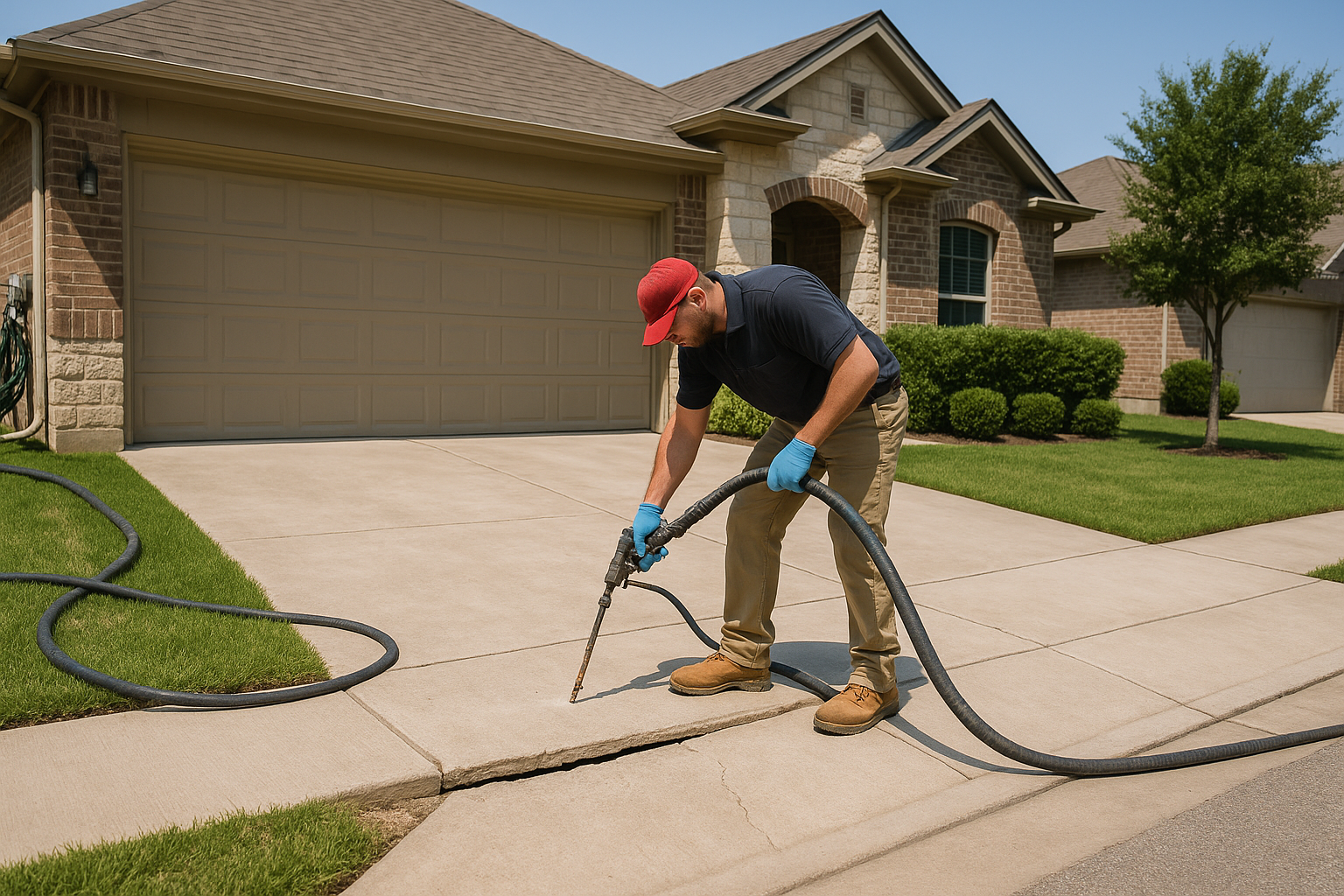
Polyurethane foam leveling is a repair method used to lift and support settled concrete. Instead of demolishing the slab, we drill small holes through the concrete and inject a high-density foam beneath it. The foam expands, fills voids, and applies controlled lifting pressure until the slab returns close to its proper position.
- We inspect the slab and identify the cause of settlement. Drainage, washout, soil movement, and joint condition all matter.
- Small injection holes are drilled. These are much smaller than what you see with older mudjacking methods.
- The foam is injected under the slab. It expands into empty spaces and helps stabilize weak areas.
- The slab is lifted carefully. We monitor the elevation during the process to avoid over-lifting.
- The holes are patched and the area is cleaned up. Most repairs are neat and fast compared to replacement.
One big reason homeowners like foam leveling is turnaround time. In many cases, the repaired slab can be used the same day. There is no major tear-out, no forms, no long cure window, and no hauling off broken concrete. For busy households in Cedar Park, that is a major advantage.
It is also lightweight compared to traditional fill materials, which matters when the underlying soil is already part of the problem. The goal is not just to lift the slab. The goal is to fill the voids, restore support, and reduce future movement as much as possible.
Why Homeowners Choose Repair Over Replacement
Replacement has its place. If the concrete is shattered, severely cracked through multiple sections, or structurally too far gone, removal and repour may be the right call. But that is not the case for every uneven slab. A lot of concrete in Cedar Park is still solid enough to be saved.
The biggest reason homeowners choose leveling is cost. Full replacement means demo, disposal, new base prep, forming, pouring, finishing, and curing time. Depending on access and slab size, replacement can climb fast. In many cases, concrete leveling comes in at about 50% to 70% less than replacement. That makes a real difference when you are dealing with a driveway, sidewalk run, or patio section.
Speed is another factor. A replacement project may take several days when you count removal, prep, pour, and cure time. Foam leveling is often completed in hours. That means less interruption to your home and less mess on the property.
Homeowners also like that leveling keeps the existing concrete in place. If the finish and color still match the rest of the property, repair avoids the patchwork look that can happen when one section is freshly poured and the surrounding slabs are older. On a front entry or long driveway, that matters.
From a safety standpoint, lifting settled concrete can eliminate trip hazards and improve drainage before they lead to bigger issues. A sidewalk lip may not seem like much until someone catches a toe on it. A low driveway spot may not seem urgent until runoff starts working back toward the garage. Fixing it early is usually cheaper than waiting.
What does concrete leveling cost in Cedar Park?
Every job is different, but for residential slab lifting, pricing usually depends on the size of the affected area, how far the slab has dropped, access to the work area, and how much void filling is needed. Small repairs may run in the few hundred dollar range, while larger or more complex leveling projects can reach the low thousands. That is still often well below the cost of tearing out and replacing good concrete.
The best approach is to inspect the slab, identify why it moved, and recommend the right repair. If drainage or open joints are part of the issue, those should be addressed too, or the same problem can come back.
Concrete Leveling for Driveways, Sidewalks, and Patios
Not every slab problem shows up the same way, and different areas of the property take different loads. Driveways deal with vehicle weight, sidewalks create safety concerns, and patios often suffer from drainage problems near the home. That is why we tailor the repair to the slab and the site conditions.
- Driveways: Lift settled panels, reduce standing water, and smooth out transitions at the garage and street.
- Sidewalks: Remove trip hazards and bring uneven sections back into alignment.
- Patios: Correct negative slope and help keep water from draining toward the house.
If you are seeing settlement on your property in Cedar Park, the sooner you get it checked, the better chance you have of saving the slab and avoiding more movement.
Hill Country Slabs provides concrete leveling solutions built for Texas conditions. If you need help with a sinking driveway, uneven sidewalk, or settled patio in Cedar Park, we can take a look and tell you whether foam leveling is the right fix. Contact us at /contact or call (737) 287-4308 to schedule an estimate.