If you need concrete leveling in Bee Cave, TX, the main thing to know is you usually do not need to tear out and replace the whole slab. Around Bee Cave, we see driveways, sidewalks, patios, and pool decks settle because of shifting soil, long dry spells, heavy rain, and drainage issues. In a lot of cases, polyurethane foam lifting can bring that concrete back up fast, clean, and without the mess of a full replacement.
At Hill Country Slabs, we work with homeowners dealing with uneven concrete across Bee Cave and nearby areas like Lakeway and Austin. If your slab is structurally sound and just dropping in spots, leveling is often the better option. It is quicker, less disruptive, and in many cases costs far less than replacement.
Why Concrete Sinks in Bee Cave, TX
Bee Cave sits in Central Texas where concrete takes a beating from both the soil and the weather. You have a mix of rocky Hill Country ground, shallow soils over limestone, and pockets of clay-rich material that expand and contract with moisture changes. That movement matters. When the ground under a slab loses support, the concrete starts to settle, crack, or tilt.
We commonly see a few causes behind sinking concrete in Bee Cave:
- Expansive clay soils that shrink during drought and swell after rain
- Erosion under slabs from runoff, broken drainage patterns, or gutter discharge
- Improper compaction when the original base was not packed tightly enough
- Washing out around pool decks and patios from splash-out and deck drains
- Tree root activity that changes moisture levels in the surrounding soil
Texas weather is a big part of the problem. We can go from extended heat and dry conditions to hard rain in a short window. That cycle opens voids under concrete. Once a slab loses support, even a small gap can turn into settlement. Driveways in particular take a lot of stress from parked vehicles and daily traffic, so low spots tend to get worse over time.
Another issue we pay attention to is joint failure. If the control joints or expansion areas are not doing their job, water can get below the slab and accelerate washout. That is why we often recommend property owners learn more about expansion joints and proper joint protection after leveling. Good joint sealing also helps, and resources like sealmyjoints.com can help explain why keeping water out matters.
Signs You Need Concrete Leveling
Not every crack means a slab needs replacement. A lot of the time, the real issue is settlement. If the concrete is still in decent shape but has dropped, foam leveling can usually correct the height and improve safety at the same time.
Here are the most common signs it is time to look into leveling:
- One side of the driveway is lower than the other
- Sidewalk panels have a lip that creates a trip hazard
- Water is pooling against the house or garage
- Patio furniture rocks because the surface is uneven
- Pool deck sections have sunk near coping or drains
- Garage approach slabs have settled below the garage floor
- Concrete cracks are getting wider as the slab continues to move
In Bee Cave neighborhoods, we often see sunken driveway panels near the street, settled front walkways, and back patios that slope the wrong direction after years of soil movement. These are not just cosmetic issues. Uneven concrete can become a safety problem and can also hold water where you do not want it.
As a general rule, if the slab is stable enough to lift and the surface is not completely broken apart, leveling is worth considering first. For homeowners comparing options, the cost difference can be significant. A full tear-out and repour may run 2 to 4 times more than leveling, depending on access, thickness, finish, and disposal. Foam lifting also tends to be completed in hours, not days.
If the problem is in your driveway, take a look at our Driveway Leveling service. If you are dealing with trip hazards around walkways, our Sidewalk Repair service may be the better fit.
How Foam Concrete Leveling Works
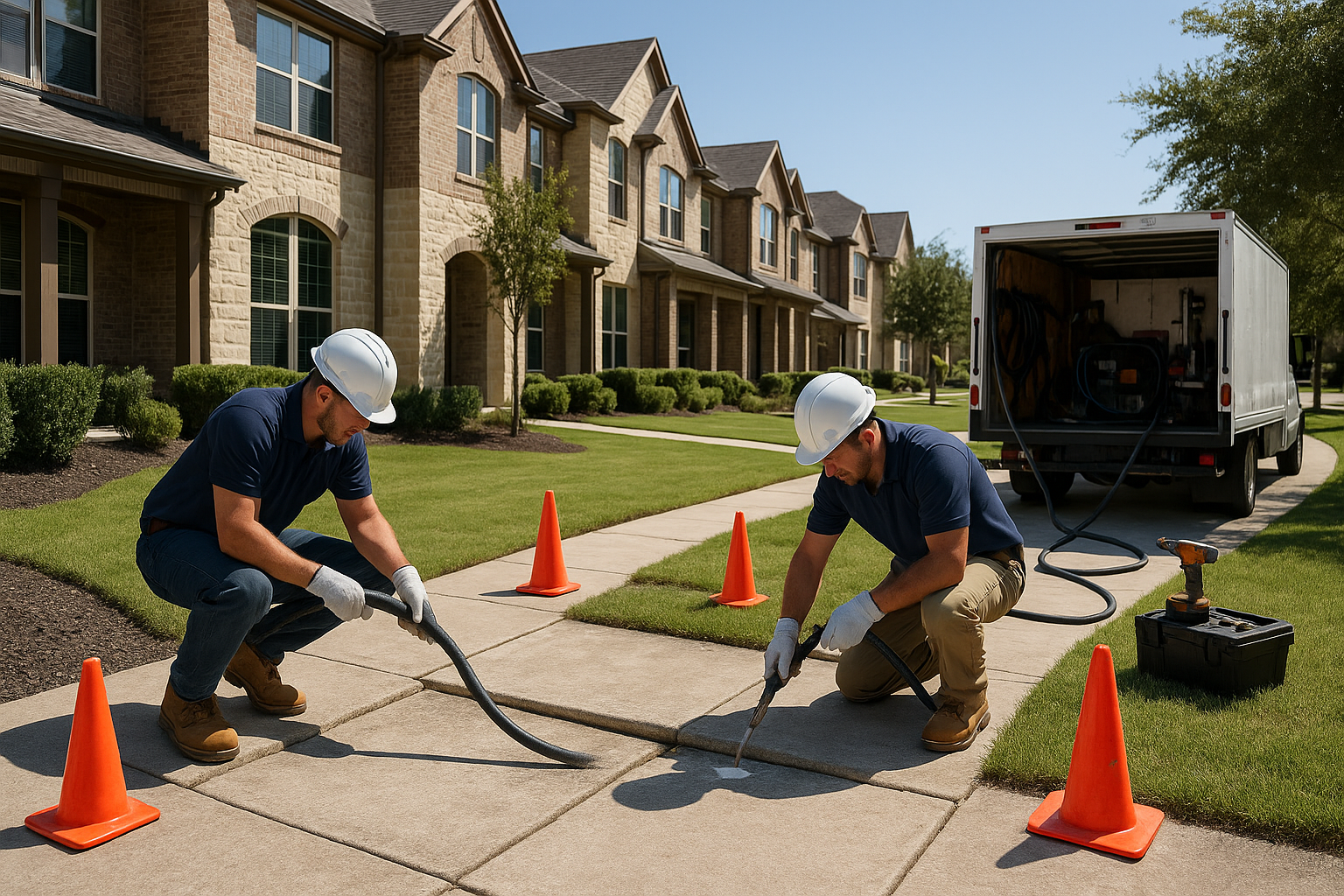
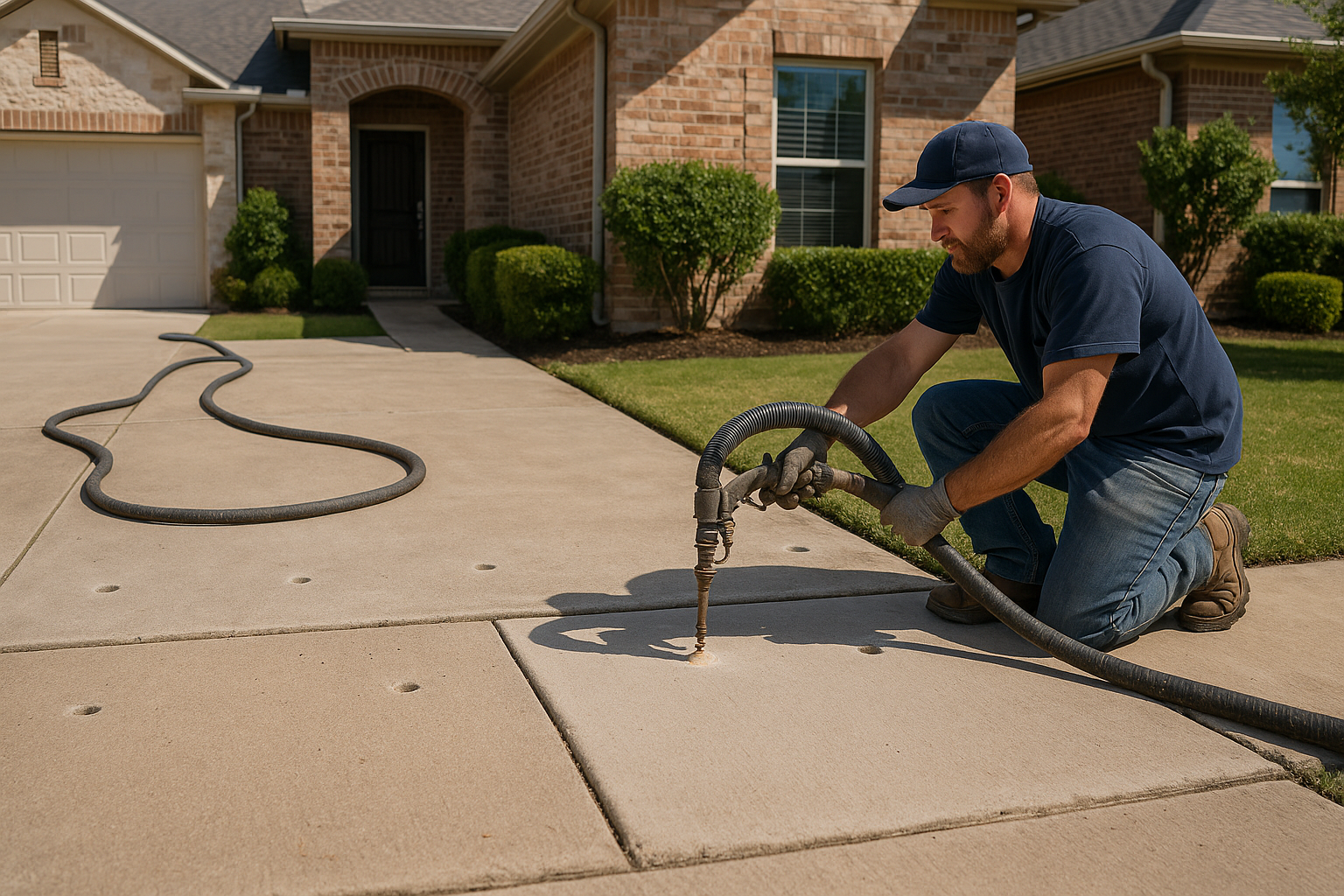
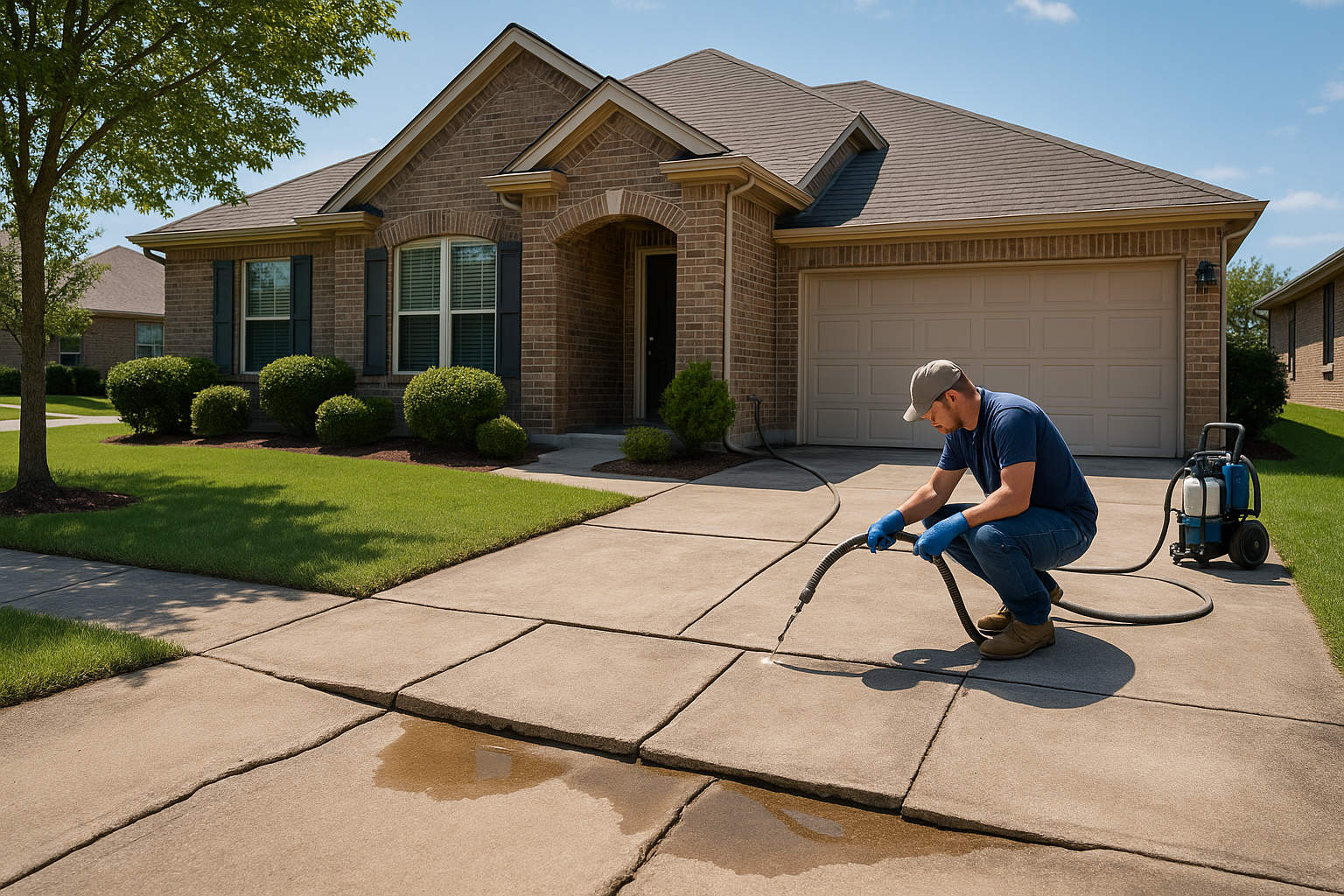
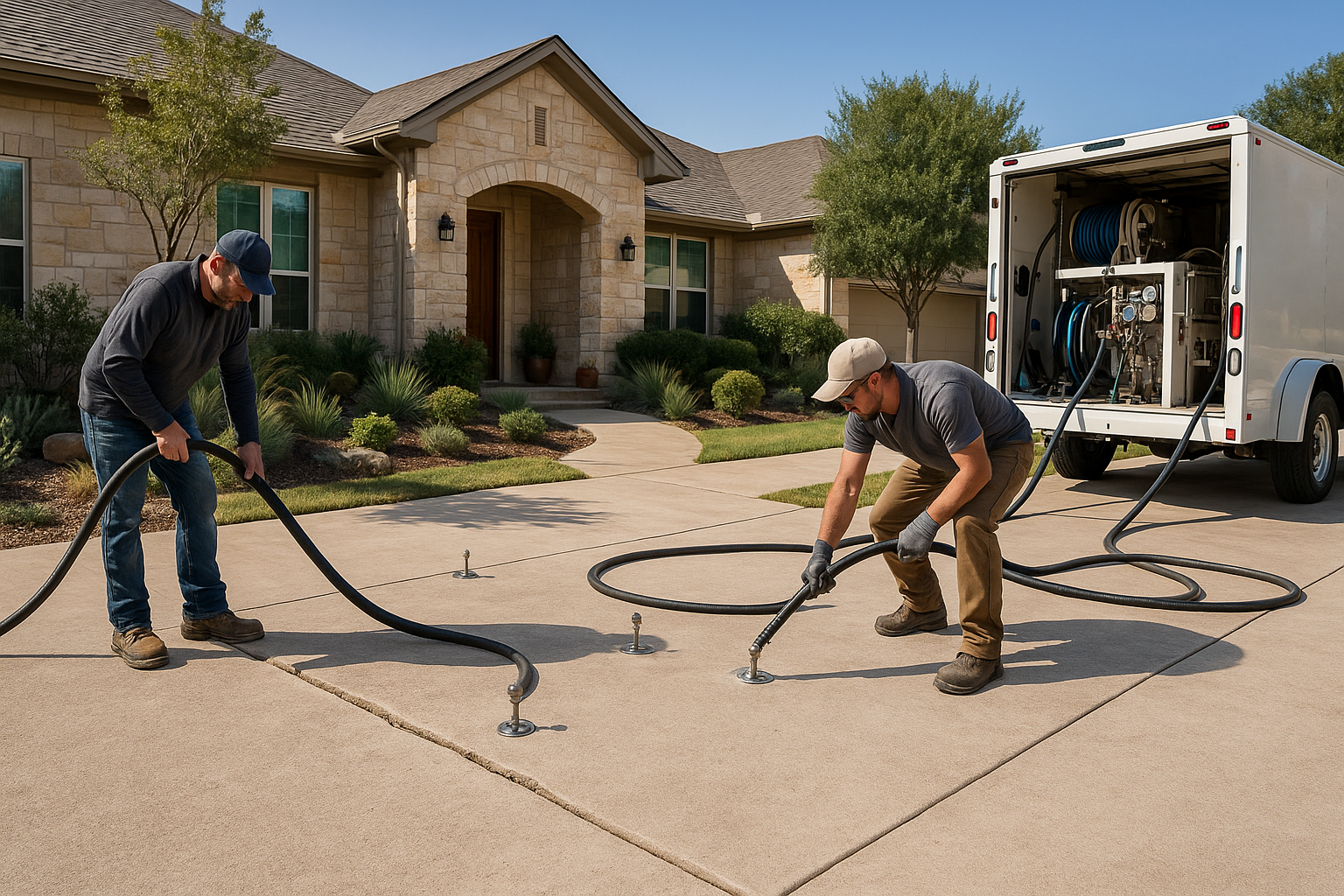
Polyurethane foam concrete leveling is a clean, efficient repair method for slabs that have settled because of voids or weak support below. Instead of removing the concrete, we drill small injection holes through the slab and pump a two-part foam underneath. That foam expands, fills empty space, and applies controlled lifting pressure to bring the slab back toward grade.
The process usually goes like this:
- We inspect the slab, measure settlement, and identify where support has been lost.
- We drill small holes in the affected concrete panels.
- We inject polyurethane foam below the slab in a controlled sequence.
- The expanding foam fills voids and gently lifts the concrete.
- We monitor elevation as we go to avoid over-lifting.
- The holes are patched and the slab is ready for use quickly.
One of the biggest advantages of foam is weight. Traditional mudjacking material is heavier, while polyurethane foam is lightweight and does not add much load to already compromised soil. It also cures fast. In many cases, the repaired area can be used the same day.
Foam leveling works well for:
- Driveways
- Sidewalks
- Patios
- Pool decks
- Garage approaches
- Porches and entry walks
For Bee Cave homes, that speed matters. Homeowners do not want their driveway blocked off for days or their patio demolished if the slab can be saved. Leveling is less invasive, and it usually preserves the look of the existing concrete better than a patchwork replacement.
That said, not every slab can be lifted. If the concrete is crushed, severely fractured, or the base failure is extreme, replacement may still be the right call. A good contractor should tell you that upfront. The goal is not to sell leveling on every job. The goal is to fix the slab the right way.
Pricing depends on how far the slab has settled, how large the affected area is, how easy the site is to access, and whether void filling alone or actual lift is needed. In the Bee Cave area, minor leveling work may start around a few hundred dollars, while larger driveway or pool deck corrections can run into the low thousands. Even then, it is often still much cheaper than demolition, haul-off, forming, and repouring new concrete.
Why Homeowners in Bee Cave Choose Leveling First
Most folks call us because they want to fix the problem without turning the property into a construction zone. Foam leveling makes sense when the slab is worth saving and you want a faster repair.
- Fast turnaround with minimal downtime
- Lower cost than full replacement in many cases
- Small injection holes instead of major demolition
- Less mess around landscaping and finished surfaces
- Improved drainage when low spots are corrected
- Safer walking surfaces around the home
That is especially important in Bee Cave, where many homes have decorative flatwork, tight access, pool areas, and landscaping you do not want torn up just to correct settlement.
Get a Free Quote in Bee Cave
If you have a sinking driveway, uneven sidewalk, settled patio, or sunken pool deck, we can take a look and tell you whether leveling is the right fix. At Hill Country Slabs, we provide honest recommendations based on the condition of the slab, the soil support underneath it, and the best long-term option for your property.
We serve Bee Cave and surrounding Central Texas communities, and we understand how local clay movement, limestone terrain, runoff, and heat cycles affect concrete over time. If your slab is dropping, it usually will not correct itself. The sooner you address it, the better chance you have of avoiding bigger separation, more cracking, and drainage problems.
Ready to talk about concrete leveling in Bee Cave, TX? Contact Hill Country Slabs for a free quote at /contact or call (737) 287-4308 today.