If you need concrete leveling in Austin, TX, chances are you have already noticed the warning signs. One corner of the driveway is lower than the rest. A sidewalk panel has turned into a trip hazard. The back patio holds water after every rain. Around Central Texas, that kind of slab movement is common. We see it all over Austin, Round Rock, Cedar Park, Georgetown, Pflugerville, and just about every neighborhood built on shifting Texas soils.
The good news is you usually do not need to tear out and replace the concrete. In many cases, foam leveling can lift and stabilize the slab without the mess, downtime, and cost of full replacement. For homeowners dealing with sunken driveways, sidewalks, pool decks, and patios, that is often the faster and smarter fix.
Why Concrete Sinks in Austin, TX
Austin-area concrete moves for a few big reasons, and the main one is our soil. A lot of Central Texas sits on expansive clay soils that swell when they get wet and shrink when they dry out. That constant cycle puts pressure on slabs and leaves voids underneath them. One season the slab is supported, the next season part of it drops.
We also deal with long dry spells, sudden heavy rain, and extreme summer heat. Those weather swings are rough on subgrade soils. During drought conditions, the ground can pull away and dry out hard. Then when we get a big rain, water runs into gaps and washes out fine material below the slab. Over time, the concrete loses support and starts to settle.
In newer subdivisions around Austin and Round Rock, we also see issues tied to fill soils and construction compaction. If the soil under a driveway or sidewalk was not compacted right from the start, settlement can show up sooner than homeowners expect. Tree roots can contribute too, especially around older neighborhoods where roots change moisture levels under flatwork.
Here is what commonly causes sinking concrete in this area:
- Expansive clay soil shrinking and swelling
- Heavy rain washing out base material
- Drought creating gaps beneath slabs
- Poor soil compaction during construction
- Drainage issues that keep water moving under the concrete
- Leaking irrigation or downspouts dumping water too close to the slab
That is why concrete leveling in Austin, TX is not just about making a slab look better. It is about restoring support and helping prevent more movement down the line.
Signs You Need Concrete Leveling
Most homeowners notice the problem before they know what to call it. Maybe the garage apron drops and you feel a bump every time you pull in. Maybe the front walk has one panel higher than the next. Maybe rainwater starts draining back toward the house instead of away from it.
If you catch settlement early, leveling is usually more straightforward and less expensive than waiting until the slab gets worse. Keep an eye out for these signs:
- Uneven driveway or sidewalk panels
- Trip hazards between slab sections
- Standing water on patios, pool decks, or walkways
- Gaps forming under the edge of the slab
- Concrete pulling away from steps, porches, or garage floors
- Sections that feel loose or sound hollow underneath
On a driveway, even a small drop can turn into a bigger issue fast because of vehicle weight. On sidewalks, a height difference of even a little over 1/4 inch to 1/2 inch can become a real safety concern. On patios and pool decks, low spots often create drainage problems that keep water where you do not want it.
If your slab is still in decent shape structurally, with no major shattering or widespread failure, leveling may be the right repair. We handle that often with services like Driveway Leveling and Sidewalk Repair depending on where the settlement is happening.
How Foam Leveling Works
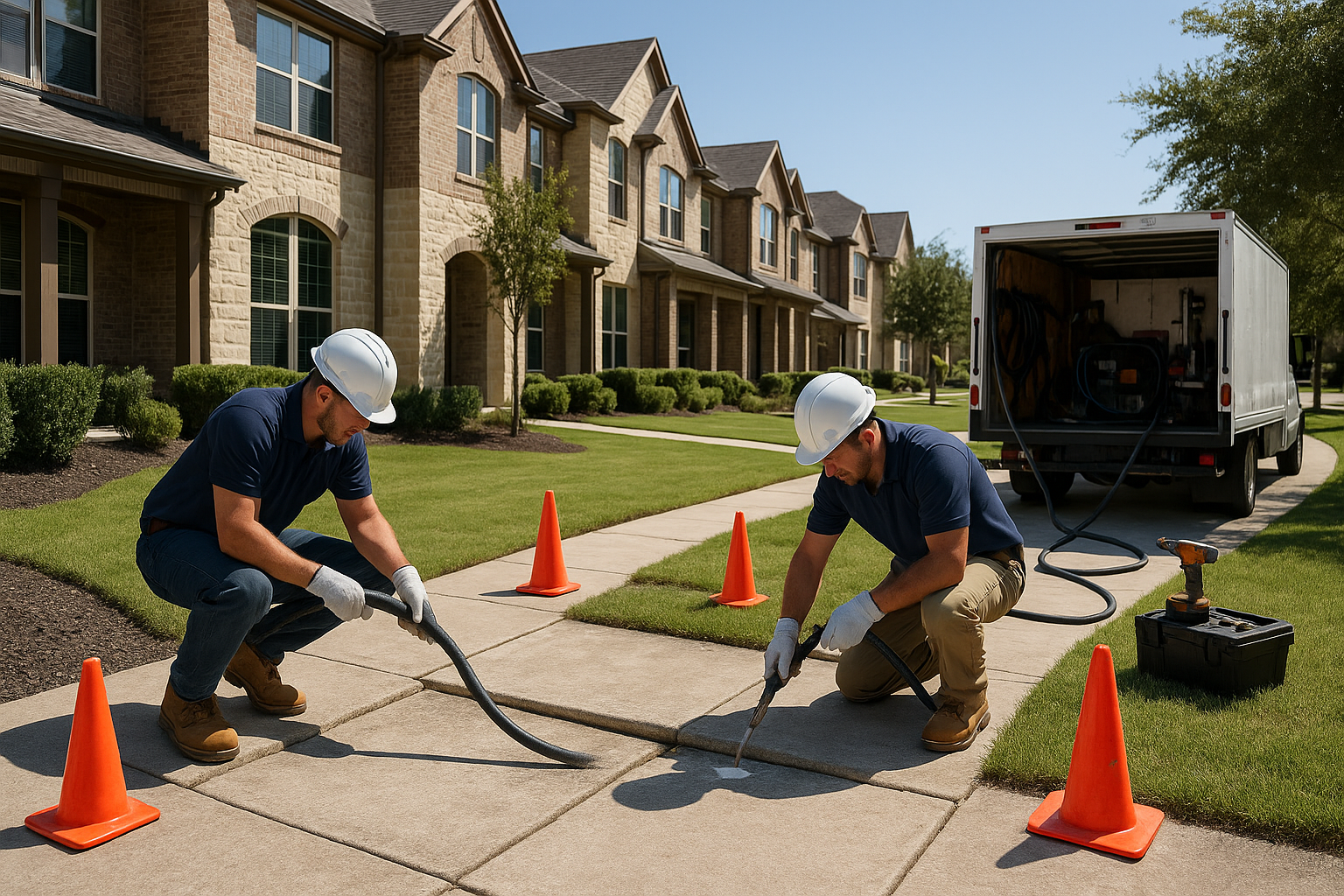
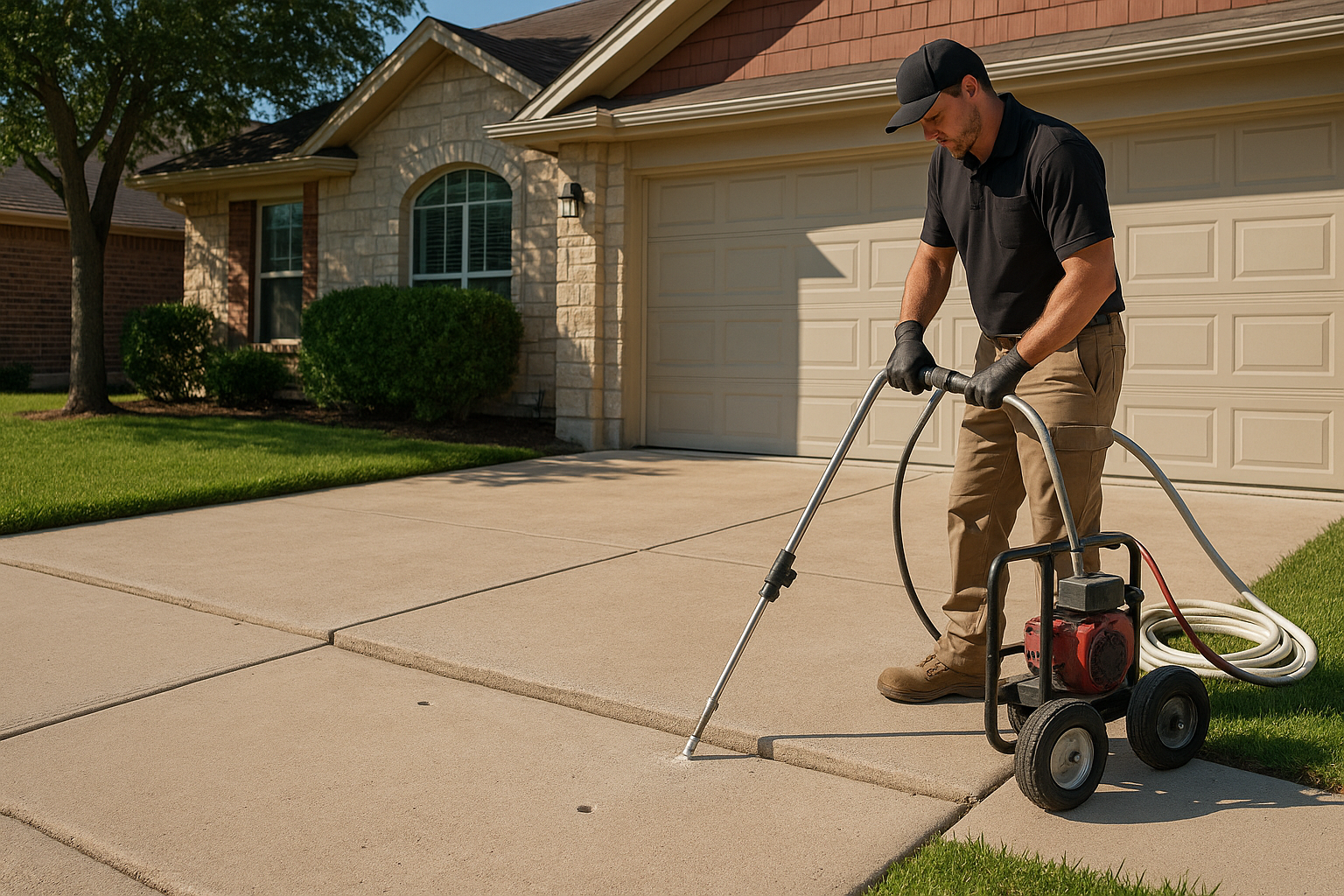
Foam leveling, sometimes called polyurethane concrete lifting, is a repair method that raises sunken slabs by filling voids below the concrete with expanding structural foam. It is a clean process and a good fit for many residential and light commercial jobs around Austin.
Here is the basic process:
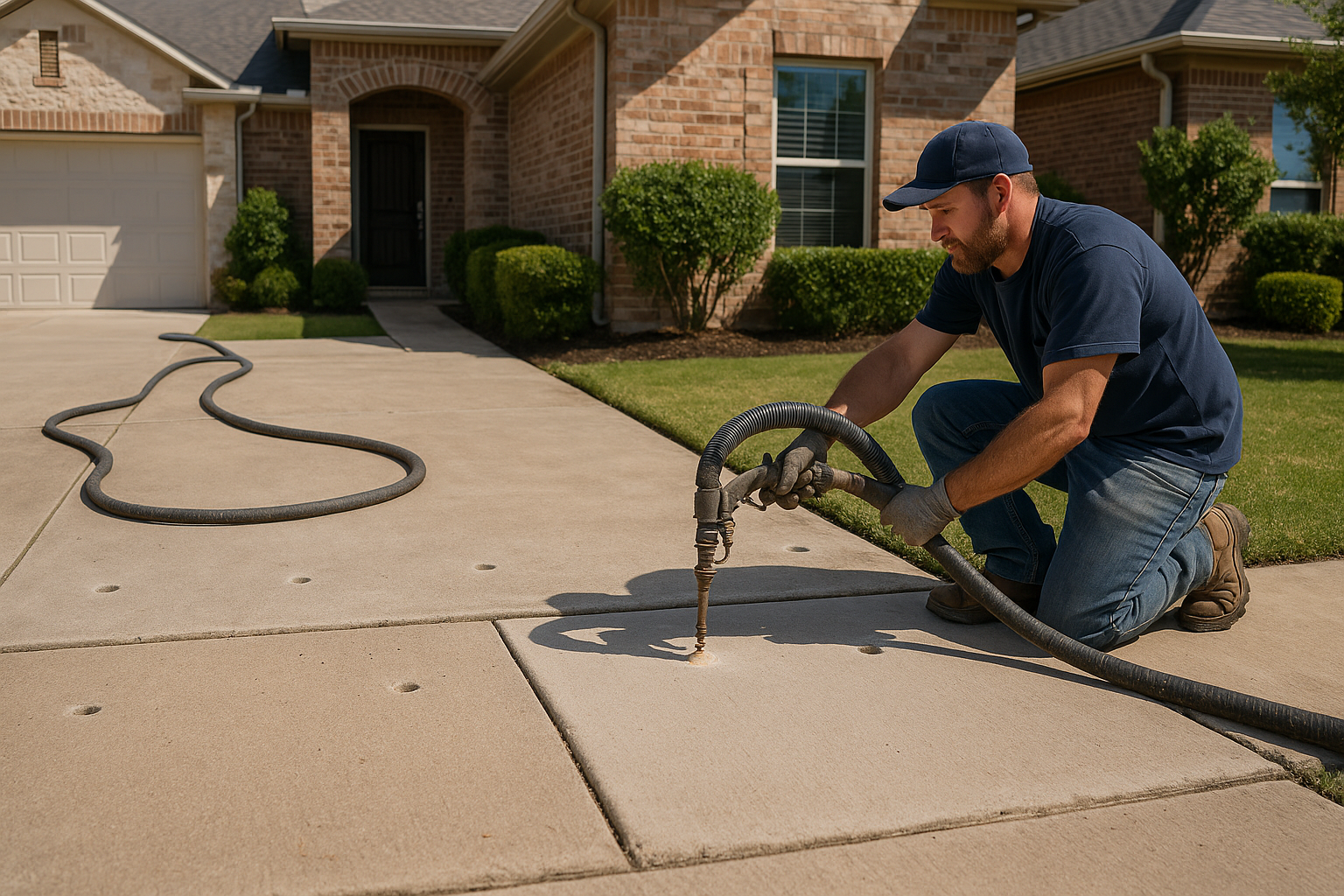
- Small holes are drilled through the concrete in strategic spots.
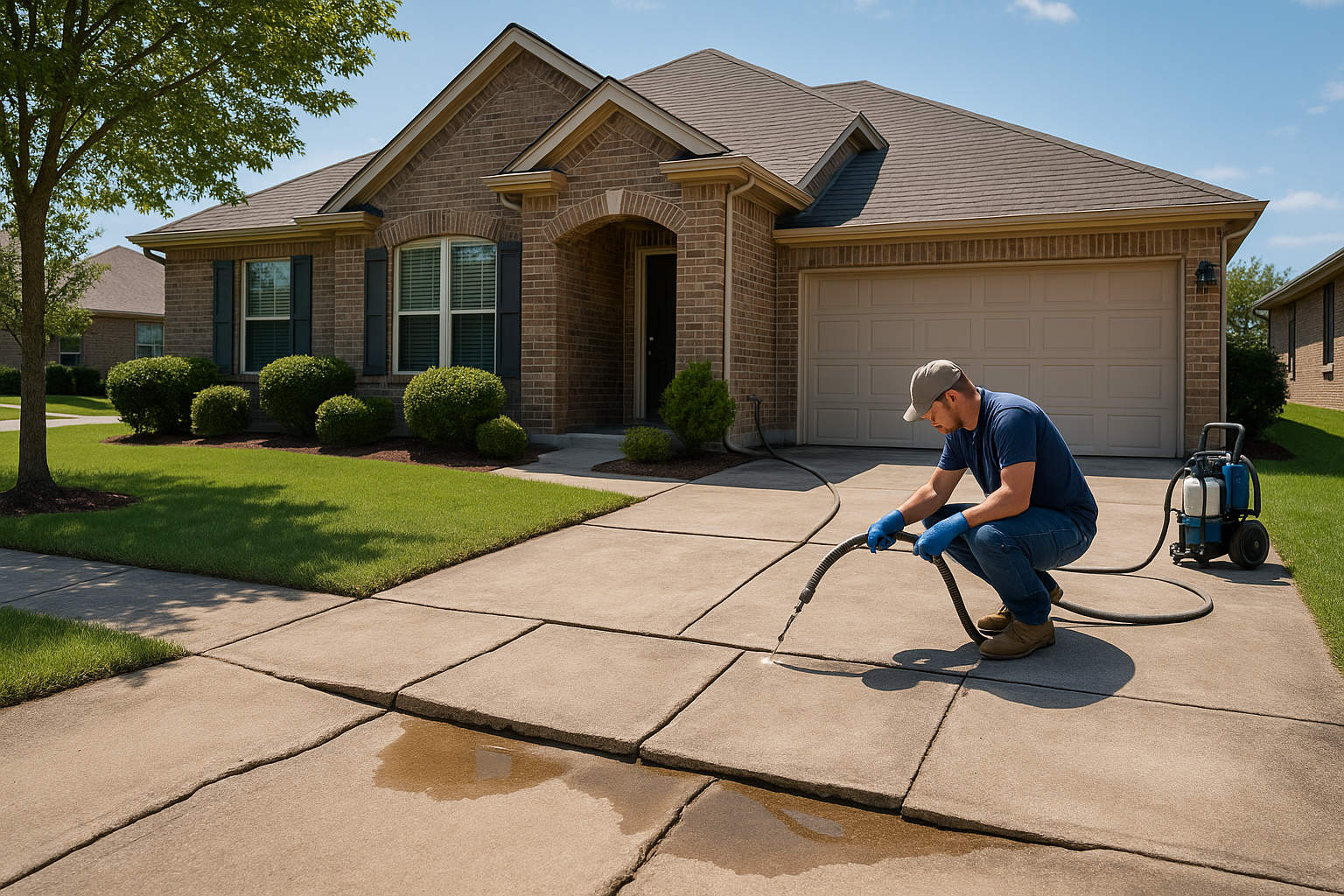
- A two-part polyurethane foam is injected beneath the slab.
- The foam expands, fills empty space, and applies controlled lift.
- The slab is raised back toward its proper position.
- The holes are patched, and the area is cleaned up.
One reason homeowners like this method is speed. In many cases, the repair can be completed in just a few hours, and the slab is ready for use much sooner than replacement. There is no need to demo the old concrete, haul debris out, form up new sections, pour fresh concrete, and wait days for it to cure.
Foam is also lightweight compared to older mudjacking materials, which matters when you are trying to stabilize soil conditions without adding more load. It works well for lifting driveways, sidewalks, patios, porches, and pool decks when the slab itself is still worth saving.
That said, leveling is not one-size-fits-all. A good contractor needs to look at the slab condition, the amount of settlement, drainage patterns, and whether there are control joints or cracks that need attention too. If joints have opened up or sealant is failing, it is smart to address that as part of the repair plan. You can learn more about that at /expansionjoints and at sealmyjoints.com.
What Foam Leveling Is Best For
- Sunken driveway panels
- Uneven sidewalks and walkways
- Patios that hold water
- Pool decks with minor settlement
- Garage aprons that have dropped
- Porches and entry paths with trip hazards
When the slab is badly broken, crushed, or missing large sections, replacement may still be necessary. But for a lot of Austin-area settlement problems, foam lifting gets the job done without turning your property into a construction site.
Why Homeowners Choose Repair Over Replacement
The biggest reasons are cost, time, and disruption. Full replacement sounds simple until you price it out and look at the timeline. Demolition, disposal, base prep, forming, rebar if needed, concrete placement, finishing, and cure time all add up fast.
For many residential slabs, leveling costs noticeably less than replacement. While every job is different, homeowners are often looking at repair costs that can come in at roughly 50% to 70% less than tearing out and replacing the same section. That is a big deal when the concrete surface is still in serviceable condition.
There is also the time factor. A foam leveling repair is often done in hours, not days. That matters if it is your main driveway, your front walkway, or the patio you use every weekend. Less downtime means less hassle.
Another reason is appearance. Replacement can leave you with brand-new concrete right next to older concrete, and the color usually does not match for a long time. Leveling keeps the original slab in place, so you avoid that patchwork look as long as the existing concrete is still sound.
Repair also makes sense when you want to address the cause, not just the symptom. If poor drainage or joint failure is allowing water under the slab, a good repair plan can include correcting runoff, sealing joints, and monitoring areas where the soil is vulnerable to movement. In Central Texas, that matters. Between dry summers, intense storms, and expansive clay, the real battle is keeping water from undermining the slab in the first place.
Why Austin Homeowners Call Before Replacing Concrete
- Lower cost on many settled slab repairs
- Faster turnaround with minimal downtime
- Less mess than demolition and replacement
- Cleaner appearance because the original slab stays in place
- Targeted repair for voids, settlement, and drainage-related movement
If you are in Austin and trying to decide whether your concrete needs replacement or can be lifted, the best first step is to get it looked at by someone who understands local soil and weather conditions. A slab in West Austin may behave differently than one in Round Rock or down toward Buda because the drainage, lot grading, and soil profile can all change from one area to the next.
At Hill Country Slabs, we focus on practical repairs that make sense for Texas properties. If your driveway, sidewalk, patio, or walkway has started to sink, we can help you figure out whether foam lifting is the right fix and what else needs to be done to keep the problem from coming back.
Need concrete leveling in Austin, TX? Contact Hill Country Slabs to schedule an evaluation. We handle slab lifting and related repairs across the Austin area. Visit /contact or call (737) 287-4308 to get started.