In Texas, curbs take a beating. Between long dry spells, sudden heavy rain, clay-heavy soils, and traffic from work trucks, delivery vans, and daily neighborhood use, it does not take much for a curb to start sinking, separating, or cracking. A damaged curb is not just an eyesore. It can create drainage issues, trip hazards, and edge breakdown that keeps getting worse if it is left alone.
The good news is that full tear-out is not always the right answer. In many cases, concrete curb repair in Texas can be completed faster and at a lower cost than replacement by lifting and stabilizing the existing section with polyurethane foam. That means less mess, less downtime, and a cleaner finish for residential streets, drive approaches, parking lots, and community sidewalks.
At Hill Country Slabs, we repair settled concrete across Central Texas, including Austin, Round Rock, and Cedar Park. If the curb damage is tied to nearby flatwork, we also handle Concrete Slab Repair and Sidewalk Repair. Here is what causes curb problems in Texas and when repair makes more sense than replacement.
What Causes Concrete Curbs to Sink or Crack in Texas?
Texas soil is one of the biggest reasons curbs move. Around Central Texas, we see expansive clay soils that swell when wet and shrink hard during drought. That constant movement leaves voids under concrete and puts stress on the slab edge. In other areas, especially where fill soil was not compacted well during construction, water can wash fine material away and leave unsupported sections behind.
Some of the most common causes of curb damage include:
- Expansive clay soil movement from wet-dry cycles
- Erosion under the curb from poor drainage or runoff
- Tree roots pushing from the back side of the curb or nearby sidewalks
- Vehicle loading from garbage trucks, trailers, and repeated tire impact
- Poor original subgrade prep that allows settling over time
- Failed joints that let water work down below the concrete
We see this all over the region, from older neighborhoods in Austin to newer developments in Round Rock and Cedar Park. One section starts to drop, water begins ponding where it should be flowing, and then the edge starts breaking apart. If movement is caught early, repair is usually straightforward. If it is ignored, the damage spreads into connected walks, driveways, and gutter sections.
That is also why expansion joint maintenance matters. If the joints between curb, driveway, sidewalk, or other concrete sections are open or dried out, water gets below the surface much easier. You can learn more about protecting those transitions at /expansionjoints or visit sealmyjoints.com for more information on joint sealing.
When Concrete Curb Repair Makes More Sense Than Replacement
A lot of property owners assume any cracked or sunken curb has to be torn out. That is not always true. If the concrete is still mostly intact and the section has settled because of voids or weak support below, lifting and stabilization is often the smarter route.
Concrete curb repair usually makes more sense than replacement when:
- The curb has sunk but is not completely shattered
- The crack pattern is limited and the pieces are still tight
- The problem is caused by soil settlement or erosion below
- You want to avoid demolition, haul-off, and long cure times
- You need the area back in service quickly
In those cases, foam leveling can save time and money. A full replacement often means saw cutting, removing old concrete, re-forming, pouring new material, and waiting for cure time before normal use. Depending on access and scope, that can turn into a bigger disruption than most owners expect.
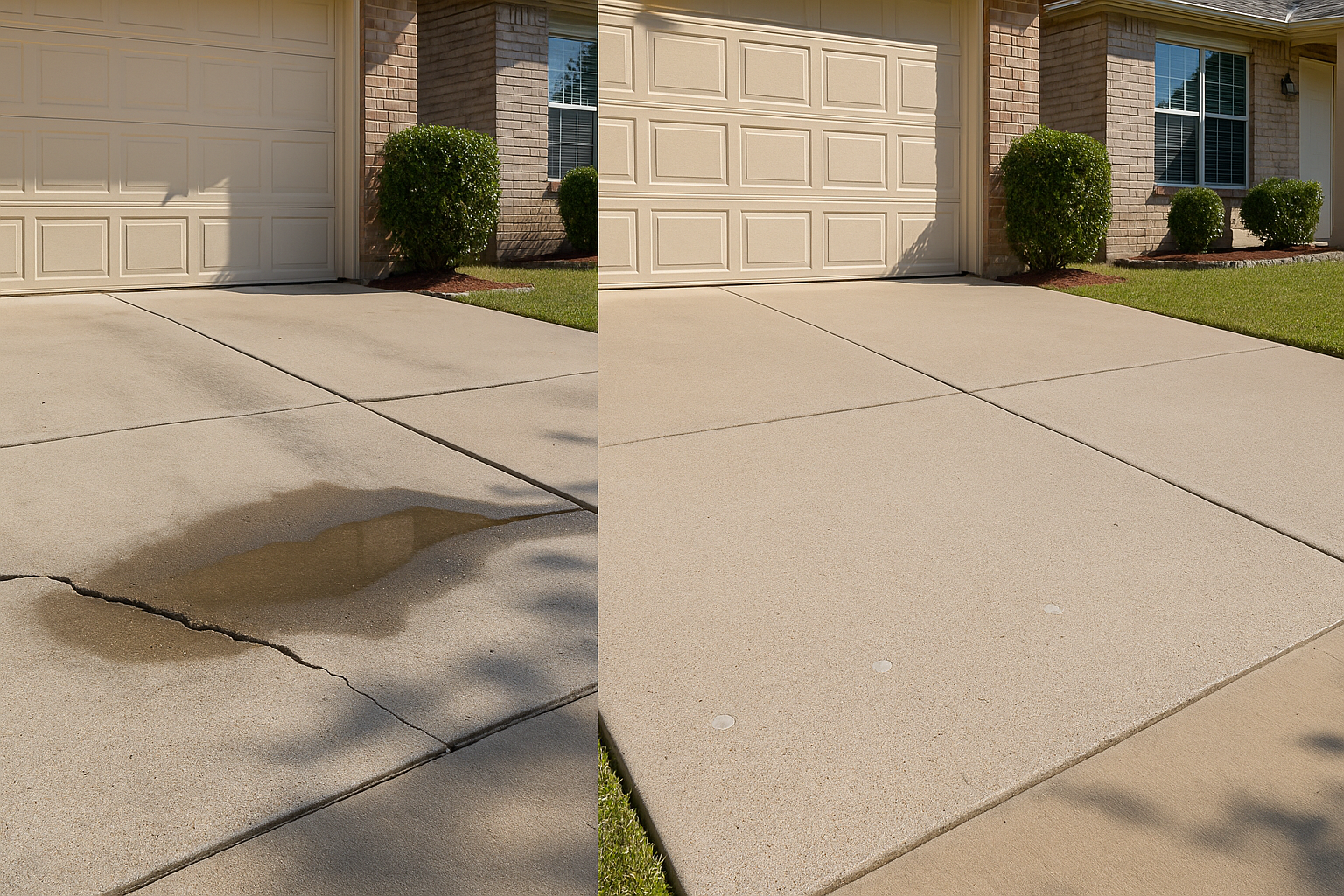
By comparison, foam repair is commonly completed in a fraction of the time, with small injection holes and minimal disturbance. In many situations, repair costs can run substantially less than full replacement, especially when the goal is to correct settlement and restore drainage instead of rebuilding the entire curb line. It is not unusual for owners to save 30% to 50% versus replacement when the curb is a good candidate for lifting and stabilization.
Replacement still has its place. If the curb is crushed, missing sections, badly heaved, or broken beyond alignment, a new pour may be the right call. The key is having somebody look at the actual cause instead of just the surface damage.
How Foam Leveling Works for Concrete Curb Repair
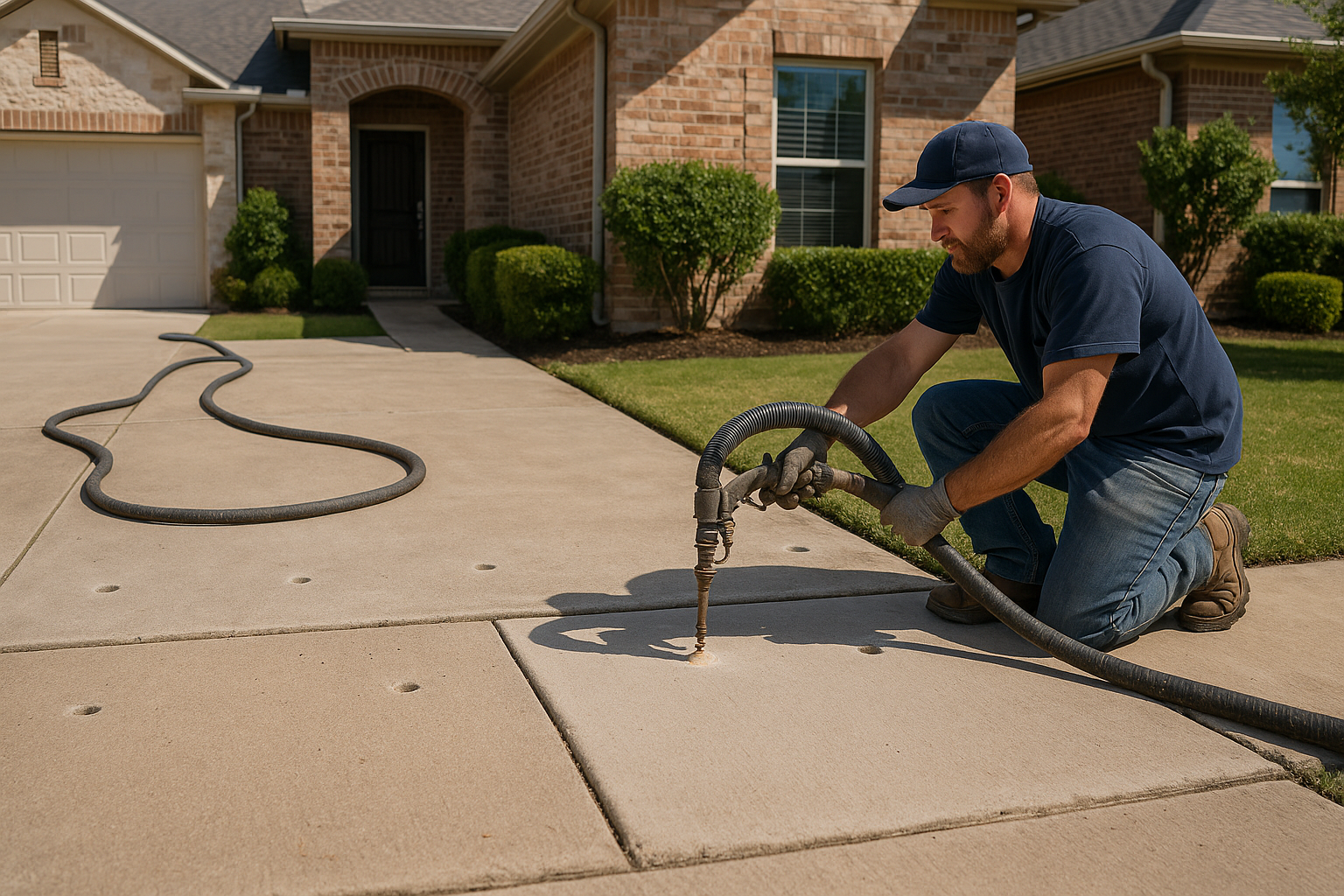
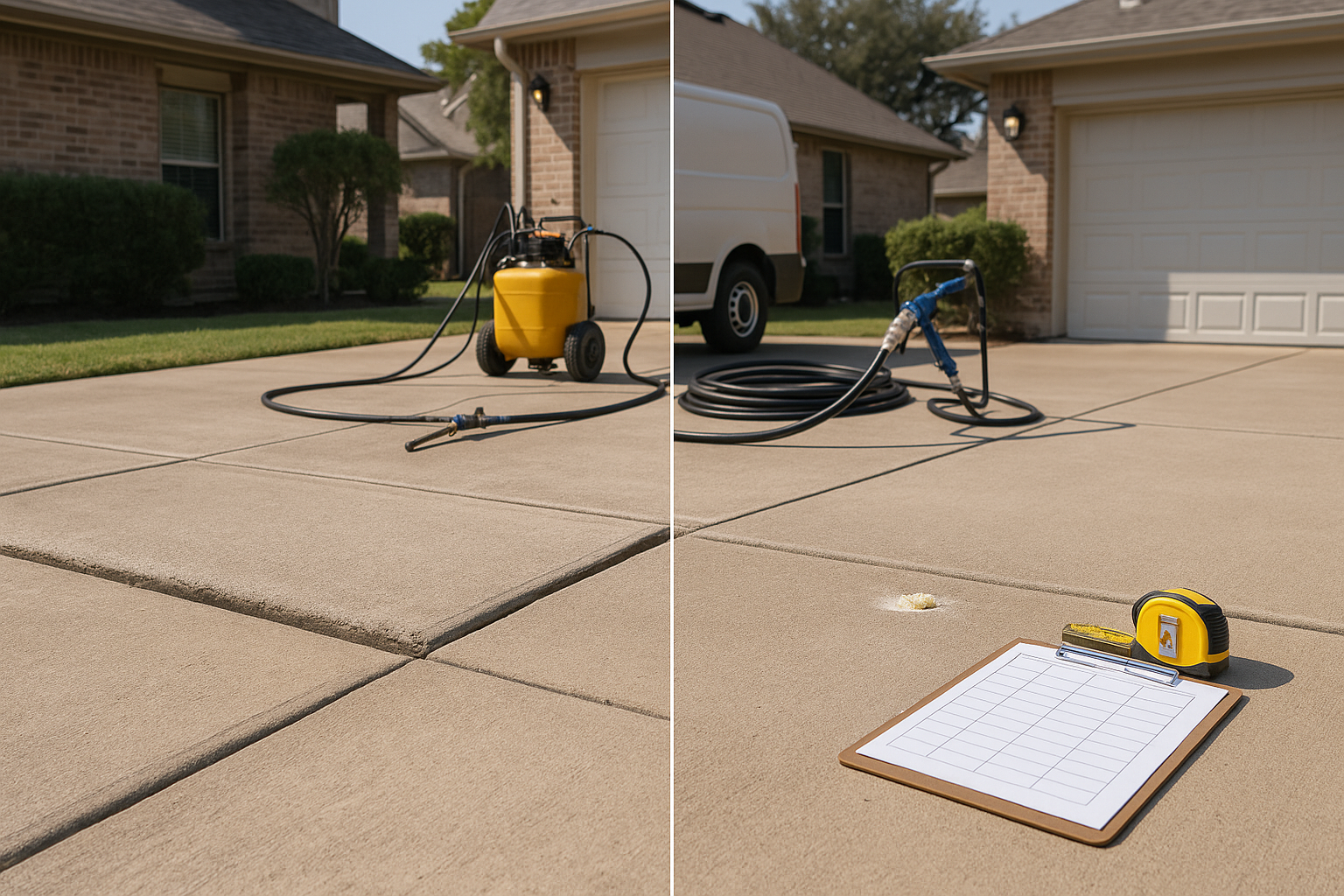
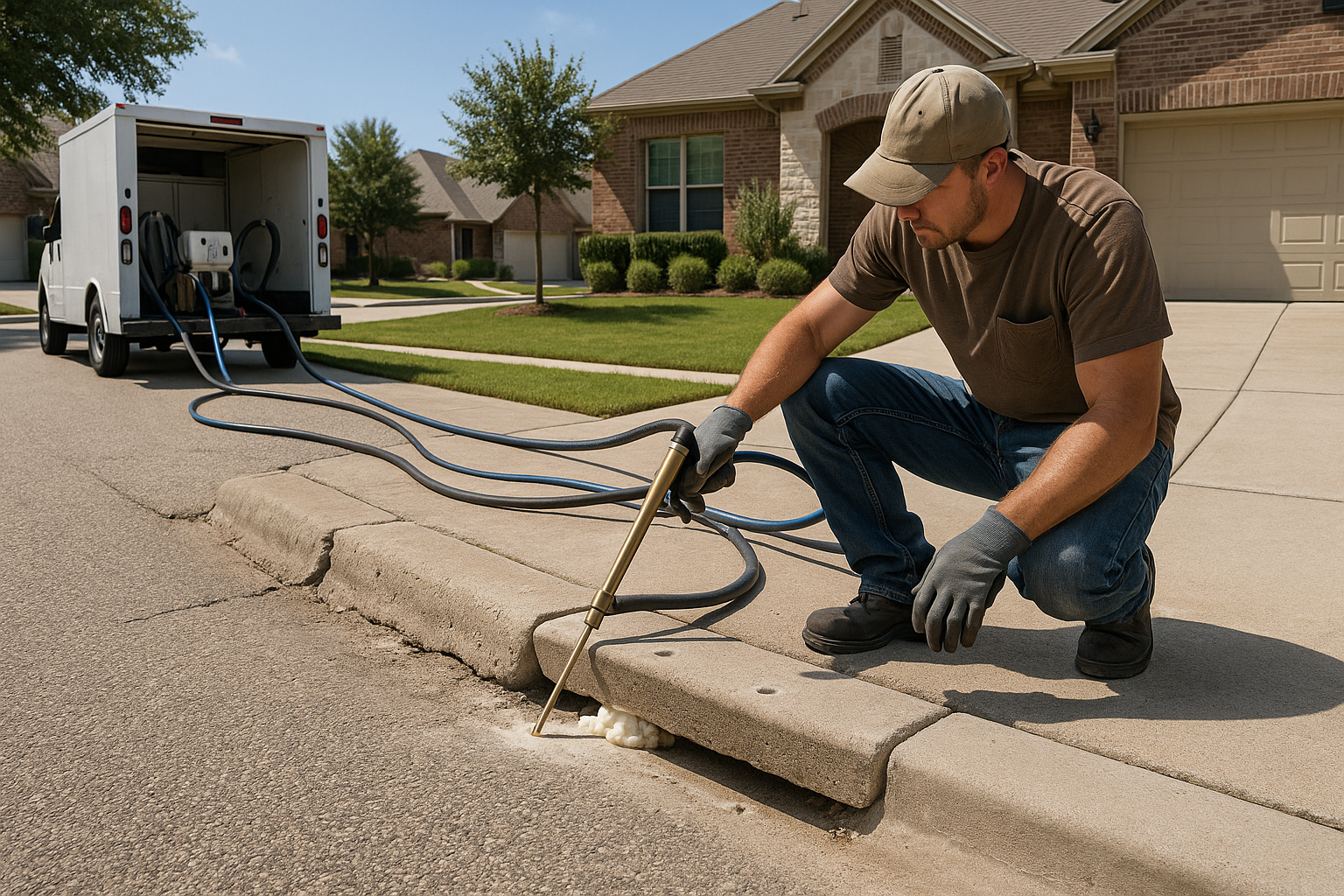
Polyurethane foam leveling is one of the cleanest ways to repair settled concrete in Texas. The process starts with evaluating the curb, the surrounding grade, and the amount of movement. Small holes are drilled in strategic locations, and a two-part structural foam is injected beneath the slab. As the material expands, it fills voids, compacts weak soils, and gently lifts the concrete back toward proper grade.
For curb repair, that matters for two big reasons. First, the lift is controlled, which helps us bring the section back into line without the heavy disturbance of demolition. Second, the foam is lightweight, so it does not add major load back onto already unstable soils.
Benefits of foam leveling for curbs include:
- Fast installation with no major tear-out
- Minimal downtime compared to replacement
- Small drill holes instead of large equipment damage
- Void filling and support below the concrete
- Better drainage restoration when slope is corrected
Most people are surprised how quickly the area can be returned to service. In many jobs, the curb is ready for normal use the same day. That is a big deal for HOA streets, commercial properties, and residential neighborhoods where access and appearance matter.
Foam leveling also works well when curb issues are tied into nearby settled flatwork. If the curb has dropped with the adjacent walk or driveway apron, we can often address the system together through Sidewalk Repair or Concrete Slab Repair so you are not fixing one piece while the surrounding concrete keeps pulling away.
How to Know If Your Curb Is a Safety or Drainage Problem
Not every crack is an emergency, but a lot of curb damage in Texas turns into a real liability faster than owners expect. If the curb is low in one area, stormwater may stop flowing properly and begin ponding against the gutter or backing up near driveways. If the face of the curb is broken or uneven, it can create trip edges where pedestrians step off nearby sidewalks or where maintenance crews work around the street edge.
Watch for these warning signs:
- Standing water near the curb after rain
- Uneven curb reveal from one section to the next
- Separation at joints that keeps widening
- Cracks with vertical displacement
- Broken edges where tires or foot traffic hit the curb
- Settlement next to sidewalks or driveways
Drainage matters a lot in Texas because our weather swings are hard on concrete. A curb that holds water after one heavy storm can push more moisture into the subgrade, and then a long hot stretch causes shrinkage and more movement. That cycle repeats until a small issue becomes a bigger repair.
From a safety standpoint, any curb with noticeable displacement should be looked at sooner rather than later. For commercial properties and HOAs, that can mean reducing exposure to claims. For homeowners, it means protecting the driveway edge, sidewalk, and street approach before damage spreads.
What We Look At Before Recommending Repair
Before we recommend foam leveling, we look at the condition of the concrete, the amount of settlement, nearby drainage patterns, and whether the joints are still doing their job. We also check if water is getting in from failed seals or open gaps. If the curb can be lifted and stabilized effectively, repair is usually the most efficient path. If the concrete has failed structurally, we will tell you that too.
The goal is simple: fix the cause, not just the symptom. A curb that gets lifted without addressing water entry at the joints may settle again. That is why we often talk with owners about sealing and protecting those transition points after the structural repair is complete.
If you have a sinking, cracked, or uneven curb, Hill Country Slabs can help you figure out whether it can be repaired without full replacement. We serve property owners across Central Texas with practical solutions that fit Texas soil and weather conditions. Contact us at /contact or call (737) 287-4308 to schedule an evaluation.