In Texas, concrete takes a beating. Between long summer droughts, sudden heavy rain, shifting clay soils, and day-to-day traffic, it does not take much for a slab to start showing stress. We see it all over Austin, Round Rock, San Antonio, Georgetown, and the rest of Central Texas. A small crack in a driveway, patio, sidewalk, or foundation-adjacent slab may not look like a big deal at first, but if the slab is moving underneath, that crack can widen fast.
The good news is not every crack means full replacement. In many cases, concrete crack repair in Texas is straightforward when you catch it early. In other cases, the crack is really a symptom of settlement, voids, washout, or expansion pressure. That is when leveling the slab is usually the smarter fix. The main job is figuring out whether you just need the crack treated or whether you need to stabilize the slab so the crack does not come right back.
What Causes Concrete Cracks in Texas?
Texas soil is one of the biggest reasons concrete cracks here more than people expect. A lot of the state, especially around Austin, Round Rock, Temple, Waco, and Dallas-Fort Worth, has expansive clay soil. That clay swells when it gets wet and shrinks when it dries out. During a dry spell, the soil pulls away from the slab. Then a hard rain comes through, the soil rehydrates unevenly, and the slab gets stressed from below. That movement creates cracks, especially in driveways, walkways, pool decks, and garage floors.
In other parts of Texas, you may deal with sandy or rocky soils that drain differently, but the result can still be the same. Water erosion, poor base prep, plumbing leaks, bad drainage, or gutter discharge dumping next to a slab can wash out support. Once the slab loses contact with the soil, it starts bridging over empty space. Concrete is strong in compression, but not when it is hanging over a void. That is when cracks start to show up.
- Expansive clay movement from drought and rehydration cycles
- Heavy Texas rain washing out soil under slabs
- Tree roots pulling moisture from one side of the slab
- Poor drainage from downspouts, grading, or irrigation overspray
- Heat and sun exposure causing expansion and shrinkage stress
- Vehicle loads on driveways and approach slabs
- Missing or failed joints that let random cracking form
We also see a lot of issues where control joints and expansion joints were never installed right or have broken down over time. If you have open joints, weeds growing in the gap, or joint sealant that has dried out and failed, water gets into places it should not. That is why we tell homeowners to pay attention to joint maintenance. If you need more information on that side of slab protection, check out expansion joints and sealmyjoints.com.
When Is Crack Repair Enough vs Leveling?
This is where a lot of property owners get bad advice. If the slab is still supported, still sitting fairly even, and the crack is mostly cosmetic or the result of normal shrinkage, then direct crack repair may be enough. That usually applies to hairline cracks, non-displaced cracks, and isolated surface defects where the concrete is not rocking, dipping, or separating in elevation.
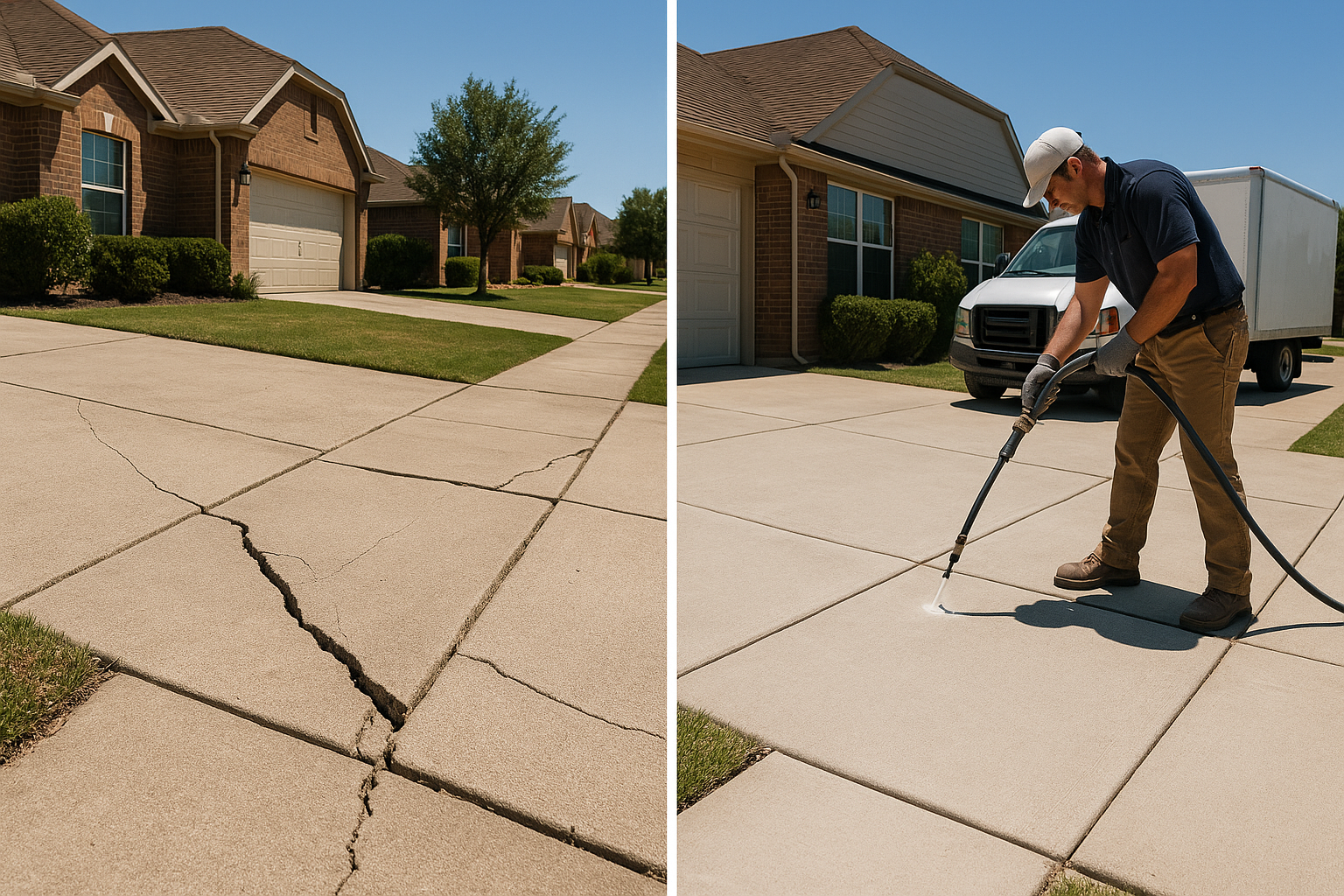
But if one side of the crack is higher than the other, if water is draining toward the house, if the slab sounds hollow, or if the crack keeps reopening after patching, the real problem is usually movement underneath. In that situation, sealing the crack alone is a temporary bandage. The slab needs to be lifted, stabilized, or both.
Here is a simple way to look at it:
- Crack repair alone makes sense when the slab is stable and level
- Leveling plus crack repair makes sense when there is settlement, rocking, trip hazards, or drainage problems
- Replacement is usually reserved for slabs that are severely broken, badly spalled, or structurally beyond repair
For many Texas homeowners, leveling is the cost-saving move. A full tear-out and replacement can run into the thousands fast once demolition, haul-off, forming, rebar, and finishing are added up. Depending on access and slab condition, leveling is often done for far less than replacement, and it avoids turning your property into a construction site for days. On smaller residential sections, homeowners often find repair and leveling costs are 40% to 70% lower than replacing the slab outright.
If you are dealing with settled flatwork around the house, our Concrete Slab Repair service is usually the starting point. If the main issue is a sunken approach, apron, or residential drive, our Driveway Leveling service is the better fit.
How Foam Leveling Helps Stop Cracks From Getting Worse
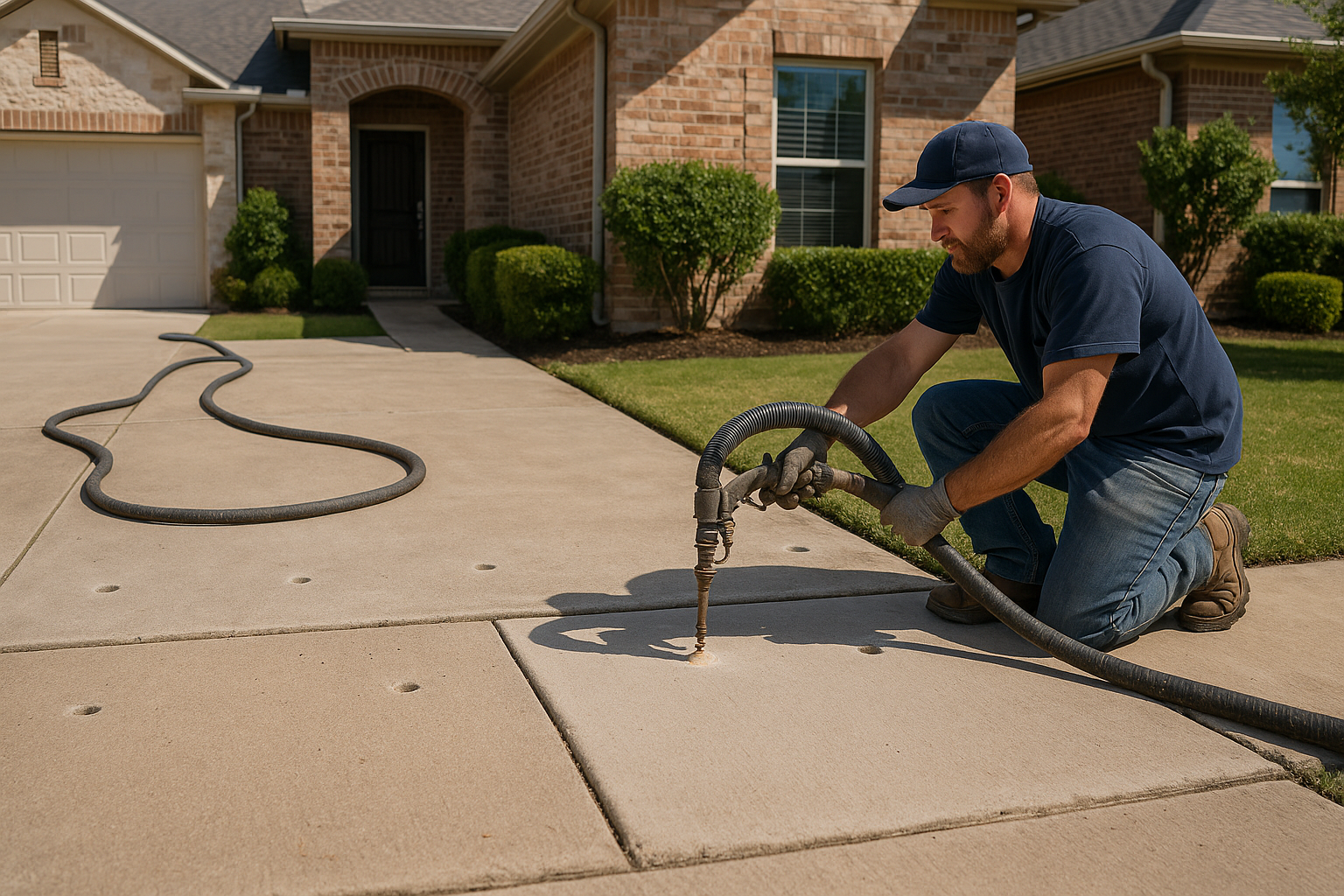
Polyurethane foam leveling works well in Texas because it addresses the root problem under the slab. Instead of removing good concrete, we drill small holes, inject high-density foam beneath the slab, and let that material expand into voids and weak spots. The foam lifts and supports the concrete while adding very little weight to the soil below. That matters in areas with soft or moisture-sensitive soils.
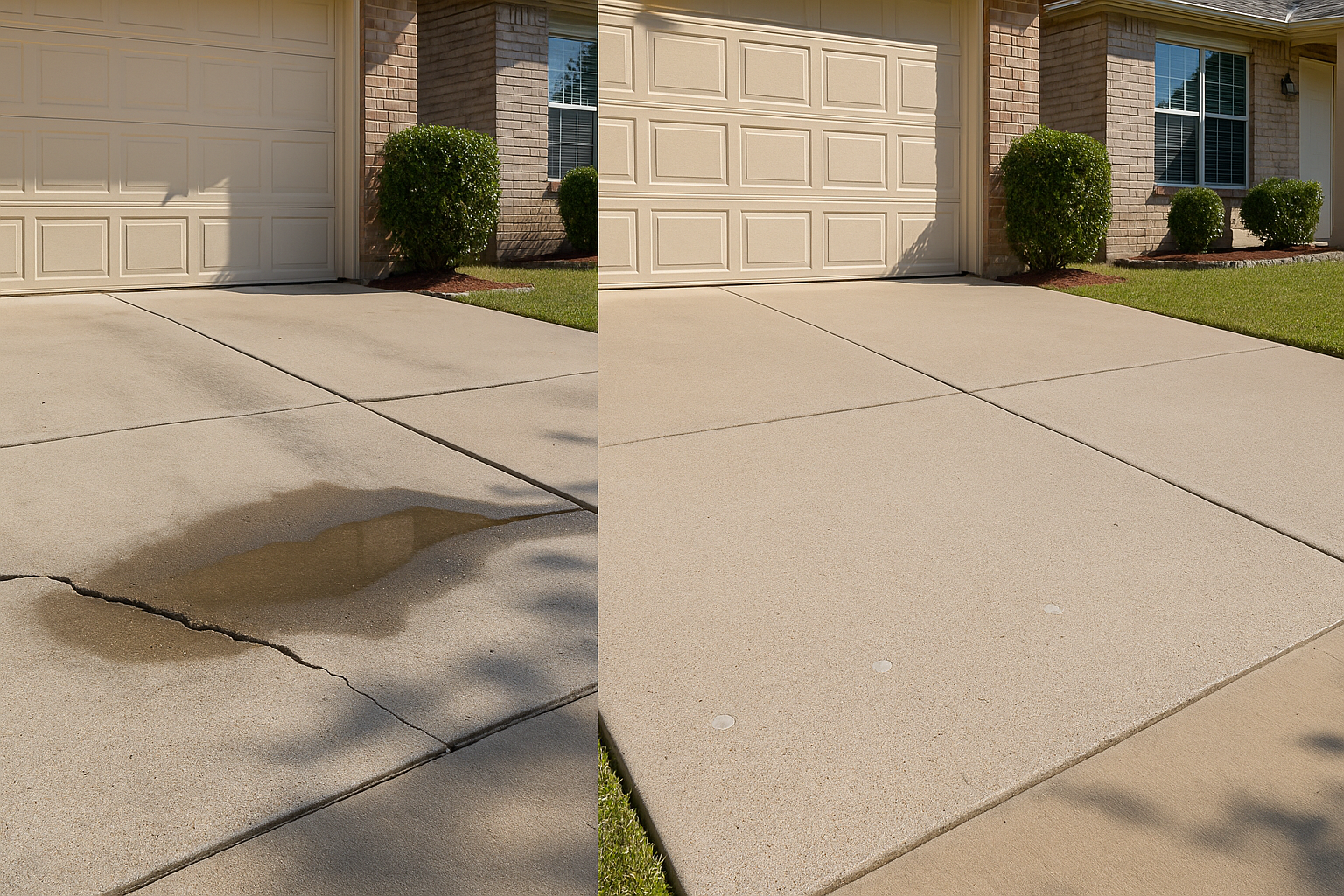
Once the slab is back where it belongs, the crack is no longer being stressed the same way. That does not mean every crack disappears, but it does mean the slab is stabilized so repairs have a better chance of lasting. In practical terms, foam leveling helps by:
- Filling voids caused by erosion or soil shrinkage
- Reducing slab movement that keeps reopening cracks
- Improving drainage by restoring the right pitch
- Removing trip hazards on sidewalks, patios, and driveways
- Avoiding demolition and long cure times tied to replacement
In Central Texas, that is especially important after a dry summer followed by fall or spring storms. We will often see a driveway crack that looked minor in July turn into settlement by October because the soils changed so much underneath. The same thing happens around pool decks and sidewalks where runoff repeatedly washes along one edge. When the slab gets lifted early, you usually prevent wider cracks, broken corners, and more expensive follow-up work.
Another advantage is speed. Most foam leveling jobs are completed in hours, not days, and the slab is typically ready for use quickly after repair. For busy homeowners and commercial properties, that matters. You are not waiting around on a new pour to cure while your driveway or walkway stays blocked off.
When to Call for Concrete Crack Repair in Texas
Some cracking is normal in concrete. What matters is whether the crack is stable or whether it is a warning sign of movement. We recommend calling for an inspection when you notice any of the following:
- One side of the crack sits higher than the other
- The crack is widening over time
- Sections of the slab feel loose or rock underfoot
- Water ponds near the crack after rain
- There is a trip hazard along a sidewalk or driveway
- You see separation near the garage, porch, or home entry
- Past patch jobs have failed more than once
Homeowners in Austin and Round Rock often call after noticing the slab moved during one season and then cracked more during the next. That is common in Texas. The earlier you deal with it, the more options you usually have. Once a crack turns into major displacement or the slab breaks into multiple unsupported sections, repair gets more limited and replacement becomes more likely.
As a general rule, if the crack is only a surface issue, repair may be all you need. If the slab is settling, lifting, draining wrong, or opening at joints, it is time to look at leveling and support underneath. A good contractor should tell you the difference and not push replacement if the slab can still be saved.
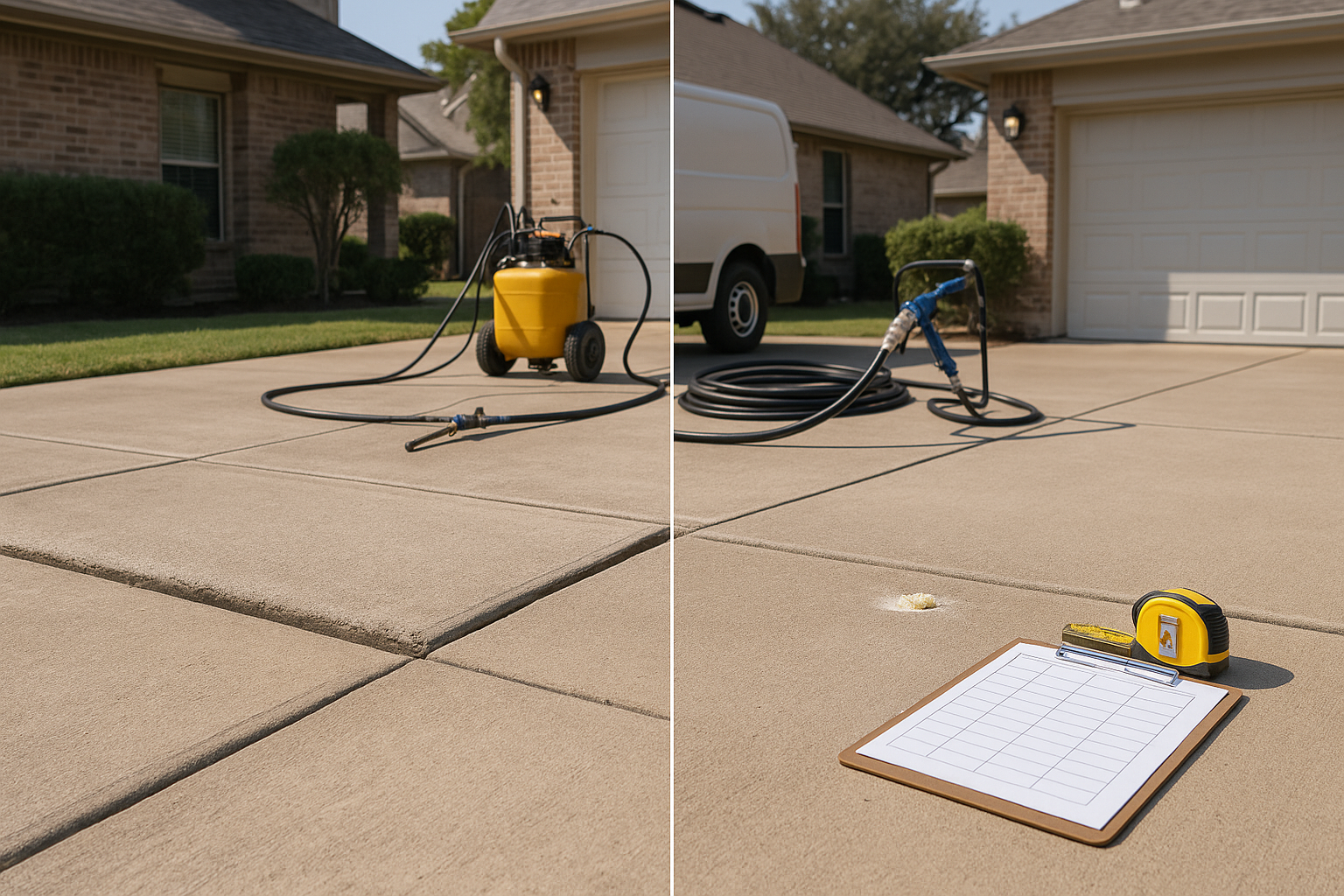
At Hill Country Slabs, we look at the whole slab system, not just the line in the concrete. We check for settlement, voids, drainage issues, joint failure, and soil-related movement so you get a repair that actually addresses the cause. If you are seeing cracks in a driveway, sidewalk, patio, or other slab in Texas, now is the time to get it looked at before the damage spreads.
Need honest advice on concrete crack repair in Texas? Contact Hill Country Slabs for an evaluation and a practical repair plan. Visit /contact or call (737) 287-4308 today.