If you manage retail centers, office buildings, medical properties, schools, or industrial sites, sidewalk problems do not stay small for long. In Texas, a little slab movement can turn into a trip hazard, drainage issue, and liability problem in one season. Between expansive clay soils, long dry stretches, sudden heavy rain, and constant foot traffic, commercial sidewalks across the state take a beating.
That is why commercial sidewalk repair in Texas is usually about timing as much as method. Catch a sinking or uneven panel early enough, and you may be able to lift and stabilize it instead of tearing everything out. Wait too long, and replacement becomes the better call. At Commercial Concrete projects around Austin, TX, San Antonio, TX, and the surrounding Hill Country, we see the same pattern over and over: the best repair is the one that fixes the cause, not just the surface.
Below is what property managers, facility teams, and business owners should know before they schedule work.
When Commercial Sidewalk Repair Is the Best Option
Not every bad sidewalk needs full replacement. A lot of commercial panels are still structurally sound even when they have settled, tilted, or separated at the joints. If the concrete is in decent shape and the main problem is loss of support underneath, repair can save time and money.
Commercial sidewalk repair usually makes sense when you are dealing with:
- One or more panels that have sunk but are not badly broken
- Trip hazards at panel edges or control joints
- Water draining toward storefronts, entries, or accessible routes
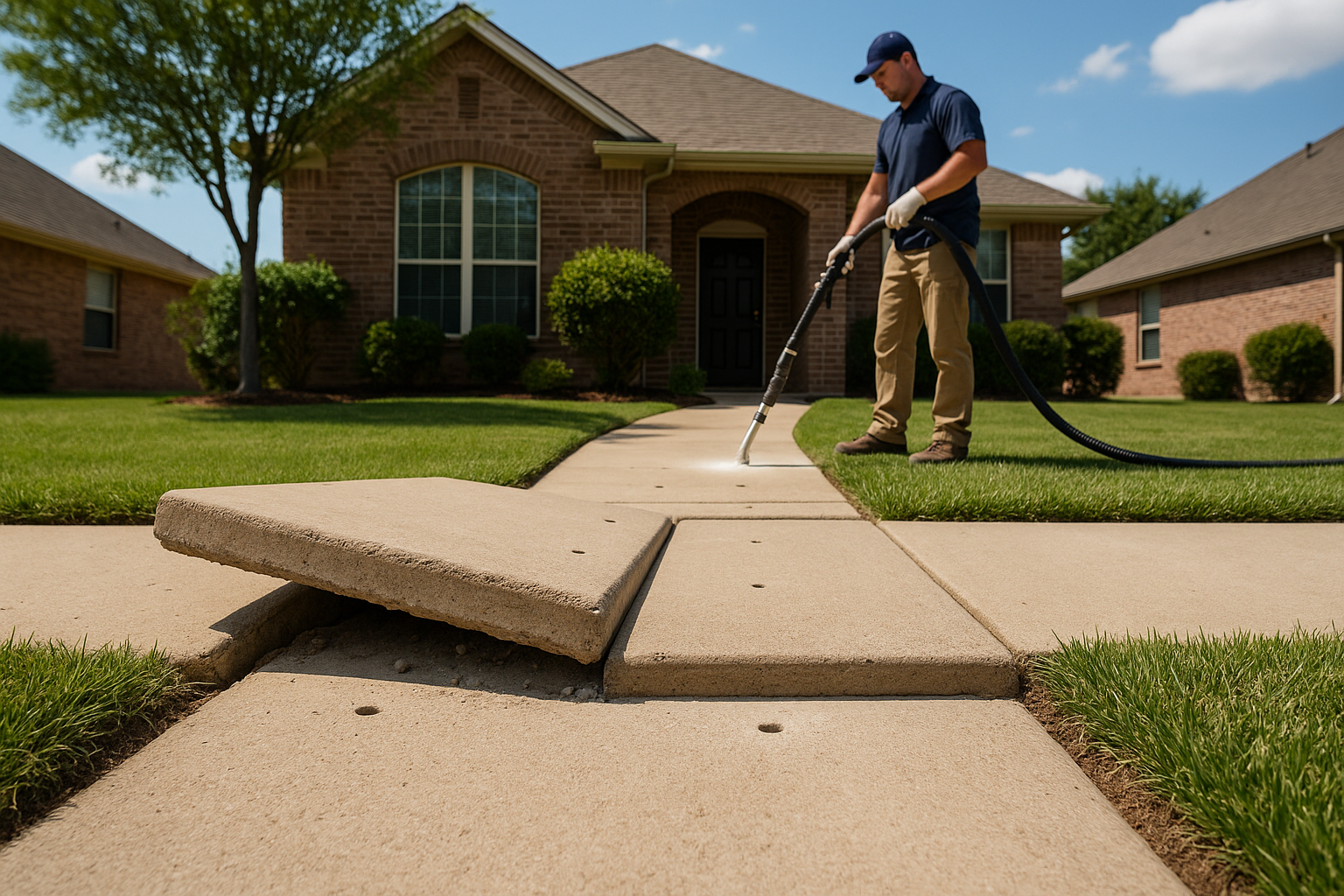
- Voids under the slab from soil washout
- Early-stage movement before major cracking spreads
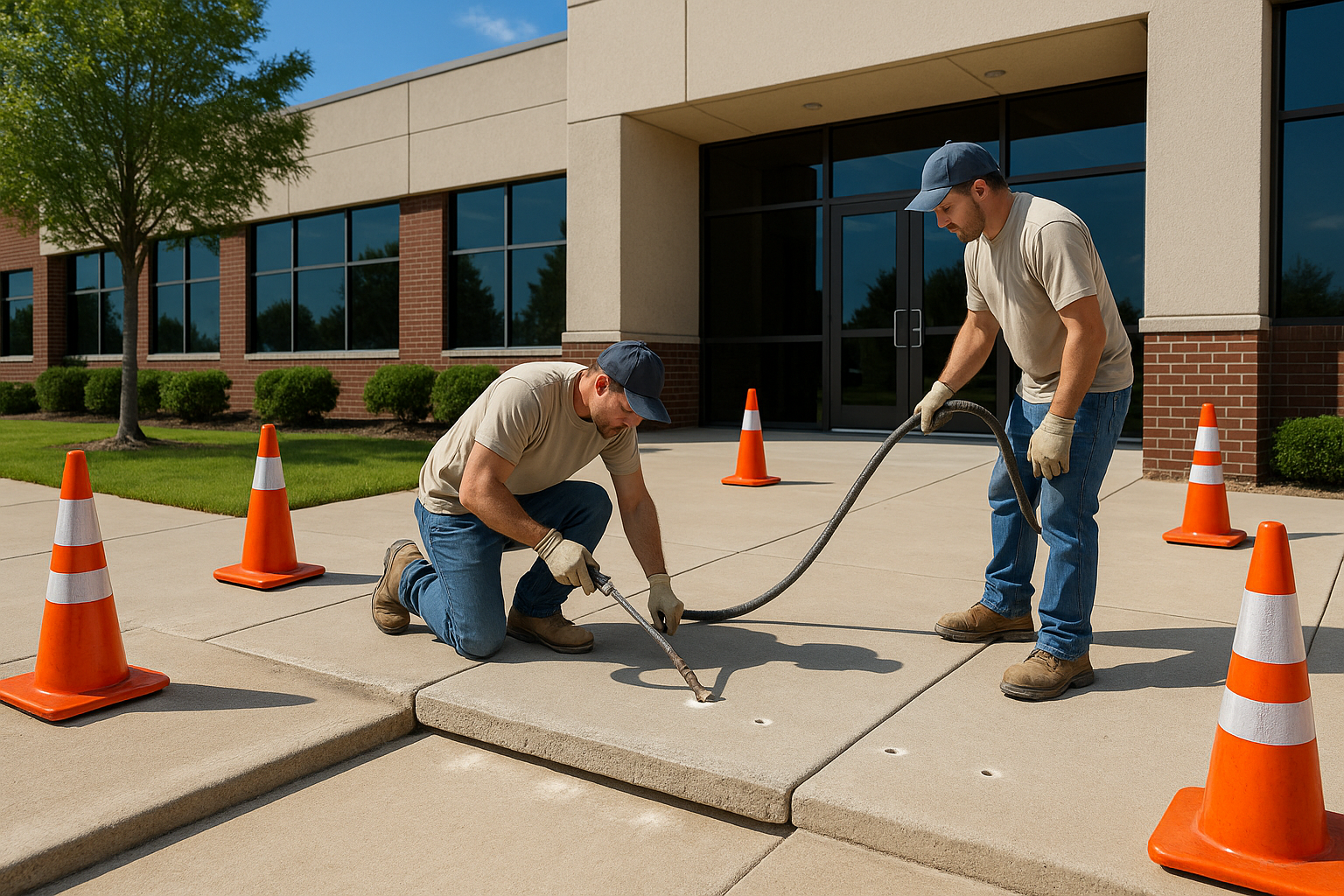
In those cases, lifting the slab back into place can often restore safe access without shutting down a whole walkway for days. For busy properties, that matters. Retail tenants, office staff, patients, and customers still need a clear path in and out.
We typically tell owners to look at three things first: slab condition, amount of movement, and what is going on below grade. If the panel is intact and settlement is manageable, foam lifting is often the practical fix. If the slab is shattered, heaved, or deteriorated from the inside out, replacement is usually the smarter long-term investment.
For broader site work, many owners pair sidewalk correction with Sidewalk Repair planning across the whole property so isolated hazards do not keep popping up in new spots.
Common Causes of Sinking Sidewalks at Commercial Properties
Texas gives concrete a rough working environment. The reason sidewalks settle here is usually not a mystery. The challenge is that several conditions can stack on top of each other.
Expansive clay soils
Across Central and South Texas, expansive clay is one of the biggest causes of slab movement. These soils swell when they take on moisture and shrink when they dry out. That repeated cycle leaves concrete without consistent support. In places around Austin, San Antonio, New Braunfels, San Marcos, and Georgetown, this is a constant issue.
When drought hits and the soil pulls away, slabs can drop. When heavy rains come back fast, the ground shifts again. That is one reason you can see sidewalks move even on fairly new commercial sites.
Poor drainage and washout
Water is just as hard on sidewalks as dry weather. Downspouts that discharge too close to walkways, broken irrigation lines, low spots that hold runoff, and improper grading can all wash fines out from beneath the slab. Once a void forms, the concrete starts bridging empty space. After that, traffic loads and weather do the rest.
If water is moving through joints, that is also a good time to look at joint sealing. Proper maintenance at expansion joints helps reduce infiltration and protects the slab system over time. For more on joint sealing, property teams can also review sealmyjoints.com.
Inadequate compaction during original construction
Some commercial sidewalks settle because the base was never compacted the way it should have been. That may not show up right away. It can take months or years before the slab starts dipping near entries, dumpster enclosures, loading walks, or parking lot connections.
Once that weak base gets exposed to moisture swings, the problem gets worse faster.
Tree roots and nearby site pressure
Not all movement is downward. Tree roots can lift sidewalk sections, especially near landscaped frontage areas. Heavy delivery routes, adjacent curb failure, and movement from nearby paving can also push stress into the walkway. On commercial sites, sidewalks are connected to a bigger system. If one part moves, another part often follows.
Foam Leveling vs Replacement for Business Sidewalks
This is the question most property managers ask first: should we lift it or replace it?
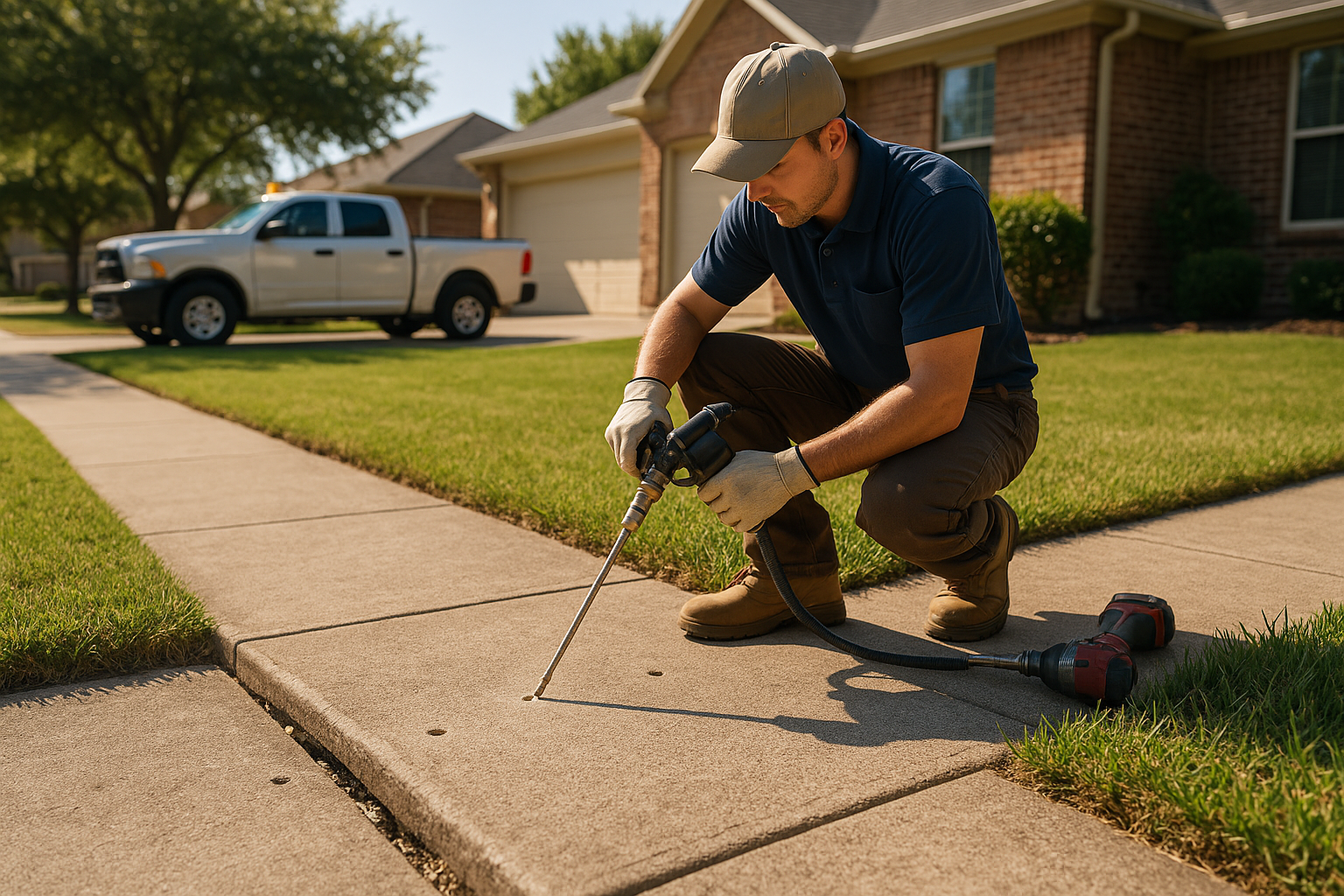
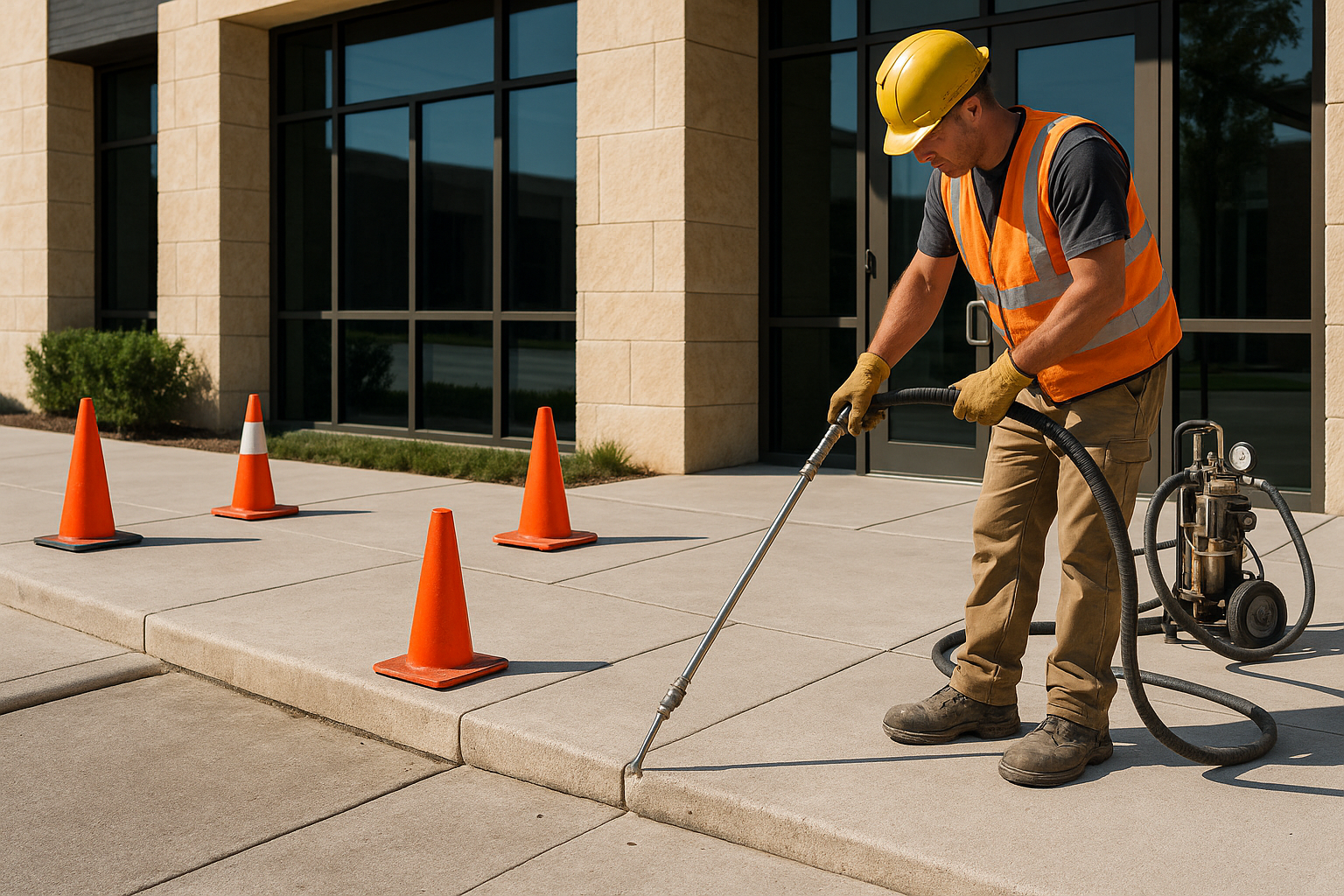
Foam leveling works by injecting polyurethane beneath the slab through small drilled holes. The material expands, fills voids, and raises the panel in a controlled way. For the right sidewalk, it is fast, clean, and less disruptive than demolition.
Replacement means removing the old concrete, rebuilding the base as needed, pouring new concrete, and waiting through cure time before the area can handle normal use.
When foam leveling is the better fit
- The slab is still in one piece or has only minor cracking
- The main issue is settlement, not severe surface failure
- You need faster turnaround with less interruption to tenants or customers
- There are voids under the slab that can be filled and stabilized
- You want to avoid disturbing nearby landscaping, storefront access, or utilities
For many commercial properties, foam lifting is the best answer because it gets the walkway back in service quickly. In a lot of cases, access can be restored the same day. Cost matters too. While every job is different, lifting is often noticeably less than replacement when the slab is salvageable. On commercial walks, owners may see repair costs come in at far less than full tear-out and replacement, especially when you factor in labor, haul-off, re-pour, and downtime.
When replacement is the better fit
- The concrete is badly cracked, spalled, or broken apart
- The slab has ongoing heaving from roots or underlying structural issues
- Drainage redesign or major subgrade correction is required
- The walk no longer meets layout or access requirements
- Previous repairs have failed and the panel cannot hold up long term
Replacement costs more up front, but sometimes it is the only way to solve the issue the right way. If a slab is too far gone, lifting it will not create new concrete. A contractor should be honest about that.
For Texas owners, the practical comparison usually comes down to this: if the sidewalk is sound and just unsupported, lift it. If it is structurally spent, replace it.
What Texas Property Managers Should Expect From Repairs
A solid commercial sidewalk repair process should be straightforward, documented, and built around site access. Property managers have enough moving parts already. You should not have to chase down basic answers.
Here is what to expect from a professional repair scope:
- Site evaluation. The contractor checks settlement, trip points, drainage, cracking, and likely soil or washout causes.
- Repair recommendation. You should get a clear explanation on lifting versus replacement, not a one-size-fits-all sales pitch.
- Access planning. On commercial jobs, pedestrian routing, ADA-sensitive areas, tenant entrances, and business hours all matter.
- Actual repair work. Foam lifting is typically quick and clean. Replacement takes longer and may require more staging and cure time.
- Joint and water review. If drainage or open joints caused the problem, those issues should be addressed too.
- Final walkthrough. You should know what was corrected, what to monitor, and whether any adjacent slabs may need future attention.
In Texas, it also helps to work with a contractor who understands regional conditions. Blackland Prairie clays around Austin behave differently than rockier areas west of the city, but both can create slab movement. San Antonio sites may deal with drought-hardening soils followed by sudden downpours. Either way, local weather patterns matter. Summer heat, flash rain, and moisture swings are not side notes here. They are a big part of why the concrete moved in the first place.
Property managers should also ask about minimizing disruption. On a working commercial site, speed counts. A repair that protects storefront traffic and reduces closure time has real value beyond the invoice total. That is why many owners prioritize methods that reduce downtime and preserve existing concrete where possible.
As a general rule, the sooner you address settlement, the better your options. A small trip edge today can become a larger safety problem after one hard rain event or another long dry spell. Early repair is usually the cheapest window you will get.
Final Thoughts on Commercial Sidewalk Repair in Texas
Commercial sidewalks in Texas fail for predictable reasons: expansive soils, poor drainage, washout, heat, drought, and traffic. The right fix depends on whether the slab still has life left in it. If it does, foam lifting can be a fast, cost-effective way to remove trip hazards, restore drainage, and stabilize the walk. If not, replacement may be the better long-term move.
If you need help with commercial sidewalk repair in Texas, Hill Country Slabs can evaluate the problem and give you a straight answer on repair versus replacement. Contact us at /contact or call (737) 287-4308 to schedule a site visit.