If your back patio has started sloping away from the house, holding water after a storm, or creating a trip hazard around the steps, you are not alone. Patio leveling in Texas is one of the most common concrete repairs we see, especially in places like Austin, Round Rock, and across Central Texas where the soil moves year after year. The good news is that a sunken patio usually does not need to be torn out and replaced. In a lot of cases, it can be lifted, stabilized, and put back into service fast with polyurethane foam.
At Hill Country Slabs, we work with homeowners dealing with uneven exterior concrete every season. Whether the issue is a corner that dropped, a slab that separated from the house, or a patio that now drains the wrong direction, leveling is often the cleanest and most cost-effective fix. Compared to replacement, homeowners can often save 50% to 80% when the slab is still structurally worth keeping.
If you are dealing with sinking flatwork, our Patio Leveling and Concrete Slab Repair services are built for Texas conditions, not generic out-of-state assumptions.
Why Patios Sink in Texas
Texas concrete has a tough job. Between long dry stretches, sudden heavy rain, and expansive clay soils, the ground under a patio can change a whole lot from one season to the next. In Central Texas, black clay and other shrink-swell soils are a major reason patios settle. When the soil dries out, it shrinks and pulls away from the bottom of the slab. When rain returns, the soil can soften, shift, or wash out. That constant movement leaves empty space under the concrete, and the slab starts to drop.
We also see drainage issues cause trouble. Downspouts dumping near the patio edge, poor yard grading, irrigation leaks, and runoff from roofs can all erode supporting soil. Once water starts moving fines out from under the slab, settlement usually gets worse over time, not better. In areas with rocky limestone-based soils, you may get less expansive movement than pure clay, but you can still have voids and washout where water finds a path.
Common Texas causes of a sinking patio include:
- Expansive clay soils that shrink in drought and swell after rain
- Poor compaction of fill material under the original patio
- Heavy storm runoff washing out support soils
- Plumbing or irrigation leaks softening the ground
- Tree roots drying out nearby soils unevenly
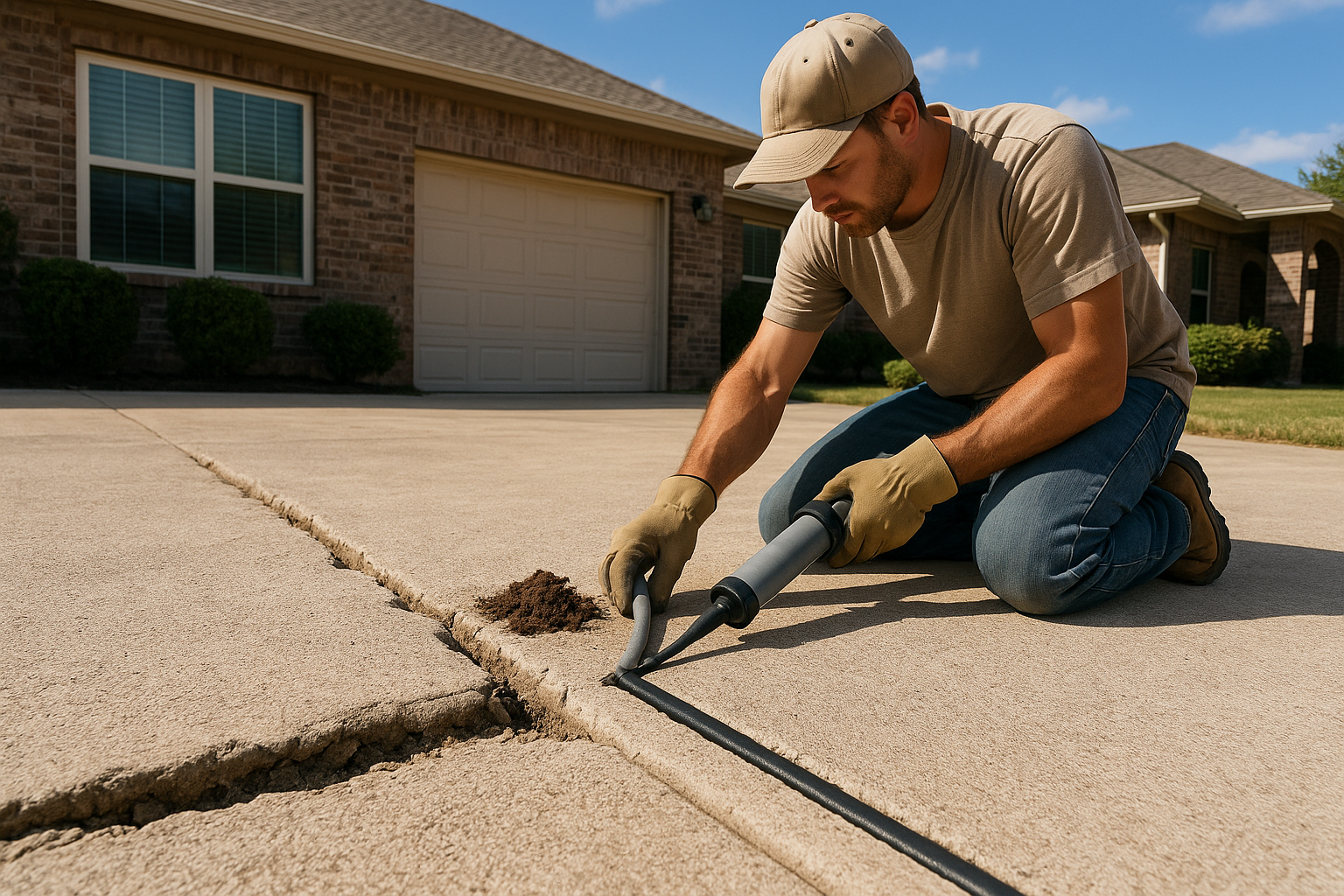
- Missing or failed joints that let water work down below the slab
Texas weather makes all of this worse. A patio can look fine in spring, then after a hard summer and a couple strong storms, one end drops enough to notice. If you have widening cracks or open joints, it is worth getting those sealed too. Water infiltration is one of the main reasons settlement keeps progressing. You can learn more about that at /expansionjoints and at sealmyjoints.com.
How Patio Leveling Works
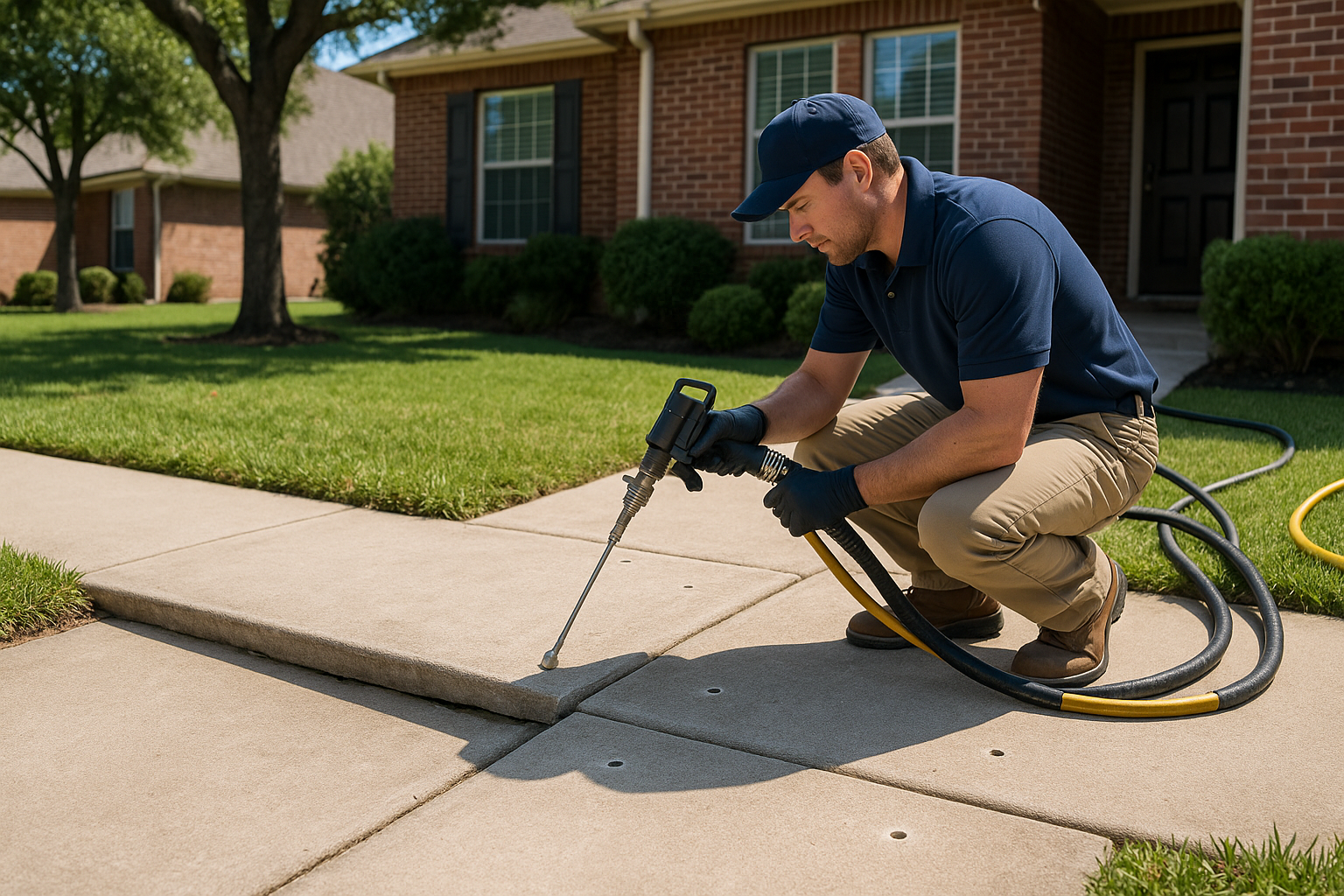
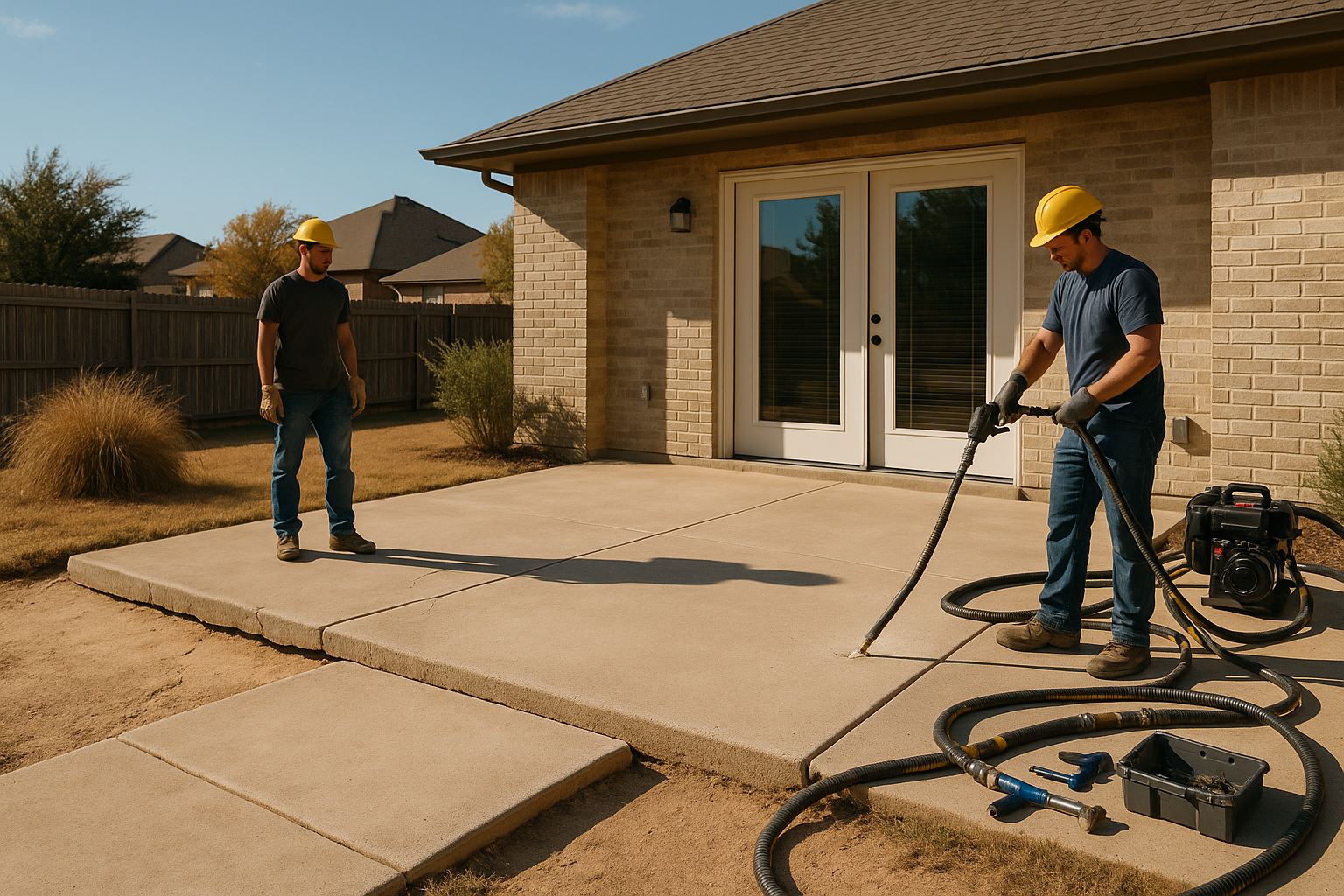
Modern patio leveling is not the old tear-it-out approach. In most cases, we can lift settled concrete with a polyurethane foam injection process. Small holes are drilled through the slab, then a two-part expanding foam is injected beneath it. As the material expands, it fills empty space, compacts loose soils, and gently raises the patio back toward its proper elevation.
This method works well for residential patios because it is precise, clean, and fast. The injection holes are small, the equipment is controlled, and the slab can often be used again the same day. Unlike full replacement, there is no long demolition process, no waiting on new concrete to cure for days, and no need to rebuild everything from scratch if the slab itself is still in decent shape.
A typical patio leveling process looks like this:
- Inspect the slab, drainage, joints, and surrounding soil conditions
- Measure settlement and identify voids or weak support areas
- Drill small access holes in strategic locations
- Inject polyurethane foam under the slab
- Lift and stabilize the patio in controlled stages
- Patch the drill holes and review drainage and maintenance recommendations
One thing Texas homeowners appreciate is the speed. Many patio leveling jobs are completed in a few hours, not several days. Cost is another major reason people choose lifting instead of replacement. Depending on the size of the patio, access, and how much settlement has occurred, leveling is often far more affordable than tearing out and pouring new concrete. While every project is different, patio lifting commonly runs at a fraction of replacement cost, and full replacement can easily push into the thousands to tens of thousands of dollars once demolition, hauling, forming, and finishing are included.
When to Level a Patio Instead of Replacing It
Not every patio should be leveled, but a lot more can be saved than most homeowners think. If the slab is mostly intact and the issue is settlement, voids, or isolated cracking, leveling is usually the first option worth considering. The goal is to keep sound concrete in place and restore function without unnecessary expense.
Leveling is often a good fit when:
- The patio has sunk but is still in one piece or only has minor cracks
- Water is draining back toward the house because of settlement
- There is a step-up or lip creating a trip hazard
- The slab has separated from adjoining concrete or the foundation
- You want a faster fix with less mess and downtime
Replacement may be the better route if the concrete is badly broken, severely spalled, or structurally failed across large sections. If the patio was poured too thin, built on poor fill, or has extensive damage from years of movement, replacement might make more sense. A good contractor should tell you the truth either way.
For many Texas homes, especially in neighborhoods around Austin and Round Rock, the slab itself is not the real problem. The support under it is. When that is the case, lifting and stabilizing the existing patio can be the smartest solution. It is efficient, less disruptive to landscaping, and often protects attached features like steps, columns, or adjacent walkways from the domino effect of a full tear-out.
What to Expect From a Patio Leveling Project
The first step is a site evaluation. We look at how far the patio has moved, whether the slab is still structurally usable, what the drainage pattern is, and what may have caused the settlement in the first place. In Texas, we pay close attention to moisture conditions around the home because if the water issue is not addressed, the movement can come back.
During the project, expect a straightforward process with minimal disruption. The crew will mark lift points, drill small holes, and begin injecting foam in stages. As the material expands under the slab, the patio is lifted carefully and monitored throughout the process. Not every slab can be brought back perfectly flush, especially if there are attached structures or rigid restraints, but in many cases we can make a major improvement in both safety and appearance.
After the lift, the access holes are patched and the area is cleaned up. From there, the big thing is prevention. Homeowners should keep water from collecting along the patio edge, watch for leaking irrigation lines, and maintain joints so runoff does not keep working under the slab. If the control joints or expansion joints are open, sealing them is a smart next step. That is where proper joint care at /expansionjoints and resources like sealmyjoints.com can help extend the life of the repair.
Here is what most homeowners care about most:
- Speed: many jobs are completed the same day
- Cost: usually much less than full replacement
- Mess: minimal demolition and less impact on landscaping
- Results: improved safety, drainage, and appearance
If your patio is sinking, rocking underfoot, or draining the wrong way, do not wait until the damage spreads to nearby walkways, steps, or the house slab. Catching settlement early usually means a simpler repair and lower cost.
Hill Country Slabs provides Texas homeowners with practical concrete solutions that make sense for our soil, our weather, and the way slabs actually fail here. If you need honest advice on patio leveling in Texas, contact our team today through /contact or call (737) 287-4308 to schedule an evaluation.