If you manage apartments, retail centers, office parks, HOA common areas, or rental properties in Texas, you already know concrete problems never show up at a convenient time. One lifted sidewalk at the leasing office, one sunken walkway by the mailboxes, or one uneven section at a storefront can turn into a tenant complaint, a bad review, or worse, a liability issue. That is why more owners and managers are turning to Commercial Concrete Leveling Texas instead of tearing out and replacing good slabs.
Across Austin, Houston, San Antonio, Round Rock, Georgetown, Temple, and Waco, we see the same pattern. Texas clay soils expand when wet, shrink when dry, and move slabs around year after year. Add heavy rains, summer drought, irrigation leaks, poor drainage, and delivery traffic, and it does not take long for sidewalks, dumpster pads, breezeways, and entry paths to settle out of line. In many cases, leveling is the fastest way to get the surface safe again without shutting down the property.
For property managers, speed matters. Tenant access matters. Budget control matters. Foam injection leveling gives you a way to correct trip hazards and settled concrete with far less disruption than full replacement. On many jobs, walking traffic can return the same day, and the repair footprint stays small compared to demolition and repour work. That is a big deal when you are trying to keep units occupied, customers moving, and maintenance calls under control.
Why Property Managers in Texas Choose Concrete Leveling
Most managed properties do not need brand-new concrete everywhere. They need stable, safe, usable surfaces without dragging a simple repair into a week-long construction project. That is where leveling makes sense. If the slab is still structurally sound and only settled, lifting it back into place is often the better move.
Texas is rough on flatwork. In Central Texas, expansive clay is a common cause of movement around apartments, pool decks, and sidewalks. In Houston and the Gulf Coast, high moisture swings and drainage issues can soften supporting soils and allow slabs to sink. In North and Central Texas, dry spells followed by heavy rain can create repeated shrink-swell cycles that leave walkways uneven from one season to the next.
Property managers usually call us for leveling because it solves the problem they actually have: an unsafe elevation change, water running the wrong direction, or a settled slab creating a bad appearance near tenants and visitors. Compared to replacement, leveling often means lower overall cost, faster turnaround, and less interruption to operations. On many projects, it can cost far less than demolition, haul-off, form work, and repour, especially when you are dealing with multiple isolated trip hazards across one property.
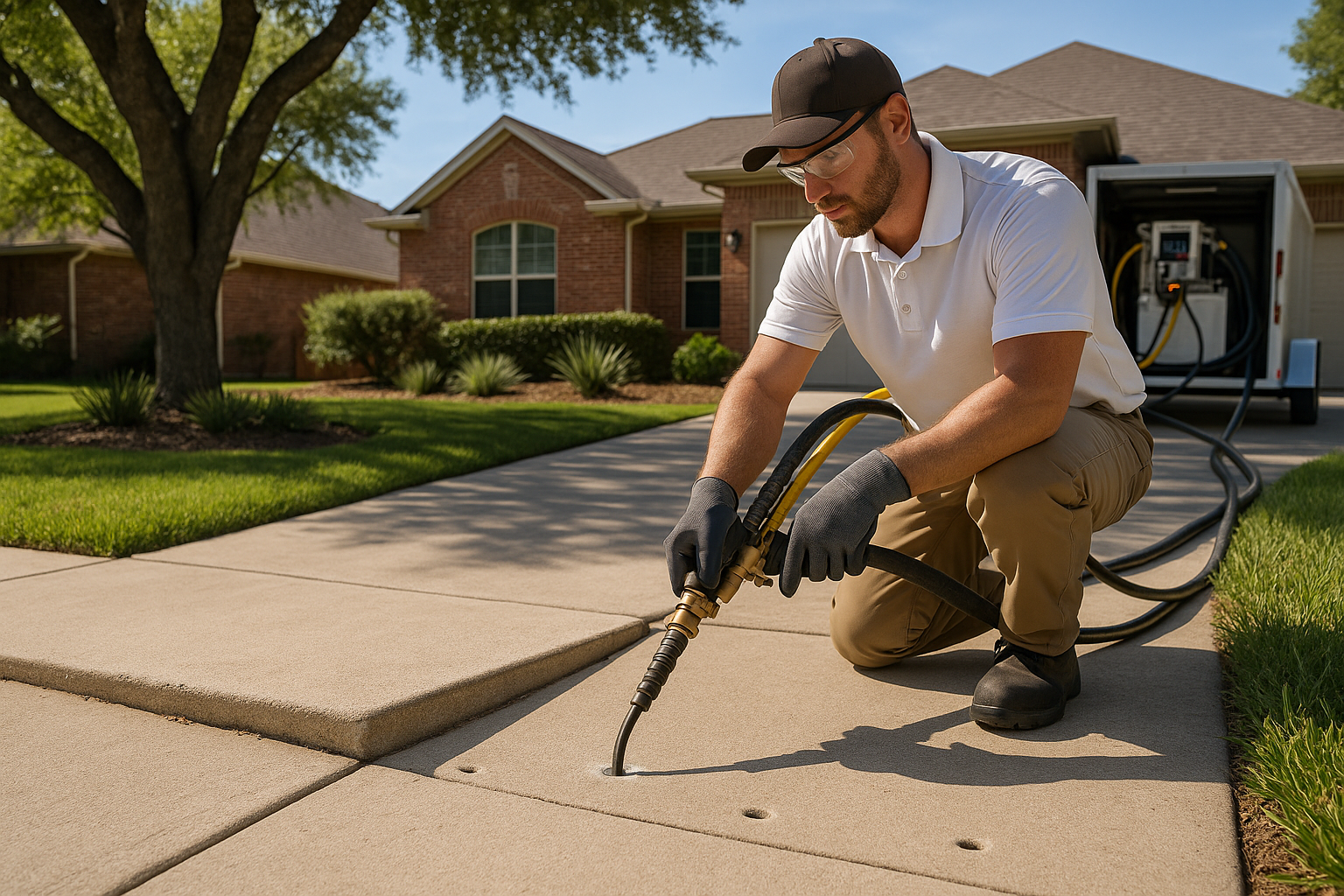
It also helps managers avoid the domino effect that comes with replacement. Tear out one panel, and now you are dealing with noise, dust, barricades, cure time, possible access reroutes, and finish matching. With leveling, the repair is targeted. We drill small injection holes, lift the slab with expanding polyurethane foam, and get the area back into service quickly.
If you are managing commercial space, multifamily, or community property, this is why our Concrete Trip Hazard Repair in Texas service is commonly used as part of a broader maintenance plan. It is not just about appearances. It is about reducing exposure and keeping the property functional.
Common Trip Hazards on Managed Properties
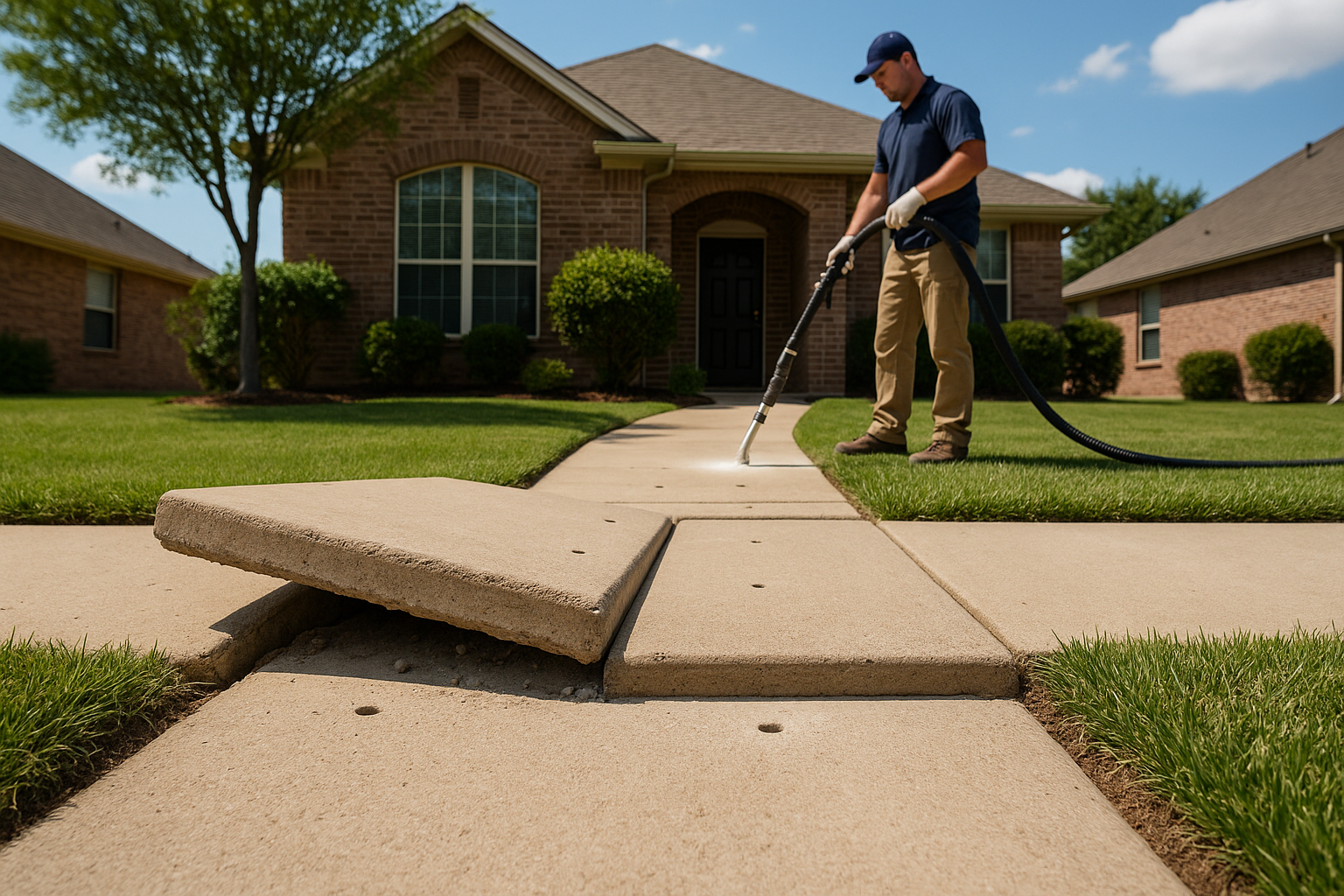
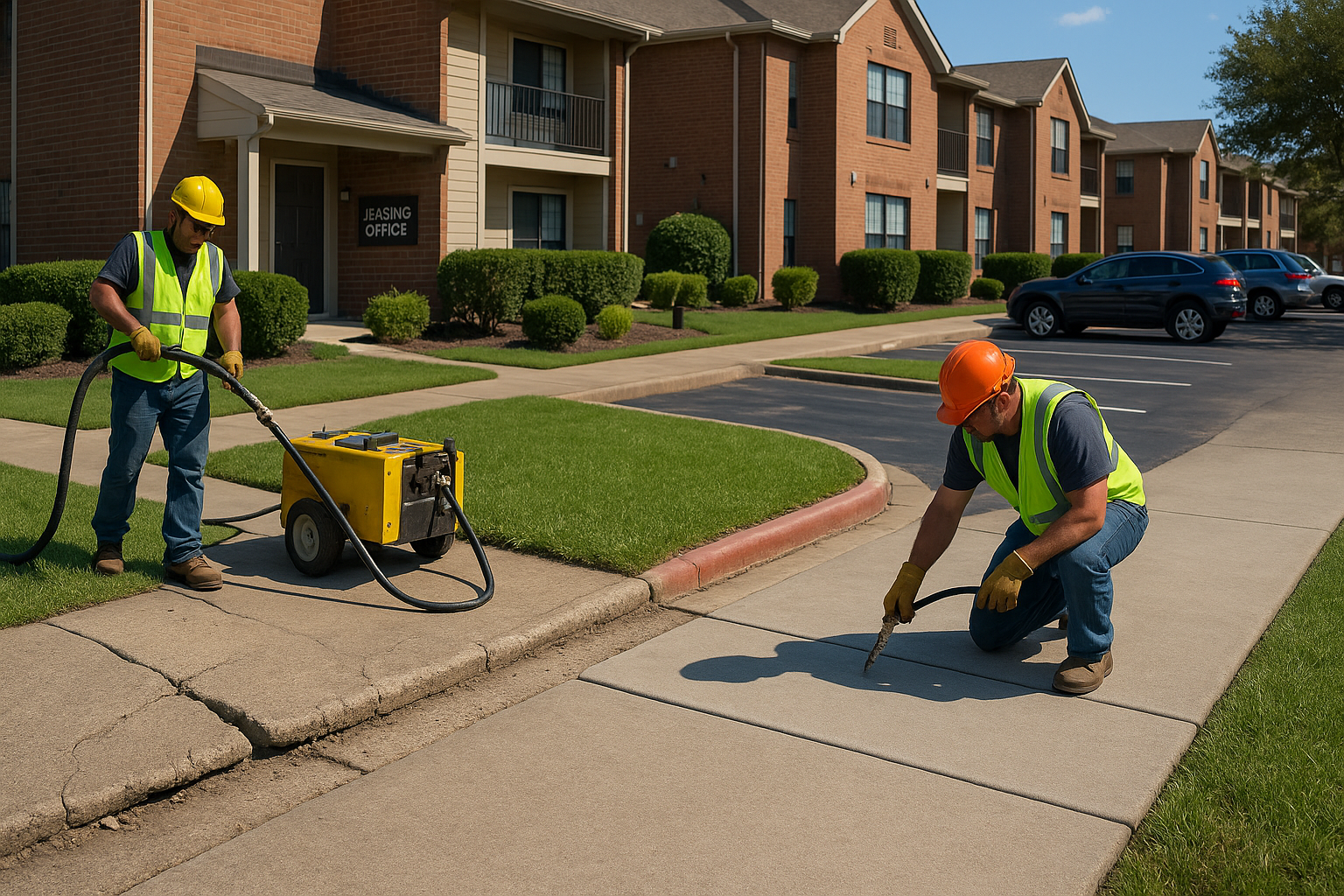
Trip hazards show up in the places people use every day. At apartment complexes, we often see settlement along unit walkways, breezeways, curb transitions, clubhouse entries, pool access paths, and sidewalks near mail kiosks. At retail and office properties, common problem areas include storefront sidewalks, handicap routes, loading areas, dumpster approaches, and pedestrian paths from parking lots to building entrances.
The biggest red flags for a property manager are usually pretty easy to spot:
- Vertical offsets of 1/2 inch or more between sidewalk panels
- Standing water near entry doors or low spots in walkways
- Cracked but otherwise intact slabs that have settled
- Gaps opening at joints after soil movement
- Uneven sections around ADA routes, ramps, and parking access
- Repeated complaints from tenants, customers, or maintenance staff
We also see trip hazards caused by drainage and joint failure working together. Water gets into open joints, erodes the supporting soils, and the slab starts to drop. That is why it is smart to look at joint protection after the lift is done. If the joints are open or vulnerable, sealing them helps reduce future water intrusion. Learn more about expansion joints and, when you are ready, visit sealmyjoints.com for joint sealing solutions that pair well with leveling work.
Another issue property managers run into is patchwork repairs that never fixed the real problem. Grinding can reduce a lip in some situations, but it does not raise a settled slab. Mudjacking may still be used in some places, but the added weight and larger drill holes are not always ideal for commercial walkways and high-visibility areas. Foam leveling is cleaner, lighter, and better suited for many occupied properties.
How Foam Leveling Minimizes Tenant and Customer Disruption
For a property manager, the best repair is the one that gets done fast and does not create ten more problems. Polyurethane foam leveling works well in occupied environments because the process is controlled and efficient. Small holes are drilled through the concrete, the foam is injected beneath the slab, and the material expands to fill voids and lift the panel. Once the slab is at the right elevation, the holes are patched and the area can often be reopened quickly.
That speed matters at apartment communities where residents are coming and going all day. It matters at shopping centers where you cannot block storefront access for long. And it matters at offices and mixed-use properties where a long closure can frustrate tenants and visitors. In many cases, the repair can be completed in hours instead of days, and foot traffic can return the same day depending on site conditions.
There is also less mess. You are not bringing in equipment to break out panels, haul debris, set forms, and wait on fresh concrete to cure. That means fewer access issues around leasing offices, amenity centers, and busy sidewalk corridors. It is one reason managers in Austin, TX and Houston, TX often choose leveling when they need a practical repair without turning the property into a construction zone.
From a budget standpoint, leveling can also help stretch maintenance dollars. If you have a property with multiple isolated settlement areas, replacing every affected panel can get expensive fast. Foam leveling lets you target the worst sections first, which is useful when you are balancing safety concerns with annual capital planning. While every site is different, managers are often relieved to find that leveling may come in at substantially less than full slab replacement for the same hazard area.
Just as important, the repair addresses more than the visible lip. Foam fills empty spaces below the slab and helps restore support, which is what you need when the concrete has dropped because the base has washed out or compressed. That makes it a solid fit for sidewalks, curbs, approaches, and common-area flatwork where maintaining grade is important.
When to Schedule a Concrete Leveling Inspection
The best time to schedule an inspection is before a small issue turns into a claim, a shutdown, or a bigger replacement project. If your maintenance team is shimming doors, flagging low spots, or getting repeated complaints about uneven sidewalks, it is time to have the property looked at. The same goes for any location where water is ponding or draining back toward the building after rain.
We usually recommend inspections in a few common situations:
- After heavy rain events or extended wet periods that may have softened soils
- At the end of a Texas summer when drought shrinkage has increased slab movement
- Before property walks, insurance reviews, or capital planning meetings
- When buying, selling, or taking over management of a property
- As soon as a visible trip hazard appears on a tenant or customer route
In Texas, timing matters because soil movement is seasonal. A property in Central Texas may show one pattern during a dry August and another after fall rain. Gulf Coast sites can have moisture-related settlement issues that stay active if drainage is poor. A quick inspection helps determine whether the slab is a good candidate for leveling now or whether drainage, joint sealing, or other corrective work should happen alongside it.
For managers overseeing several buildings or a large multifamily site, it often makes sense to walk the whole property and create a repair list instead of reacting one complaint at a time. That gives you a clearer picture of where the hazards are, which areas are highest priority, and how to phase the work without disrupting residents or tenants more than necessary.
If the concrete is intact but uneven, there is a good chance leveling can solve it. If the slab is badly broken, undermined beyond repair, or failed structurally, replacement may still be the right answer. The key is getting a straight assessment from a contractor who understands Texas soils, commercial access, and the pressure property managers are under to keep things safe without blowing up the budget.
At Hill Country Slabs, we help property managers across Texas fix settled sidewalks, common-area walkways, entry paths, and other trip hazards quickly and professionally. If you need a practical repair for apartments, retail, office, or rental property concrete, contact us today at /contact or call (737) 287-4308 to schedule an inspection.