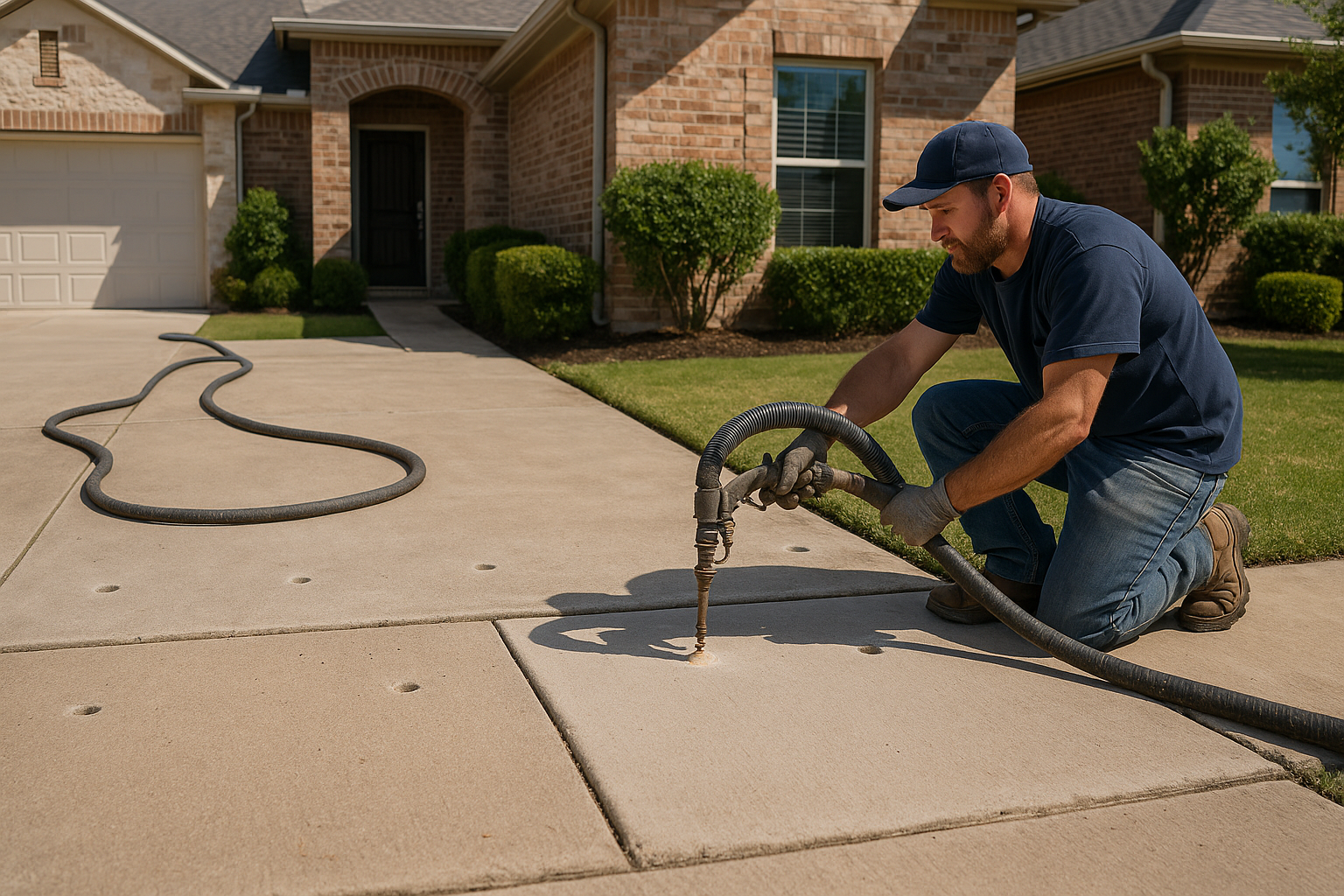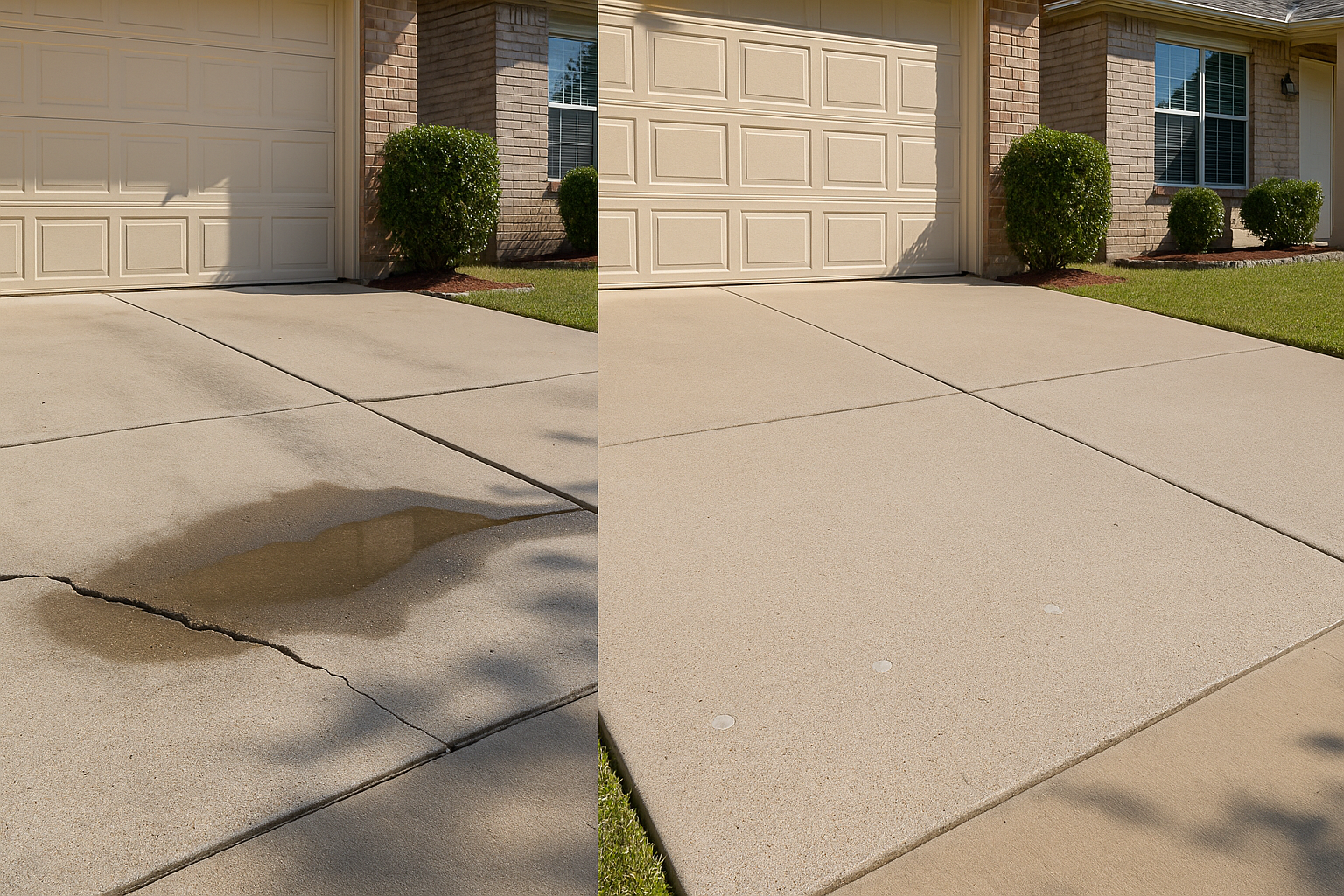
If you’ve got a sunken driveway, uneven sidewalk, or a patio that is starting to hold water, financing can be the difference between fixing it now or letting it turn into a bigger problem. Here in Texas, concrete movement is common. We deal with expansive clay soils, long dry stretches, heavy rain, and heat that beats on slabs month after month. In places like Austin and San Antonio, that movement shows up fast as trip hazards, drainage issues, and cracking around the house.
The good news is you do not always need full replacement. In many cases, leveling is the faster and more cost-effective fix. And if the timing is bad, concrete leveling financing in Texas can help spread the cost out so you can handle the repair before the slab gets worse. At Hill Country Slabs, we talk to homeowners every week who are trying to balance safety, budget, and timing. This is what you need to know.
How Concrete Leveling Financing Works in Texas
Most financing for concrete leveling works like other home improvement financing. After you get an estimate, you may have the option to apply for monthly payment plans through a financing partner. Approval usually depends on standard items like credit profile, income, current debt, and the size of the project. Some plans are built for smaller repairs, while others work better for larger driveway, pool deck, or multi-area leveling jobs.
What matters to most Texas homeowners is simple: can you fix the slab now without paying the full amount up front? In many cases, yes. That is especially helpful when the repair is urgent because someone could trip, water is running back toward the garage, or the slab is dropping near an entry point.
Concrete leveling is often easier to finance than full replacement because the project cost is lower. If you compare it to tearing out and repouring concrete, foam leveling is usually the less disruptive option and often comes in at a more manageable number. If you want a breakdown of pricing, take a look at How Much Does Concrete Leveling Cost in Texas?.
In a lot of cases, homeowners are trying to avoid turning a $1,200 to $3,500 repair into a $6,000 to $15,000+ replacement project later. That is where financing starts making sense. You are not financing a cosmetic upgrade. You are usually preventing further settlement, cracking, drainage damage, and liability issues.
Why Texas slabs end up needing fast repairs
Texas soil is a big part of the story. Around Central Texas, you see a lot of clay-heavy soil that expands when wet and shrinks when dry. That constant cycle creates voids under slabs and uneven support. In other parts of the state, sandy or mixed soils can wash out under concrete during strong rain events. Once support is lost, the slab starts dropping.
- Expansive clay soils in Central Texas can shift hard between drought and rainfall.
- Flash rains and runoff can wash out base material under driveways and sidewalks.
- Extreme summer heat dries soils out and increases shrinkage.
- Poor drainage around homes and patios speeds up settlement.
- Failed or missing joint protection allows water to work deeper under the slab.
That last point gets overlooked. If joints and cracks are open, water gets below the slab and keeps softening the base. That is why we often recommend homeowners seal expansion joints after repairs. For more joint sealing information and products, visit sealmyjoints.com.
When Financing Makes Sense for Sunken Concrete
Not every project needs financing, but plenty of them do. We usually see financing make the most sense when the slab is causing a safety issue, the affected area is used every day, or the settlement will likely get worse if it sits through another season.
For example, if your front walkway has a lip that catches feet, waiting is risky. If your driveway has dropped toward the garage, every hard rain in Texas becomes a problem. If your pool deck is uneven, that is a hazard around wet surfaces. These are the kinds of repairs where acting sooner matters.
Financing also makes sense when homeowners are juggling multiple property expenses. In Texas, it is common to have foundation, drainage, fencing, and flatwork issues show up around the same time because they are all tied to the same weather and soil conditions. Instead of delaying one repair until it turns into two, monthly payments can keep the project moving.
- There is a trip hazard at the sidewalk, porch, or entry.
- Water is draining toward the house, garage, or patio doors.
- The slab supports daily traffic and needs immediate use.
- You want to avoid the cost and downtime of replacement.
- The property is being prepared for sale and uneven concrete is hurting curb appeal.
From a contractor’s standpoint, the best time to repair a settled slab is before it breaks apart. Once the concrete is severely cracked, spalled, or no longer structurally sound, leveling may not be the right fix. But when the slab is still in decent shape and the main problem is loss of support underneath, polyurethane foam leveling is often the smart move. You can read more here: Polyurethane Concrete Leveling in Texas.
What Projects Can Be Financed
Most homeowners think of driveways first, but financing may be available for a wide range of concrete leveling jobs depending on the contractor and lending partner. Around Texas homes, the most common projects include driveways, sidewalks, patios, porches, garage approaches, and pool decks.
Commercial properties may also look at financing for walkways, loading areas, dumpster pads, entry plazas, and other flatwork where settlement affects access or safety. The exact project types depend on the scope and whether the slab is a good candidate for leveling instead of replacement.
- Driveways with settled sections, cracking from unsupported slabs, or drainage problems
- Sidewalks and walkways with raised or dropped panels creating trip hazards
- Patios and porches that slope incorrectly or hold standing water
- Garage floors and approaches where settlement affects vehicle clearance or water entry
- Pool decks with uneven surfaces that create safety concerns
Project size matters too. A single lifted sidewalk panel may be a smaller out-of-pocket repair, while a long driveway with multiple settled sections can be a stronger case for financing. In general, homeowners choose financing when the total repair lands in that middle range where the job is too important to delay but not large enough to justify replacement.
Typical leveling costs in Texas vary by access, slab thickness, amount of settlement, void size, and total square footage. Smaller repairs may run in the low thousands, while larger or more complex jobs can climb higher. Even then, they are often well below replacement costs. That is why many homeowners would rather finance a targeted repair now than gamble on a much bigger concrete bill later.
How to Get a Concrete Leveling Estimate and Payment Options
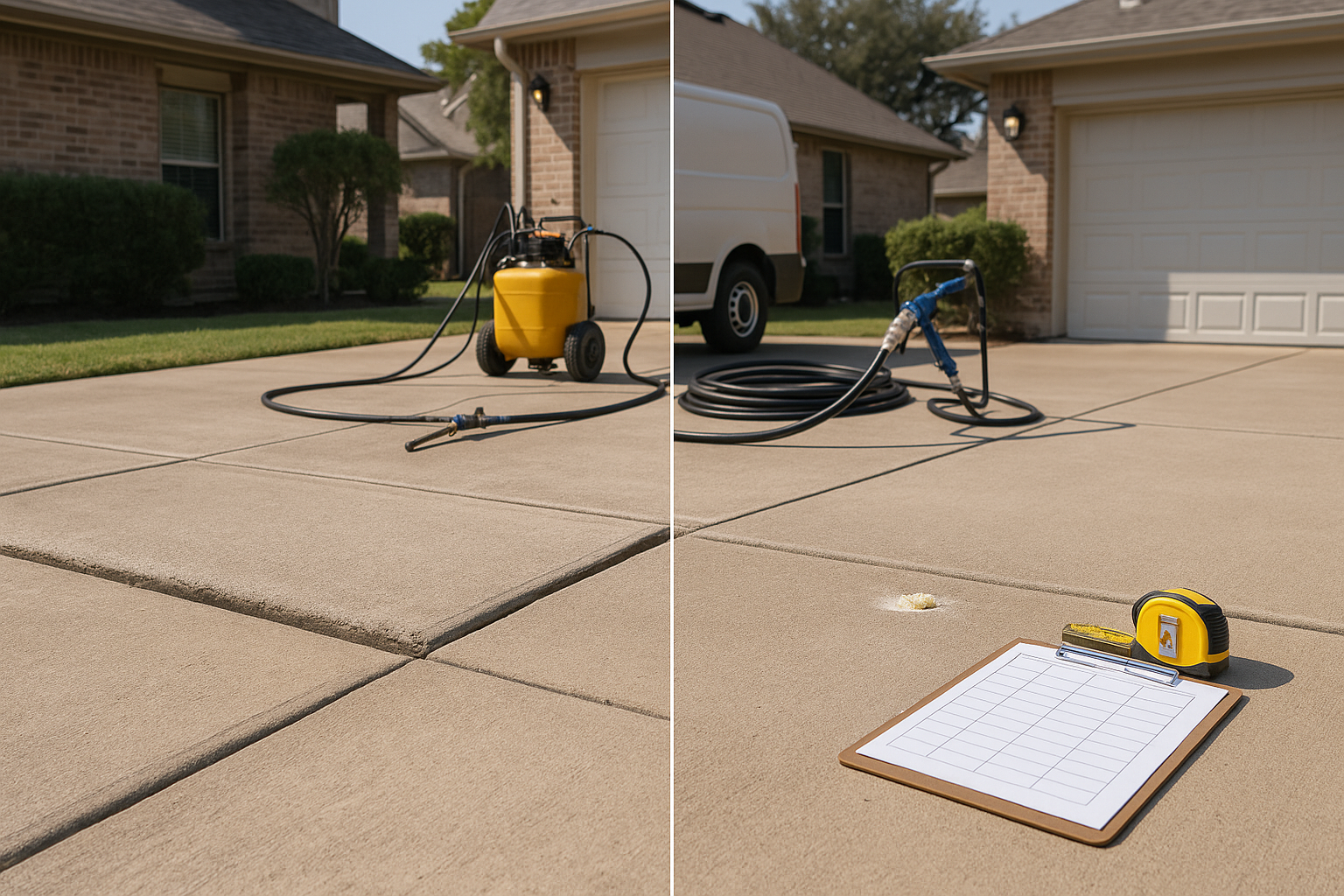
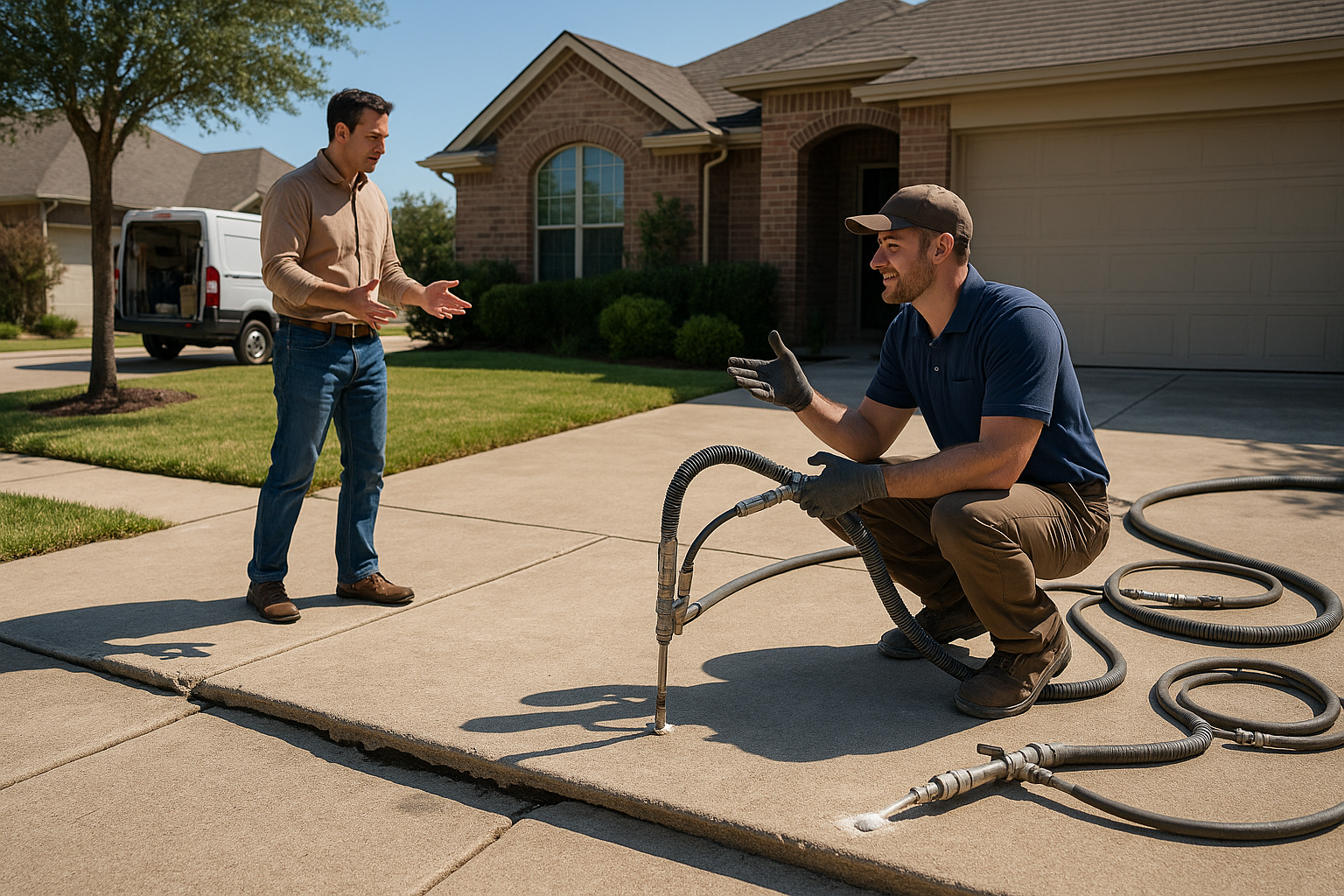
The first step is getting a real estimate from a contractor who understands Texas slabs. A good site visit should cover what caused the settlement, whether the concrete is still a candidate for lifting, how much movement is present, and whether drainage or joint sealing should be addressed at the same time.
At Hill Country Slabs, we look at the whole picture. On a typical estimate, we want to know where the water goes, what kind of soil conditions are present, how the slab is being used, and whether nearby areas are starting to move too. A cheap patch without solving the support issue underneath usually does not hold up.
- Schedule an on-site evaluation of the settled concrete.
- Confirm whether leveling is the right repair versus replacement.
- Review the scope, materials, and expected lift results.
- Ask about payment options or financing availability.
- Move forward before another Texas rain cycle or dry spell makes the problem worse.
When you ask about financing, be ready with a rough project budget and your timeline. Some homeowners want the lowest monthly payment. Others want to pay the repair off quickly and keep the total finance cost down. Either way, the goal is the same: fix the slab while the repair is still straightforward.
It is also worth asking what happens after the lift. In Texas, long-term performance often comes down to water management and maintenance. If joints are open, seal them. If runoff is hitting the slab edge, redirect it. If you are dealing with heavy clay soil, keep moisture conditions around the home as consistent as possible. Those steps help protect the repair and reduce future movement.
Concrete leveling financing in Texas is really about buying time the right way. Instead of waiting until uneven concrete turns into replacement, drainage damage, or an injury claim, you can handle the repair while the slab is still salvageable. For a lot of homeowners, that is the practical move.
If you have a sunken driveway, sidewalk, patio, or pool deck, Hill Country Slabs can take a look and walk you through repair options and payment details. Contact us at /contact or call (737) 287-4308 to schedule your estimate.