In Texas, it does not take long for a good-looking slab to start moving. Between drought, heavy rain, expansive clay, and long stretches of heat, homeowners across Austin, Round Rock, Cedar Park, and surrounding areas see the same problem over and over: driveways sink, sidewalks separate, patios settle, and front porches turn into trip hazards. That is where residential concrete leveling in Texas comes in.
At Hill Country Slabs, we work with homeowners who want to fix uneven concrete without tearing everything out. In many cases, lifting a slab with polyurethane foam is faster, cleaner, and far more affordable than replacement. When the concrete is still structurally sound, leveling can restore safety and appearance without the mess of a full demo.
What Is Residential Concrete Leveling?
Residential concrete leveling is the process of raising settled concrete back toward its original position. Around homes, that usually means correcting slabs at the driveway, front walkway, porch, pool deck, patio, or other flatwork that has dropped due to soil movement underneath.
In Central Texas, we see a lot of movement from clay-rich soils that shrink during dry weather and swell when the rains come back. That repeated cycle leaves voids under the slab. Once support is lost, the concrete starts to sink or tilt. In some neighborhoods, rocky ground and erosion can create the same issue, especially where runoff is not draining correctly.
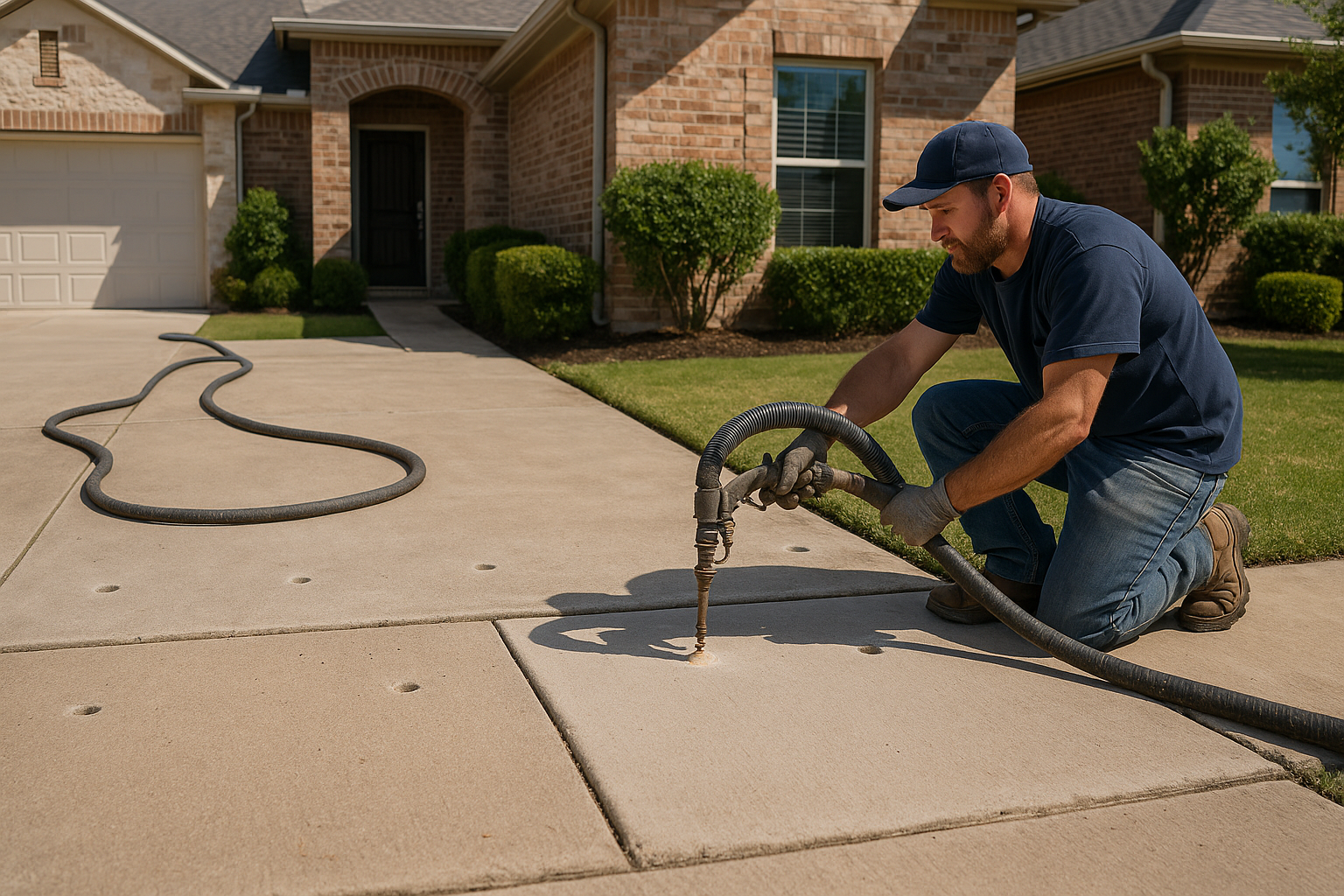
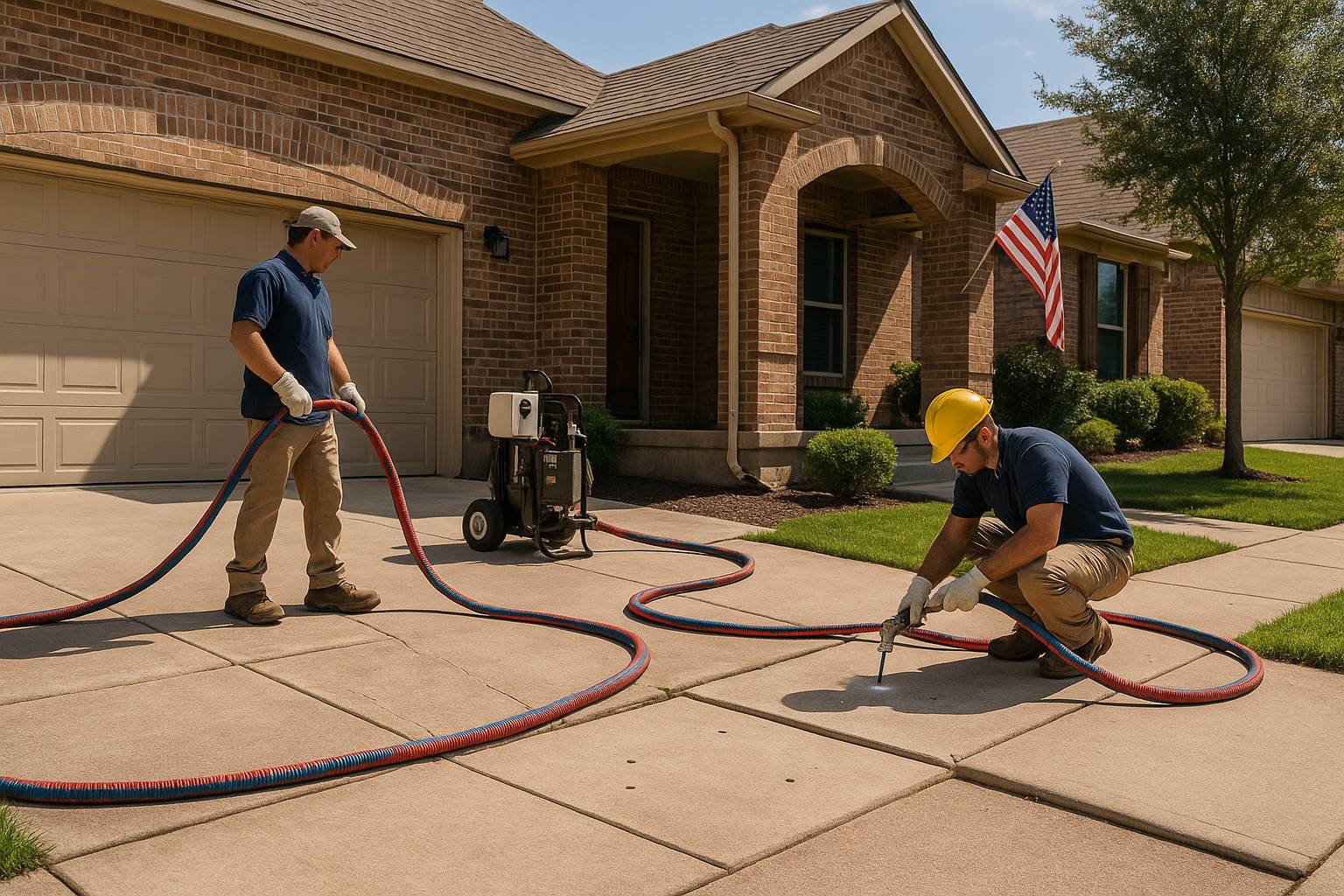
With modern foam leveling, small holes are drilled through the slab and a two-part material is injected beneath the concrete. As it expands, it fills empty space and gently lifts the slab. The result is a stable, level surface with minimal disruption to the home.
If you are dealing with a sunken approach or uneven panels, our Driveway Leveling service is often the best place to start. For pedestrian paths and entry routes, we also handle Sidewalk Repair and Patio Leveling.
Signs Your Home's Concrete Needs Lifting
A lot of homeowners wait until the slab looks really bad before calling. Truth is, the early warning signs are easy to spot if you know what to look for.
- One edge of a slab sits lower than the next, creating a trip hazard.
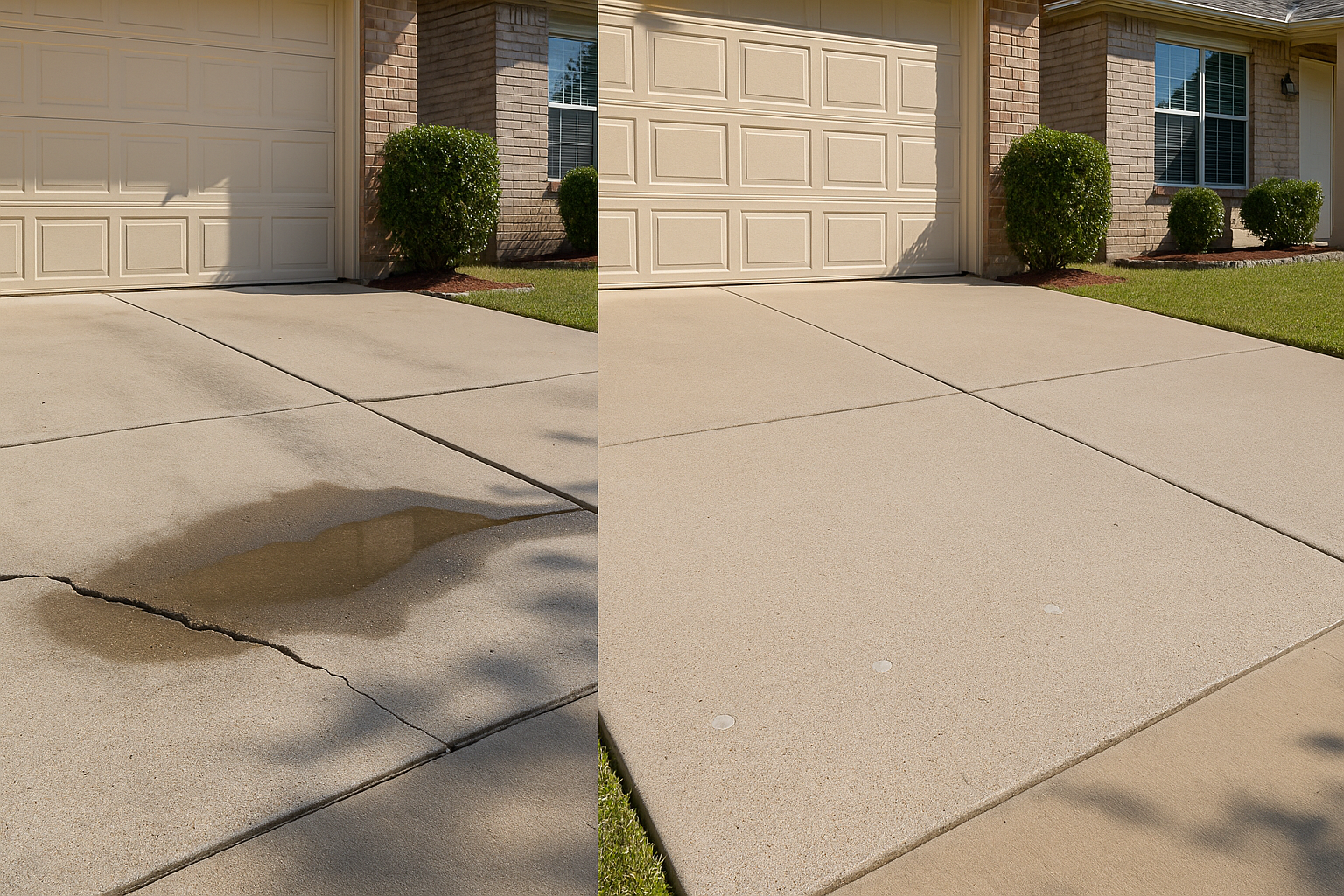
- Water puddles near the garage, porch, or patio after rain.
- Cracks are growing because the slab no longer has uniform support.
- Front steps or porch slabs pull away from the house.
- Driveway sections settle near the street or garage.
- Sidewalks tilt toward the home, sending drainage where it should not go.
These problems are common in places like Austin, Round Rock, and Cedar Park, where seasonal moisture swings can be hard on residential flatwork. The longer a slab stays unsupported, the more likely it is to crack further or create safety issues for your family and guests.
One area homeowners often overlook is the joint line. Open or deteriorated joints let water run down beneath the slab, which speeds up erosion and washout. After leveling, protecting those gaps matters. We recommend reviewing expansion joints and, when appropriate, using a quality joint sealing system like sealmyjoints.com to help keep water out.
What Surfaces Can Be Leveled Around a Texas Home?
Most residential leveling calls involve exterior concrete, but there is a pretty wide range of surfaces that can often be corrected without replacement.
Driveways
Driveways in Texas take a beating from heat, vehicle weight, and soil movement. When one panel drops, it not only looks rough, it can also create drainage issues and make the garage entry harder on tires and suspension. Foam lifting can often correct those settled sections quickly, especially when the slab is still in decent shape overall.
Sidewalks and Walkways
Uneven sidewalks are one of the most common residential trip hazards we see. Whether it is the path to the front door or a side yard walkway, lifting the slab can improve safety without replacing long runs of concrete.
Patios
Backyard patios often settle due to poor compaction, roof runoff, or shifting soils. If the patio is pitching water back toward the house or leaving furniture uneven, leveling may restore proper use and improve drainage at the same time.
Porches and Entry Areas
Your front porch is one of the first things people notice. A settled porch slab can crack, separate, and create an obvious visual problem at the entry. More importantly, it can become a safety concern for kids, visitors, and deliveries.
Pool Decks
While every pool deck needs its own evaluation, many settled sections can be lifted if the concrete remains structurally sound. Around a pool, getting rid of raised or dropped edges is important because wet feet and uneven concrete are a bad combination.
Not every slab is a leveling candidate. If the concrete is badly shattered, undermined beyond repair, or poured too thin to perform well, replacement may still be the right call. But many homeowners are surprised to learn that a slab they assumed needed demo can actually be saved.
Why Homeowners Choose Foam Leveling Over Replacement
For the right job, foam leveling solves the problem with a lot less disruption than tearing out and repouring concrete.
- Lower cost: Homeowners often find leveling costs far less than full replacement, especially when disposal, forming, and new concrete are factored in.
- Faster turnaround: Many residential leveling jobs are completed in just a few hours, not several days.
- Minimal mess: Small drill holes are much cleaner than demolition equipment and haul-off trucks.
- Less downtime: Foam cures quickly, which means the slab can usually be used much sooner.
- Better preservation: If the slab still has life left in it, lifting helps you get more value out of the original concrete.
In terms of price, every property is different, but homeowners are often looking at hundreds to a few thousand dollars for leveling versus several thousand to much more for full replacement, depending on size, access, and slab condition. The real value is stopping the problem early before movement causes wider cracking, drainage trouble, or damage to adjacent areas.
Another big advantage in Texas is weight. Polyurethane foam is lightweight compared to older fill methods, so it adds support without overloading already active soils. That matters in expansive clay regions where the ground is already prone to movement.
Texas Soil and Weather Make Timing Important
If you own a home anywhere in Central Texas, you already know the ground does not stay consistent. We can go from a long dry spell to a hard rain event in no time. That cycle affects slab support more than most people realize.
Here is what usually happens:
- The soil dries out and shrinks.
- Voids begin forming beneath parts of the slab.
- Rain returns and water follows cracks, joints, and slab edges.
- The subgrade softens or erodes.
- The concrete drops where support is weakest.
That is why it is smart to address settlement before a small height difference becomes a major repair. It is also why drainage and sealed joints matter just as much as the lift itself. Fixing the slab is step one. Keeping water from getting back under it is how you protect the repair.
What to Expect From the Leveling Process
A straightforward residential leveling project is usually pretty simple from the homeowner's side.
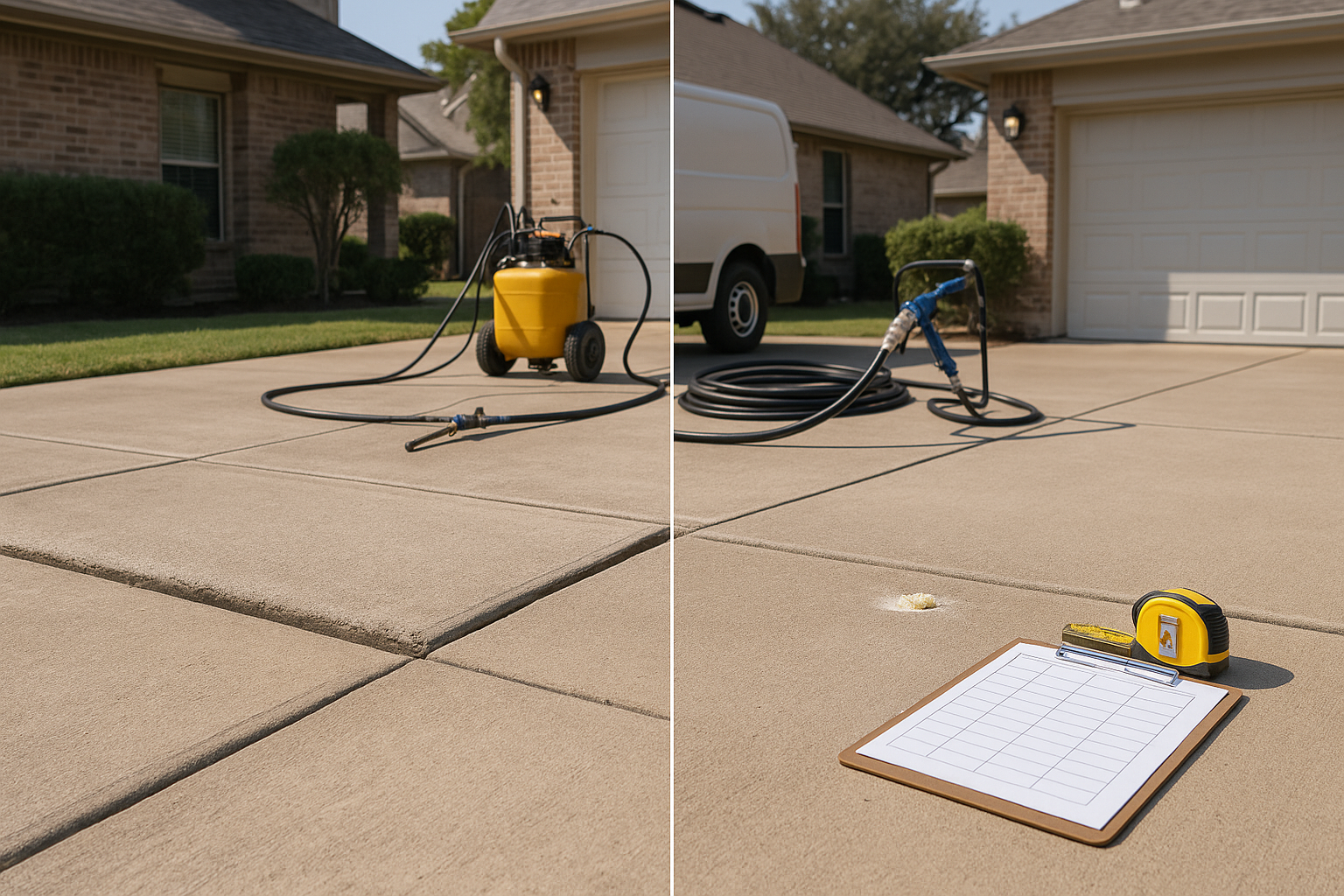
- We inspect the slab, measure settlement, and check for likely causes like washout, poor drainage, or expanding and shrinking soils.
- We identify whether the concrete is a good candidate for lifting.
- Small holes are drilled in planned locations.
- Polyurethane foam is injected under the slab to fill voids and raise the concrete.
- The slab is brought back to a safer, more functional position.
- The holes are patched, and we review any recommendations for drainage or joint sealing.
The goal is not just to make the slab look better from the street. The goal is to restore support, improve safety, and help the concrete perform the way it should.
When to Call a Contractor
If your driveway is dropping, your sidewalk has a lip, or your porch is pulling away, do not wait until replacement is your only option. Residential concrete leveling works best when the slab is still in serviceable condition and the settlement has not turned into major structural failure.
At Hill Country Slabs, we help homeowners across the region evaluate whether leveling is the right fix. If you are in Austin, Round Rock, Cedar Park, or nearby communities, we can take a look and give you a straightforward recommendation based on the slab, the soil conditions, and the best long-term value for your property.
If you need help with residential concrete leveling in Texas, contact Hill Country Slabs today through our contact page or call (737) 287-4308. We will help you figure out whether your driveway, sidewalk, patio, or porch can be lifted and stabilized without the cost of full replacement.