If you are looking for concrete leveling contractors in Texas, you are probably dealing with a driveway, sidewalk, patio, pool deck, or slab that has started to sink, crack, or create a trip hazard. We see it all over the state, from shifting clay soils in Austin to moisture swings and settlement issues around Houston. The good news is that in many cases, you do not need to tear out and replace the concrete. A qualified leveling contractor can often lift and stabilize it for a fraction of the cost and with a lot less mess.
At Hill Country Slabs, we believe property owners should know what they are paying for and what separates a good contractor from a crew that is just drilling holes and hoping for the best. Here is what concrete leveling contractors do, how to compare companies in Texas, and when leveling makes more sense than replacement.
What Concrete Leveling Contractors Do
Concrete leveling contractors raise settled slabs back toward grade by filling voids under the concrete and applying controlled lift. In Texas, that usually means dealing with expanding and shrinking soils, poor compaction, washout, plumbing leaks, or drainage problems that let water move under the slab.
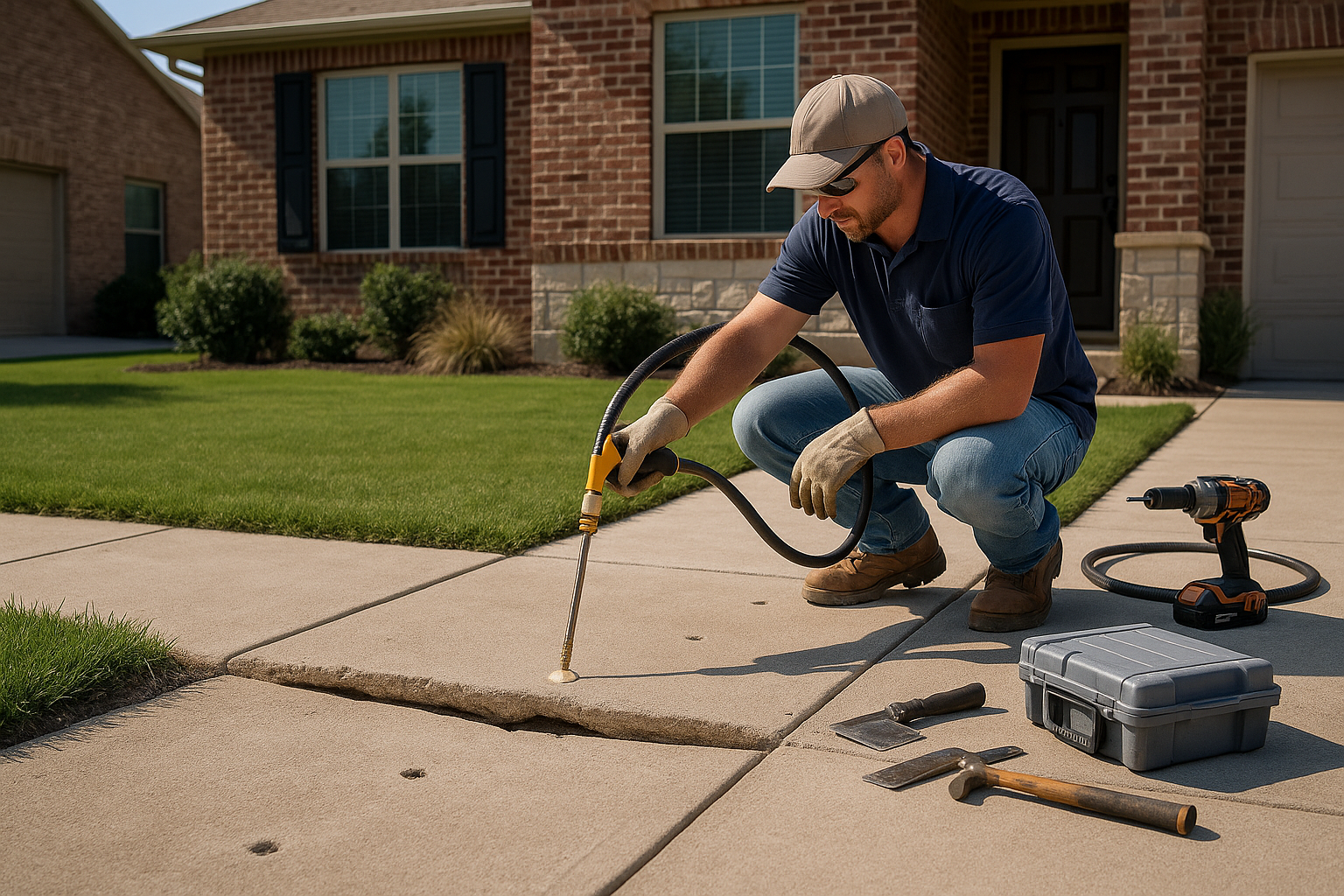
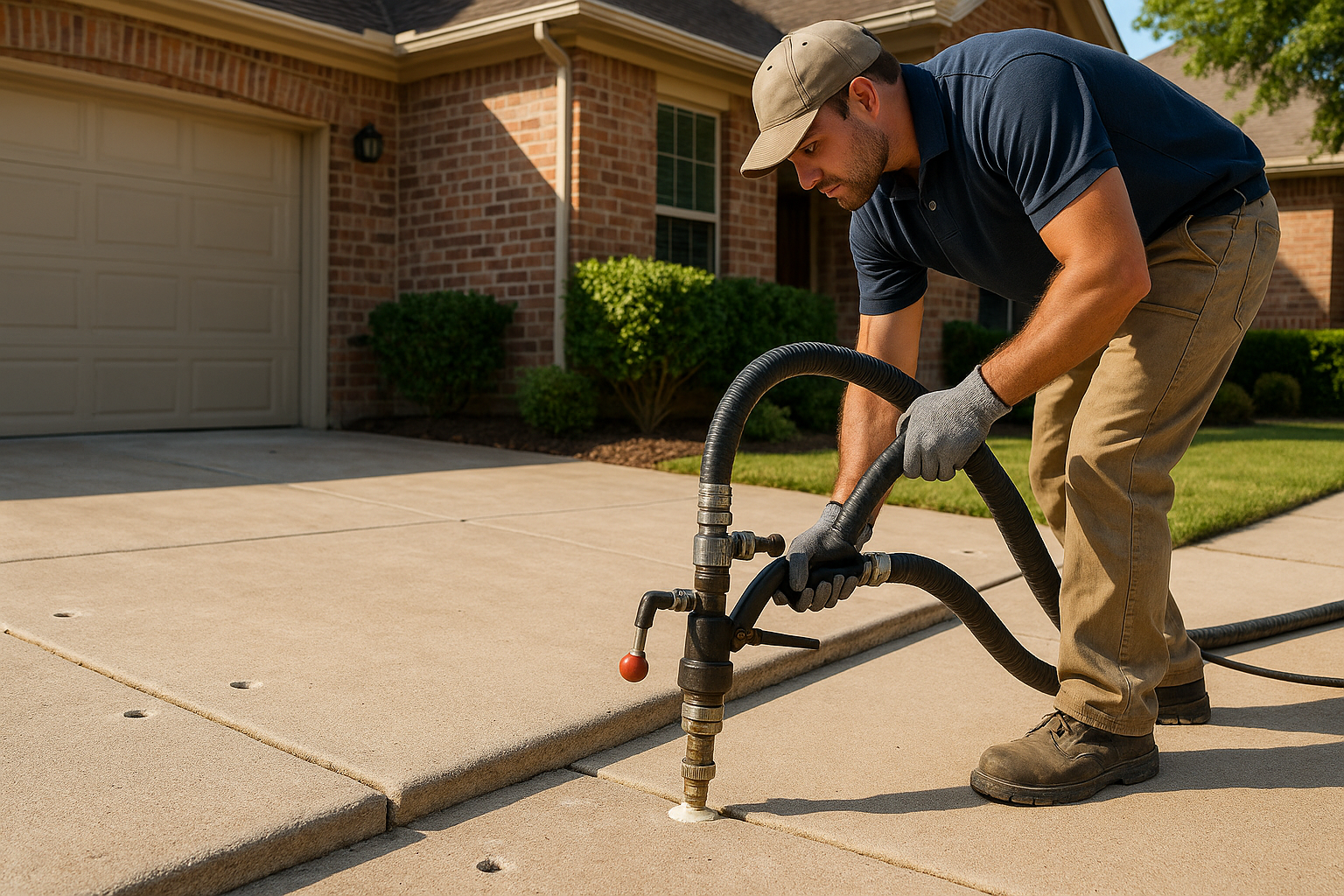
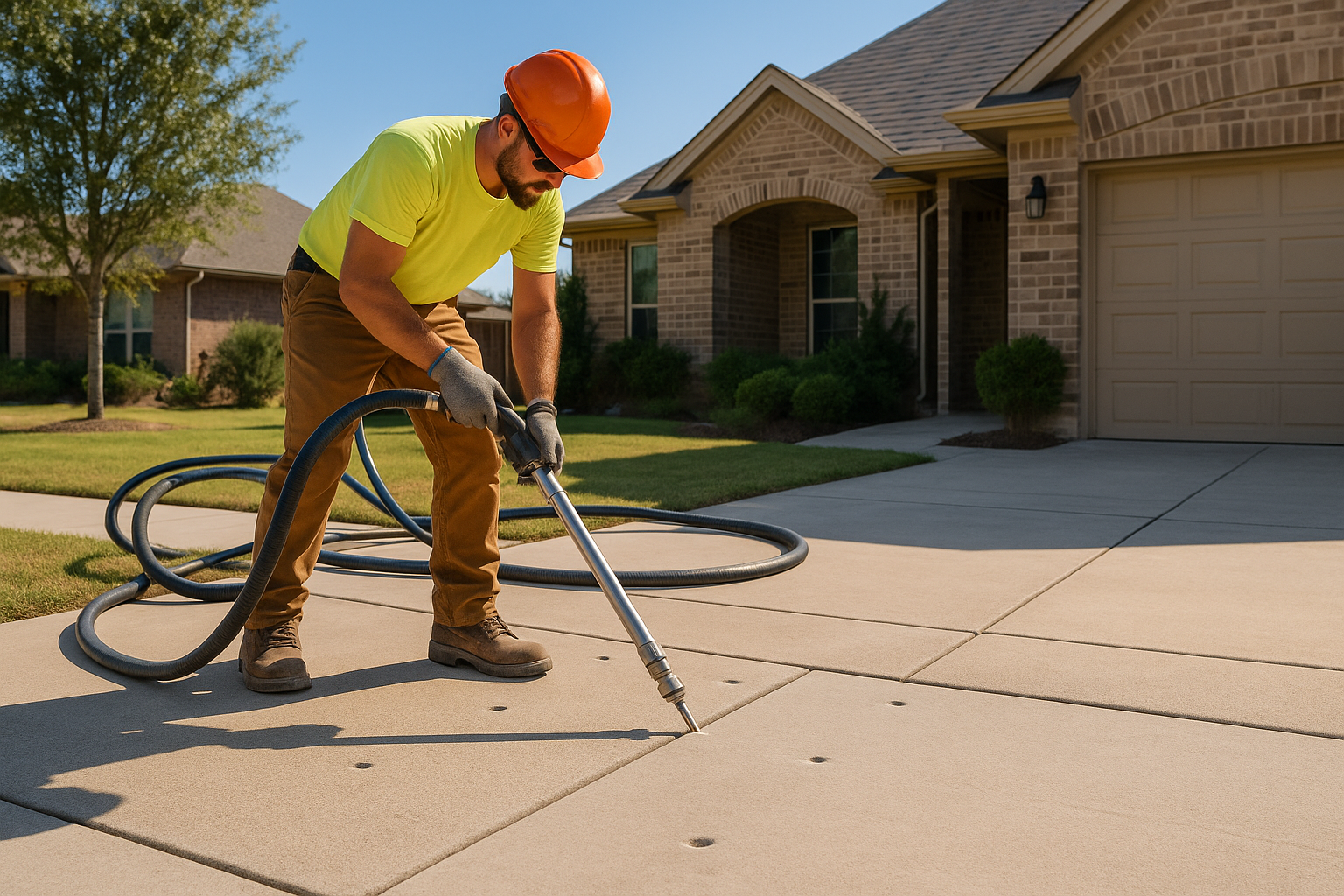
The most common modern method is polyurethane foam injection. Small holes are drilled through the slab, structural foam is injected below the surface, and the material expands to fill empty space and lift the concrete. This is the process used in many Polyurethane Concrete Leveling in Texas projects because it is fast, clean, and precise when handled by an experienced crew.
A good concrete leveling contractor is not just there to make a slab look better for one day. The real job is to figure out why the slab moved in the first place. In Texas, that can mean:
- Highly expansive clay soils that swell when wet and shrink during drought
- Sandy or loose fill soils that were never compacted properly
- Erosion from bad drainage, gutter discharge, or sprinkler overspray
- Voids from plumbing leaks under or near the slab
- Tree roots pulling moisture out of surrounding soils
- Heavy heat cycles and dry summers that cause seasonal movement
That is why contractor experience matters. North and Central Texas often deal with active clay soils that can move a slab more aggressively than homeowners expect. Along the Gulf Coast, high moisture and drainage issues can create soft spots and washout. In either case, leveling without understanding site conditions is just a short-term patch.
When done right, foam leveling can often be completed in a matter of hours, and many slabs can be used again the same day. Compared to replacement, that means no demolition, no hauling off concrete, and less disruption to your home or business. In many situations, property owners save 50% to 80% compared to full replacement costs.
If your slab is structurally sound but no longer sitting where it should, a contractor offering Concrete Lifting in Texas may be able to restore it without starting over.
How to Choose the Right Concrete Leveling Contractor in Texas
Not all concrete leveling contractors are the same. Some know Texas soil and slab behavior. Some do not. Before hiring anybody, look for a company that treats the work like foundation and soil-related repair, not just cosmetic concrete work.
Look for Texas-specific experience
You want a contractor who understands local movement patterns. A slab in the Hill Country behaves differently than a slab in Houston black gumbo clay or in sandy areas outside San Antonio. Ask where they work most often and what kinds of site conditions they see.
Ask what material they use
Polyurethane foam is a common solution because it is lightweight, water-resistant, and able to reach voids below the slab. But the quality of material and the installer’s control during injection both matter. Too much pressure or poor placement can make a bad situation worse. A reliable contractor should be able to explain how their process works in plain English.
Make sure they evaluate drainage and joint conditions
Leveling the slab is only part of the fix. If water still gets under the concrete, the same problem can come back. Ask whether they inspect runoff, downspouts, grading, and open joints. If joints are separated or letting water in, sealing them matters. You can learn more at /expansionjoints and at sealmyjoints.com.
Review before-and-after results
A contractor should be able to show real examples of driveways, sidewalks, patios, and pool decks they have lifted. Look for clean drill patterns, tight elevation control, and an honest explanation of what level of correction is realistic. Sometimes a slab can be brought back nearly flush. Sometimes the safe target is functional improvement rather than perfection.
Compare repair scope, not just price
The lowest bid is not always the best value. One company may simply inject enough foam to raise a corner. Another may map the voids, stabilize the slab, discuss water management, and seal key joints. Those are very different repairs. In Texas, where slabs keep moving if the root cause stays in place, the scope of work matters as much as the invoice.
As a rough range, small residential leveling jobs may start around $900 to $1,500, while larger or more complex projects can run $2,500 to $6,000+ depending on slab size, access, settlement severity, and site conditions. Full replacement often costs much more once demolition, removal, forming, and repouring are included.
Questions to Ask Before Hiring a Foam Leveling Company
Before you sign anything, ask direct questions. A solid contractor should not dodge them.
- What caused the slab to settle?
You want an answer tied to drainage, soil, washout, compaction, or moisture movement, not just “it happens.” - Is the slab a good candidate for leveling?
Not every slab should be lifted. If the concrete is badly broken, too thin, or structurally failing, replacement may be smarter. - How much lift is realistic?
Ask whether they expect full correction or partial correction for safety and drainage improvement. - What material are you injecting under the slab?
They should explain the foam type, why it is appropriate, and how they control the lift. - Will you check for voids beyond the visible low spot?
Settlement often spreads farther than the eye can see. - Do you address joints, drainage, or water entry points?
If not, ask what steps you should take next to protect the repair. - How soon can the slab be used after leveling?
With polyurethane, the answer is often very fast, which is one reason homeowners prefer it. - Do you have photos from similar projects in Texas?
Local job examples tell you a lot about whether the company understands regional conditions. - What kind of warranty do you offer?
Read the terms. Make sure you understand what is covered and what site conditions can affect long-term performance.
If a company cannot clearly explain the process, the cause of settlement, or the expected outcome, keep shopping. Good contractors do not mind educated customers.
When to Call a Concrete Leveling Contractor Instead of Replacing Concrete
Replacement has its place, but a lot of Texas slabs get torn out when they could have been lifted and stabilized instead. If the concrete is mostly intact and the issue is settlement, leveling is often the better first call.
Here are common situations where leveling may make sense:
- One side of a driveway panel has dropped
- Sidewalk sections create a trip hazard
- Patio slabs are sloping back toward the house
- Pool deck sections have settled but are not shattered
- Garage aprons or approaches have dropped at the edge
- Front walkways are uneven after drought and heavy rain cycles
In those cases, leveling can restore function, improve drainage, and clean up appearance without the cost and downtime of replacement. It is especially appealing when the concrete finish still looks decent and the homeowner wants to avoid the patchwork look of replacing only part of a surface.
On the other hand, replacement may be necessary if the slab is crumbling, severely cracked through multiple sections, heaved beyond correction, or built on conditions that require deeper reconstruction. A trustworthy contractor will tell you when leveling is not the right fit.
In Texas, timing matters too. If you catch settlement early, the repair is usually more straightforward. Waiting can lead to wider gaps, more water intrusion, greater voids, and higher costs. That is why we tell property owners not to ignore small elevation changes around joints and slab edges. Today’s nuisance can turn into tomorrow’s bigger repair bill.
If you are comparing concrete leveling contractors in Texas, focus on experience, diagnosis, repair scope, and whether the company understands our soils and weather. From dry summer shrinkage in Central Texas to moisture-heavy conditions near the coast, slab movement here is different than it is in other states. You want a contractor who has seen those patterns before and knows how to respond.
Need help figuring out whether your slab should be lifted or replaced? Hill Country Slabs can take a look and give you a straight answer. Contact us at /contact or call (737) 287-4308 to talk through your project.