If you own a home in Texas, you already know concrete does not stay put forever. Between long dry spells, sudden heavy rain, shifting clay, and summer heat that bakes the ground hard, it does not take much for a driveway, sidewalk, patio, or porch slab to start dropping out of place. That is where polyurethane concrete leveling in Texas has become one of the best repair options for homeowners who want the slab lifted without tearing everything out.
At Hill Country Slabs, we talk to homeowners across Austin, Round Rock, and surrounding Central Texas communities who are dealing with trip hazards, pooling water, and ugly settled concrete. In a lot of cases, foam leveling is the right fix because it is fast, clean, and costs a lot less than full replacement. More importantly, you can usually use the concrete the same day.
What Is Polyurethane Concrete Leveling?
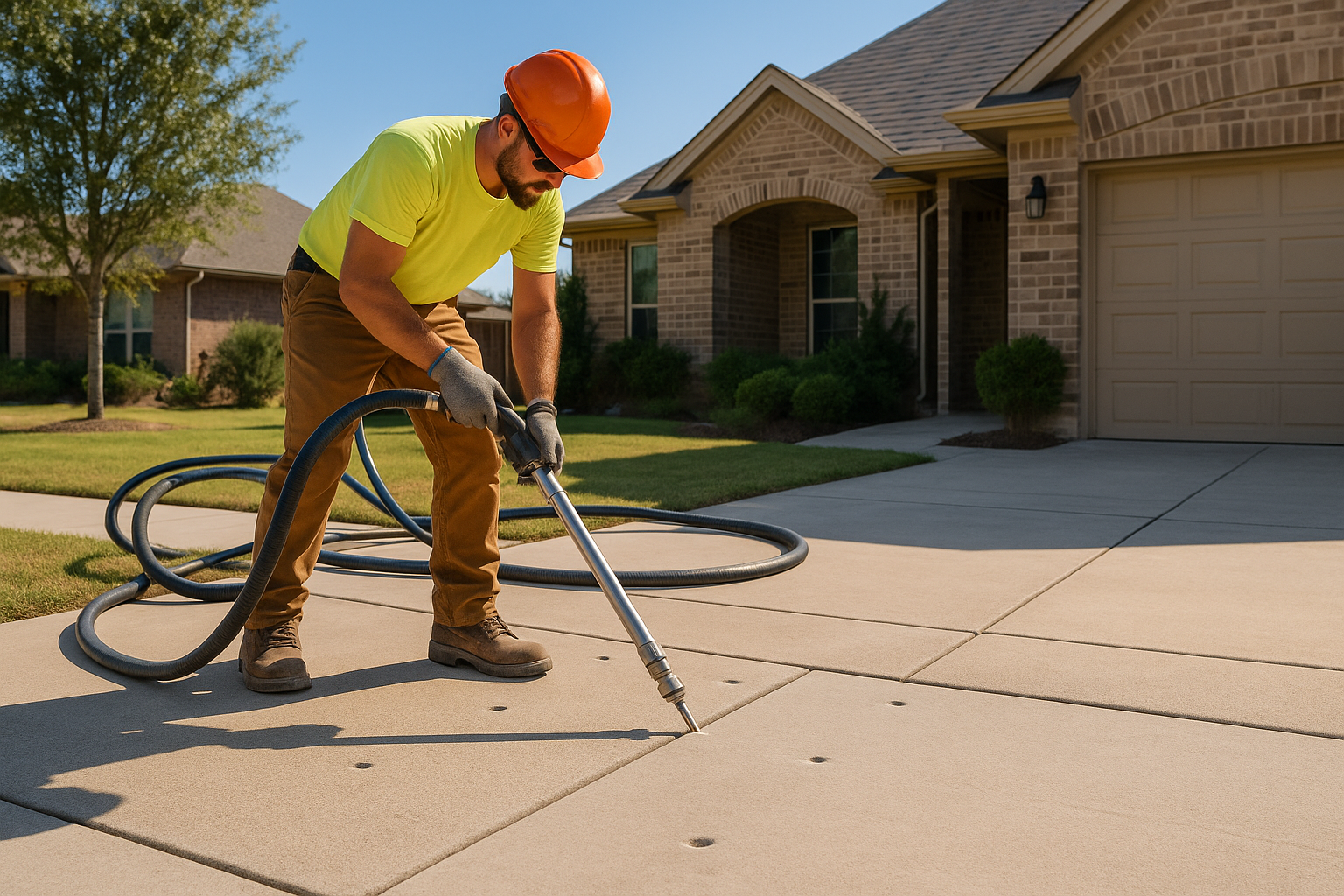
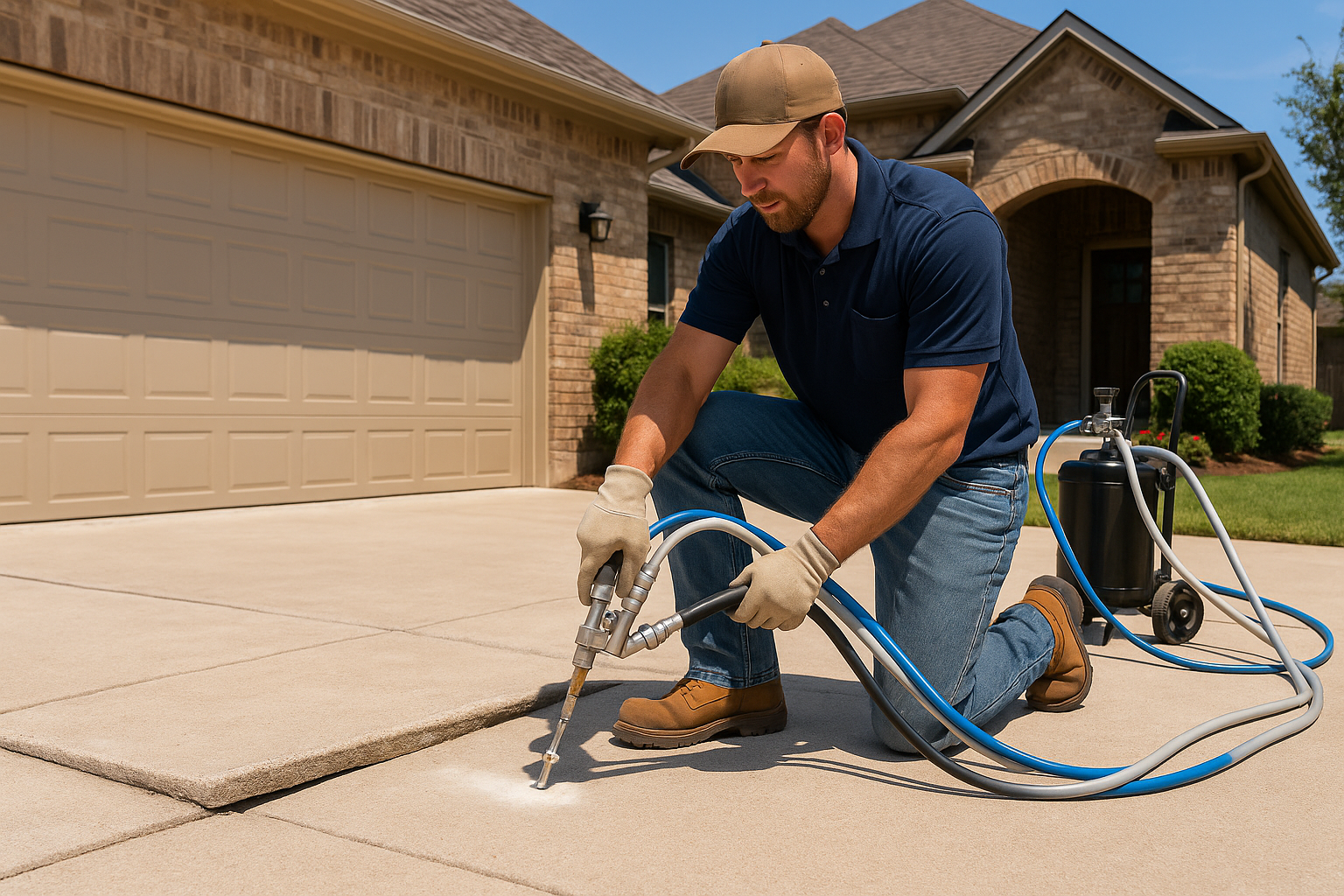
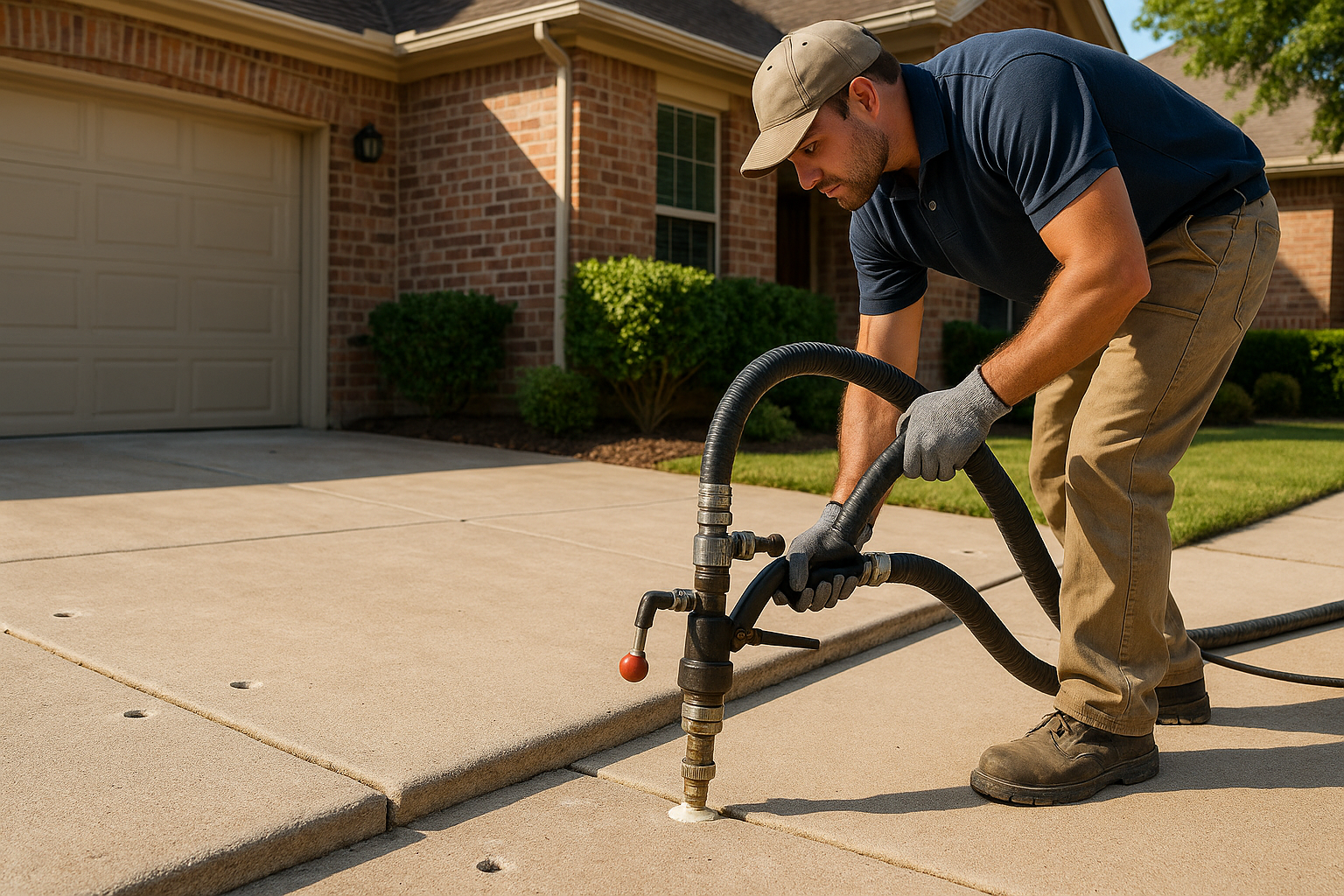
Polyurethane concrete leveling is a repair process where a contractor drills small holes through the sunken slab and injects a high-density expanding foam underneath. As the foam expands, it fills voids, stabilizes weak spots, and gently raises the concrete back toward its original position.
This is not a demolition job. There is no need to jackhammer out a whole driveway panel just because one section settled an inch or two. With foam leveling, the goal is to correct the elevation problem while keeping the existing slab in place.
For Texas homeowners, that matters because replacement is expensive, slow, and disruptive. Polyurethane foam gives us a way to make precise adjustments, especially on sidewalks, pool decks, patios, garage approaches, and residential driveways. If the concrete is still structurally decent and not completely broken apart, leveling is often the smarter play.
- Small injection holes instead of major demolition
- Fast cure time with same-day use in many cases
- Less mess than tear-out and repour
- Accurate lifting control for uneven slabs
- Lower cost than replacement in many situations
If your slab settlement is tied to underlying soil movement, drainage issues, or washout, foam leveling may also be paired with broader Concrete Slab Repair recommendations so the problem does not keep coming back.
When Texas Homeowners Should Choose Foam Leveling
Not every slab needs to be replaced. In fact, a lot of the settled concrete we see in Texas is still in good enough shape to be lifted. The biggest thing we look at is whether the slab is intact enough to save and whether the settlement came from voids or unstable soil under the concrete.
You should consider polyurethane leveling if you notice any of the following:
- One section of driveway or sidewalk has dropped lower than the next
- Water is draining back toward the house instead of away from it
- Your front porch, patio, or pool deck has become uneven
- There are trip hazards at panel joints
- The slab settled after drought followed by heavy rain
- You want to avoid the cost and downtime of replacement
Texas makes this kind of repair especially common. Around Central Texas, we deal with expansive clay soils that shrink when they dry out and swell when they get wet. In parts of the Hill Country, rocky and thin soils can still create support issues when water erodes fines under the slab. In blackland prairie areas, movement can be even more dramatic. That soil cycle is a big reason concrete settles around homes in places like Austin, Round Rock, Georgetown, Cedar Park, and San Marcos.
Foam leveling is a strong option when the problem is isolated slab settlement. If the concrete has severe cracking, major breakup, or underlying foundation movement, we may point you toward a more involved repair instead. But for many driveways and flatwork surfaces, Driveway Leveling with polyurethane foam is exactly what gets the job done.
Polyurethane Leveling vs Concrete Replacement
Homeowners usually ask the same question first: should I lift it or replace it? The answer depends on condition, but in many cases leveling wins on speed, cost, and convenience.
With replacement, you are paying for demolition, haul-off, base prep, forming, pouring, finishing, and cure time. That means more labor, more noise, and more days dealing with an unusable surface. In Texas heat, scheduling and curing can also become a factor.
With polyurethane leveling, we keep the existing slab, make targeted injections, and raise the settled section with minimal disruption. For the right slab, it is a much cleaner repair.
- Foam leveling cost: often far less than full slab replacement
- Replacement cost: can run 2x to 4x more depending on access, thickness, and finish
- Use time after foam leveling: often same day
- Use time after replacement: often several days to a week or more depending on the application
That cost difference matters to homeowners trying to fix a trip hazard or drainage issue without sinking a huge amount of money into flatwork that can be saved. While exact pricing depends on the slab size and how far it has moved, polyurethane leveling is usually the better value when the concrete is still serviceable.
Another thing to consider is appearance. If you replace only one panel of an older driveway or walkway, the new concrete usually does not match the aged sections around it. Leveling lets you preserve the existing look instead of ending up with one bright new patch in the middle of weathered concrete.
After lifting, it is also smart to pay attention to the joints. Good joint maintenance helps reduce water intrusion that can wash out support under the slab over time. If you need more information on protecting those gaps, check out expansion joints and visit sealmyjoints.com for added joint sealing resources.
Why Polyurethane Foam Works Well in Texas Soil
Texas is tough on concrete because the soil is always moving. Drought dries the ground out and causes shrinkage. Then a hard rain hits, water runs along edges and cracks, and soils expand or wash away. That repeated cycle leaves unsupported areas under slabs. Once a void forms, the concrete starts bearing weight unevenly, and settlement follows.
Polyurethane foam works well here because it is lightweight, fast-curing, and effective at filling those hidden voids. It does not add the same kind of heavy load you would get from some older mudjacking methods. That is important when the underlying subgrade is already stressed.
In Central Texas, we often see these conditions:
- Expansive clay soils that shrink and swell with moisture changes
- Erosion near downspouts and poorly directed roof drainage
- Washout under driveways from runoff during heavy storms
- Heat-related soil drying during long summer stretches
- Localized settlement around sidewalks, patios, and garage entries
Foam injection helps because it reaches underneath the slab where the problem actually is. We are not just patching a crack on top. We are restoring support below the concrete so the slab can carry weight more evenly again.
That said, the repair works best when paired with common-sense water management. If a downspout dumps water beside your driveway every storm, or if grading keeps runoff trapped near the slab, those issues need attention too. Otherwise, you may keep feeding the same soil movement that caused the settlement in the first place.
What the process usually looks like
- Inspect the slab and identify settlement, voids, and drainage issues
- Drill small injection holes in strategic spots
- Inject polyurethane foam below the slab
- Monitor the lift carefully and raise the slab to the target elevation
- Patch the holes and clean up the area
For most homeowners, the biggest surprise is how quick and controlled the process is. There is no major tear-out, no long cure delay, and no giant construction mess left in the yard. That is a big reason this method has become so popular across Texas.
If you are seeing uneven concrete around your home in Austin, Round Rock, or nearby areas, do not wait until a small drop turns into a bigger break or safety issue. Early repairs are usually simpler and more affordable.
Hill Country Slabs handles practical repair solutions for Texas concrete, and we can help you figure out whether foam leveling or a broader slab repair plan makes the most sense. Contact us through our contact page or call (737) 287-4308 to schedule an evaluation and get your concrete back in line.