
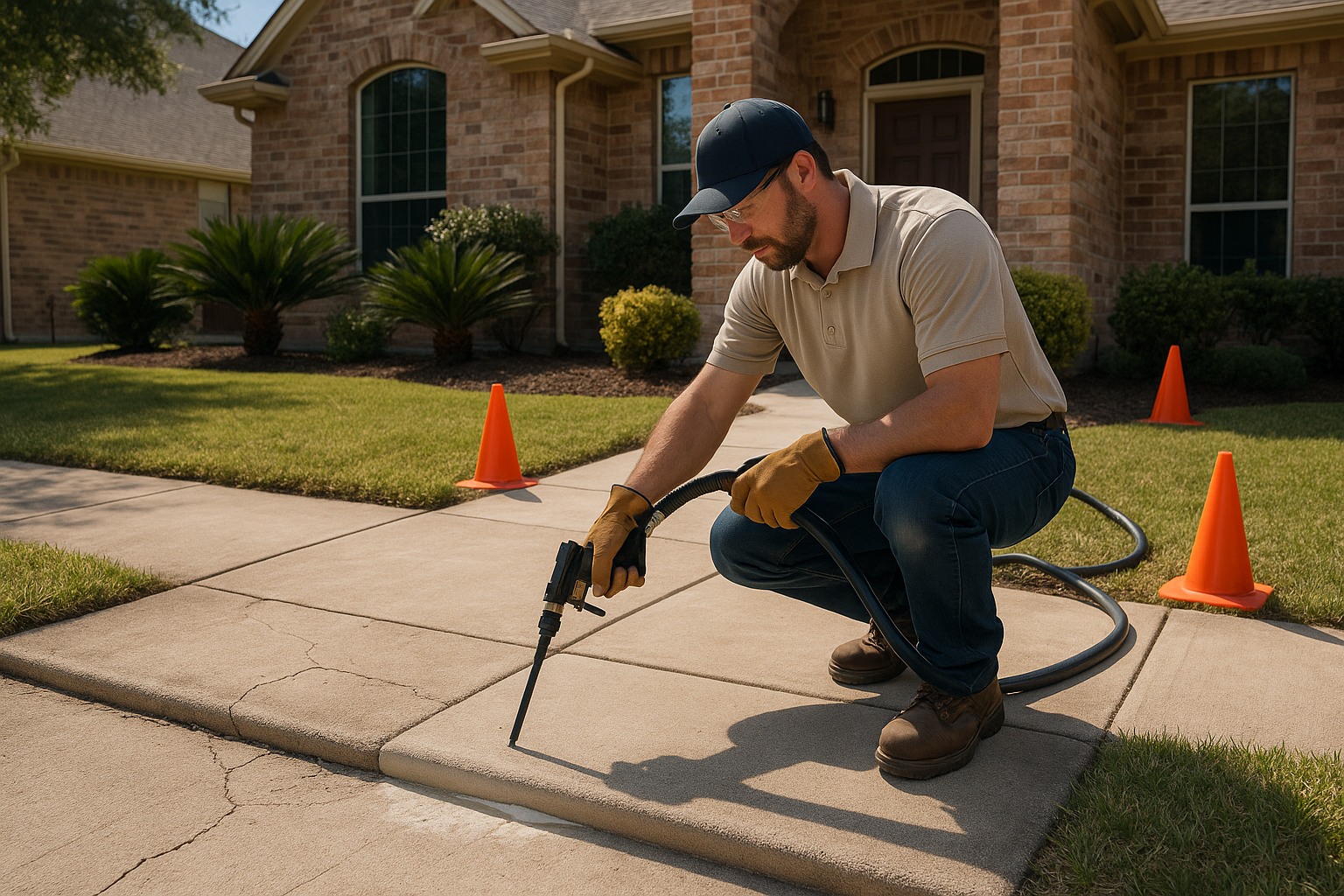
In Texas, sidewalks take a beating. Between shifting clay soils, long dry spells, hard rains, and summer heat, it does not take long for a clean sidewalk to turn into a trip hazard. We see it all over Austin, Round Rock, Cedar Park, and the surrounding Hill Country. One slab settles, one edge lifts, cracks open up, and before long you have a walkway that looks rough and creates a real safety issue.
The good news is you usually do not need to tear everything out and start over. A lot of concrete sidewalk repair in Texas can be handled with targeted repairs that cost less, move faster, and last a long time when the cause of the problem is addressed. At Hill Country Slabs, we help property owners fix uneven and damaged sidewalks with practical solutions, including lifting settled concrete and sealing joints to keep water out.
If you are dealing with a sinking, cracked, or uneven walkway, this guide covers what causes the problem, what to watch for, and why repair is often the smarter move than full replacement. You can also learn more about our Sidewalk Repair and Concrete Slab Repair services.
Signs Your Sidewalk Needs Repair
Some sidewalk problems are obvious. Others start small and get worse over time. The main thing we tell homeowners and property managers is not to wait until somebody trips or the city posts a notice.
- Uneven slab edges that create a lip between sections
- Sunken concrete where one panel has dropped below the next
- Cracks that keep widening or allow water into the base
- Standing water after a rain, which usually points to settlement or drainage issues
- Loose or failed joints that let runoff wash out the soil underneath
- Spalling or surface breakup caused by age, moisture intrusion, and movement
In a lot of cases, the sidewalk itself is still structurally usable. The real issue is underneath it. When the supporting soil shifts, washes out, or shrinks, the concrete loses support and starts moving. That is when you end up with cracking, settlement, and dangerous height changes.
From a safety standpoint, even a small offset matters. A rise of around 1/4 inch to 1/2 inch can become a trip point, especially for kids, older adults, and anyone pushing a stroller or dolly. If the sidewalk serves a business, HOA, apartment complex, or public-facing property, those hazards can quickly turn into liability problems.
What Causes Sidewalk Damage in Texas
Texas is tough on concrete, but it is even tougher on the soil supporting that concrete. Around Central Texas, we deal with expansive clay that swells when it gets wet and shrinks when it dries out. That repeated movement is one of the biggest reasons sidewalks crack and settle.
Expansive Clay Soil
Much of the Austin area sits on clay-heavy soils that move with moisture changes. During wet periods, the soil expands. In drought conditions, it shrinks and leaves voids. That cycle puts stress on concrete flatwork and causes sections to lift, drop, or crack.
Washout From Rain and Drainage Problems
When Texas storms hit hard, runoff can move a lot of soil in a short amount of time. If water is flowing under a sidewalk because of poor grading, broken sprinkler lines, roof discharge, or open joints, it can wash away the base and leave empty spaces. The slab may look fine on top at first, but eventually it starts sinking.
Tree Roots and Vegetation
Roots can push sections upward, especially in older neighborhoods with mature oaks. At the same time, nearby vegetation can affect soil moisture and increase shrinkage in dry weather. We often see a combination of root pressure and soil movement contributing to uneven sidewalks.
Heat, Drought, and Seasonal Swings
Texas summers are brutal on exposed concrete. Extended dry periods can pull moisture from the subgrade, and then a sudden heavy rain changes everything again. Those repeated swings are rough on sidewalks, patios, driveways, and foundations alike.
Failed Expansion Joints
Joints are there for a reason. When they dry out, crack, or pull apart, they let water down into places it should not go. Over time, that moisture intrusion leads to erosion and settlement. That is why we often recommend sealing joints as part of the repair process. You can learn more at /expansionjoints and at sealmyjoints.com.
Repair Options for Cracked or Sunken Sidewalks
The right fix depends on what the sidewalk is doing and why it failed. Not every damaged walkway needs replacement. In fact, full tear-out is often overkill when the slab can still be restored.
Polyurethane Foam Lifting
For settled sidewalks, foam leveling is one of the best repair methods available. Small holes are drilled through the slab, and a high-density polyurethane foam is injected below the concrete. As the foam expands, it fills voids, stabilizes the base, and lifts the slab back toward grade.
This method works well for many sidewalks because it is fast, clean, and much less disruptive than replacement. Most repairs can be completed in hours, not days, and the sidewalk is often ready for use the same day. It is also lighter than older mudjacking materials, which matters when you are trying not to add more weight to already unstable soils.
Crack and Joint Sealing
If water is getting through cracks or joints, sealing those openings helps protect the base from further erosion. This is especially important in Texas where sudden downpours can move water fast. A good repair plan does not just lift the concrete and walk away. It also addresses the entry points that allowed the problem to develop.
Partial Replacement
Sometimes a slab is too broken up to save. If the concrete is shattered, badly heaved, or missing structural integrity, replacing that section may be the better option. Even then, it is often possible to replace only the failed panels instead of the entire sidewalk run.
Root and Drainage Corrections
If tree roots, drainage issues, or leaking water lines are involved, those need to be dealt with too. Otherwise, even a solid repair can be undermined later. Good sidewalk repair is not just about making the surface look level. It is about fixing the support conditions below it.
Why Foam Leveling Is Often Better Than Replacement
We replace concrete when replacement is needed, but a lot of Texas sidewalks are better candidates for lifting and stabilization. That is especially true when the slab is mostly intact and the main problem is settlement.
- Lower cost: Repair is often 30% to 60% less than full replacement, depending on site conditions and how much concrete is affected.
- Faster turnaround: Many sidewalk leveling jobs are completed in a few hours, while replacement can take days once demolition, forming, pouring, and cure time are factored in.
- Less mess: There is no need to haul off large amounts of broken concrete or disturb nearby landscaping any more than necessary.
- Long-lasting support: Quality foam fills voids, resists water, and helps stabilize the slab from below.
- Better curb appeal and safety: Lifting the concrete removes trip hazards and improves the overall look of the property without the patchwork appearance of pieced-together replacement.
For homeowners, that usually means less downtime and a more affordable fix. For commercial properties and HOAs, it means you can address liability concerns quickly without shutting down walkways for long stretches.
We see this all the time across Central Texas. A sidewalk panel sinks near the driveway in Austin. A walkway settles near a front porch in Round Rock. A path along the side yard starts holding water in Cedar Park. In many of those cases, foam leveling gets the slab back where it belongs without the cost and hassle of ripping it out.
What Sidewalk Repair Typically Costs in Texas
Every project is different, but most property owners want a ballpark before they call. For concrete sidewalk repair in Texas, the price usually depends on how many slabs are involved, how far they have settled, accessibility, and whether crack sealing or joint sealing is included.
- Minor lifting or trip hazard correction: often starts in the few hundred dollar range
- Multi-panel sidewalk leveling: commonly falls in the mid to upper hundreds or more
- Full replacement: often costs significantly more once demo, haul-off, new concrete, and curing time are included
The cheapest price is not always the best value. If the contractor is not addressing voids, water intrusion, or failed joints, the sidewalk may just start moving again. The best repair is the one that restores support and helps prevent the same issue from coming back.
Choose a Repair Plan That Fits Texas Conditions
Concrete sidewalks in Texas fail for predictable reasons: moving clay, water intrusion, drainage issues, roots, and weather extremes. The right repair takes those local conditions into account. That is why targeted lifting, stabilization, and joint protection often make more sense than full replacement.
If your sidewalk is cracked, uneven, or sinking, Hill Country Slabs can take a look and tell you whether it can be repaired. We work with homeowners, builders, property managers, and commercial sites across Central Texas with straightforward recommendations and repair methods that fit the job.
To get started, visit /contact or call (737) 287-4308. If you need help with an uneven walkway, settled slab, or trip hazard, we are ready to help.