
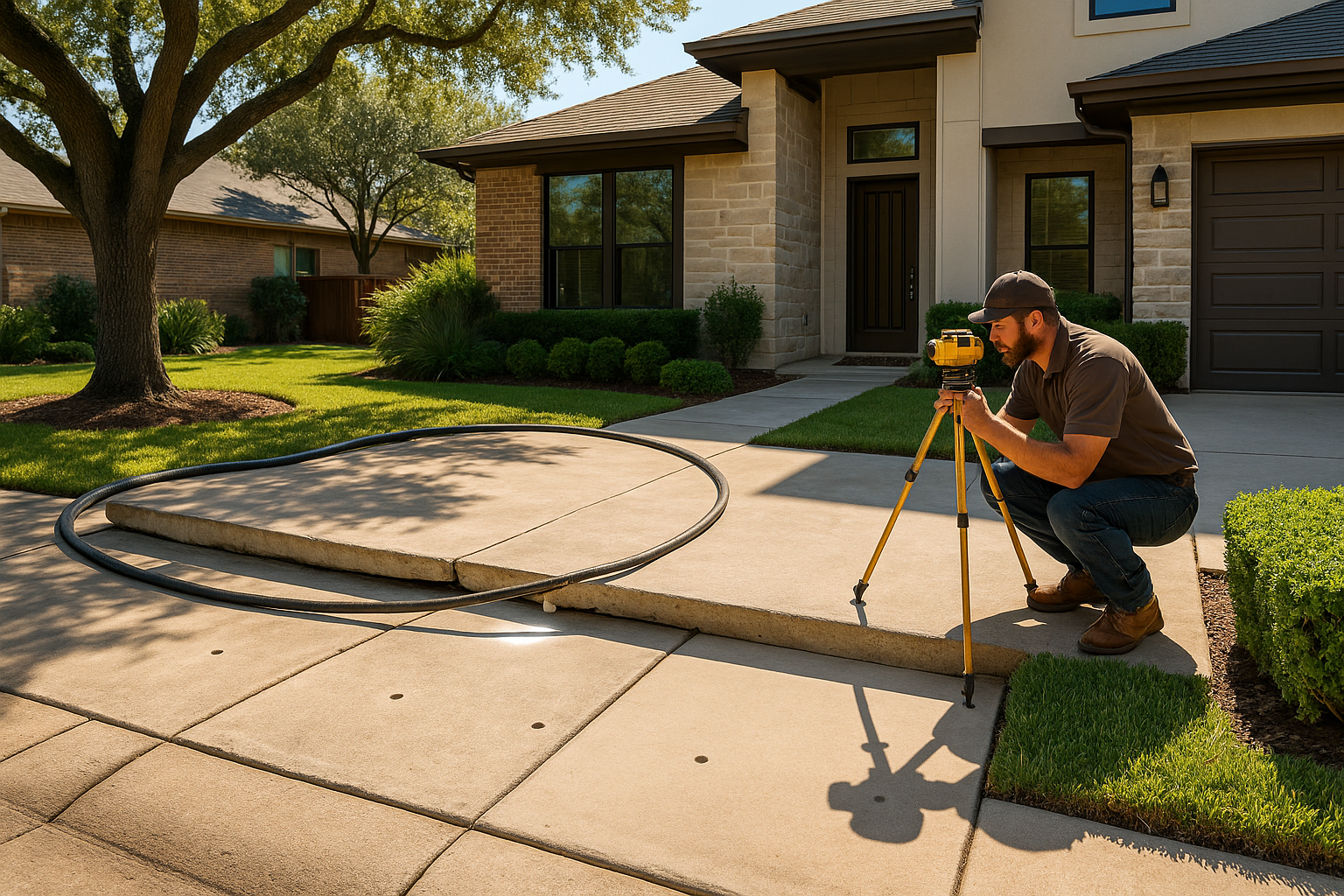
If you’re looking for concrete leveling in Houston, TX, chances are you’ve already noticed the problem. Maybe the driveway has dropped near the garage. Maybe the sidewalk is holding water after every storm. Maybe the back patio has turned into a trip hazard. Around Houston, sinking concrete is common, and it usually doesn’t get better on its own.
At Hill Country Slabs, we work with Texas property owners dealing with shifting slabs, uneven walkways, sunken driveways, and settled patios. In Houston, the combination of heavy rain, heat, clay-rich soils, drainage issues, and long dry stretches can move concrete faster than a lot of homeowners expect. The good news is you usually do not have to tear it out and start over.
With modern foam injection methods, a lot of slabs can be raised, stabilized, and put back into service quickly. If you want to learn more about the process, take a look at Concrete Leveling Near Me in Texas and Polyurethane Concrete Leveling in Texas.
Signs You Need Concrete Leveling in Houston
Most customers call us after the concrete has already dropped enough to become obvious. The trick is catching it before it turns into a bigger repair or a liability issue.
- Uneven driveway slabs where one panel sits lower than the next
- Trip hazards along sidewalks, walkways, and pool decks
- Standing water after rain, especially near the house or garage
- Patios pulling away from the home or settling at one corner
- Void formation under concrete that causes hollow spots
- Garage approach settlement where tires hit a lip every day
In Houston neighborhoods, we also see slabs settle after major rain events, plumbing leaks, poor compaction, or drainage problems that wash out supporting soils. If one section has dropped, that doesn’t always mean the whole slab has failed. In many cases, leveling is the right fix.
We also tell property owners to pay attention to the joints. When joints open up, allow water in, and stay unsealed, the soil below can soften or wash away. That is one reason we recommend learning more about expansion joints and proper joint protection. For more information on long-term joint sealing, visit sealmyjoints.com.
What Causes Concrete to Sink in Houston?
Houston has a tough combination of environmental conditions for slabs. A lot of the area is built on expansive clay soils that swell when wet and shrink when dry. That constant cycle can create movement under concrete over time. Add in intense storms, humidity, high groundwater in some areas, and long hot summers, and you’ve got a recipe for settlement.
Expansive Clay and Soil Movement
Much of Southeast Texas deals with clay-heavy soils that are sensitive to moisture changes. When the soil takes on water, it expands. When it dries out, it contracts. That movement can leave parts of a slab unsupported. Once a void forms, concrete starts to drop.
This is not just a Houston issue. We see similar slab movement in places like Austin and Round Rock, but Houston adds heavier rainfall and drainage challenges that can speed up the problem.
Drainage Problems and Washout
Improper grading, clogged gutters, downspouts dumping too close to flatwork, and low spots in the yard can all send water where it does not belong. Over time, water can erode the soil beneath sidewalks, driveways, and patios. That leaves the slab bridging air instead of bearing on compacted material.
We see this a lot around driveway edges, front walks, and areas near AC condensate lines. Once the supporting soil is compromised, settlement follows.
Tree Roots, Plumbing Leaks, and Poor Subgrade Prep
Tree roots can displace soil and create pressure points. Broken irrigation lines and plumbing leaks can soften the subgrade. And sometimes the original installation just did not have proper compaction. A slab poured over loose fill may look fine for a while, then begin to settle once the soil consolidates.
That’s why every leveling job needs a real diagnosis first. You do not want to raise concrete without understanding what made it move in the first place.
Foam Leveling vs Concrete Replacement
When homeowners see sunken concrete, they often assume replacement is the only option. Sometimes replacement is necessary, especially if the slab is badly broken, structurally failed, or missing large sections. But for many Houston properties, polyurethane foam leveling is the faster and more cost-effective repair.
How Foam Leveling Works
Foam leveling uses small, strategically placed drill holes in the concrete. Through those holes, high-density polyurethane foam is injected beneath the slab. As the foam expands, it fills voids, lifts the concrete, and stabilizes the soil below. Once the slab is back to grade, the holes are patched.
The big advantage is control. A trained crew can make precise adjustments without the mess and downtime of demolition.
Why Homeowners in Houston Choose Foam Lifting
- Less invasive than tearing out and replacing concrete
- Smaller drill holes and a cleaner finished appearance
- Fast cure time so many areas can be used the same day
- Void filling and stabilization along with lifting
- Lower overall cost in many situations compared to replacement
In a lot of cases, replacement means demolition, haul-off, new base work, forming, pouring, and curing time. That can take days or even longer depending on weather and access. Foam leveling is often completed much faster.
What Does Concrete Leveling Cost in Houston?
Pricing depends on slab size, access, severity of settlement, and how much stabilization is needed underneath. But generally speaking, foam leveling is often much more affordable than full replacement.
- Concrete leveling in Houston commonly runs far less than replacement for driveways, sidewalks, and patios
- Replacement can easily cost 2 to 4 times more once demolition, disposal, forming, and repouring are included
- Small trip hazard corrections may cost a few hundred dollars, while larger driveway or patio lifts can run higher depending on scope
Every slab is different, and nobody should give you a serious price without looking at the site. But if the concrete is still in decent shape, leveling is usually the first option worth pricing.
When Replacement Makes More Sense
We’re contractors, so we’ll say it straight. If the concrete is shattered, badly spalled, too thin, or the slab has failed beyond what lifting can reasonably correct, replacement may be the better long-term solution. The right contractor will tell you when leveling makes sense and when it doesn’t.
Still, a lot of homeowners are surprised how many slabs can be saved. If your driveway, patio, or walkway is just sunken and otherwise in fair condition, foam injection is often the smart play.
Get a Free Concrete Leveling Quote in Houston
If you’ve got sinking concrete in Houston, don’t wait until someone trips, water starts draining toward the house, or the slab drops even more. Early repair is usually simpler and less expensive than waiting.
At Hill Country Slabs, we help Texas homeowners and property managers find the right fix for settled concrete. We look at drainage, soil conditions, joint separation, voids, and slab movement so the repair addresses the real problem, not just the symptom.
Whether you’re dealing with a sunken driveway approach, uneven sidewalk, settled patio, or problem slab around a home or commercial property, we can help you figure out if foam lifting is the right option.
Need concrete leveling in Houston, TX? Contact Hill Country Slabs for a free quote today. Visit /contact or call (737) 287-4308 to get your concrete inspected and leveled before the damage gets worse.